
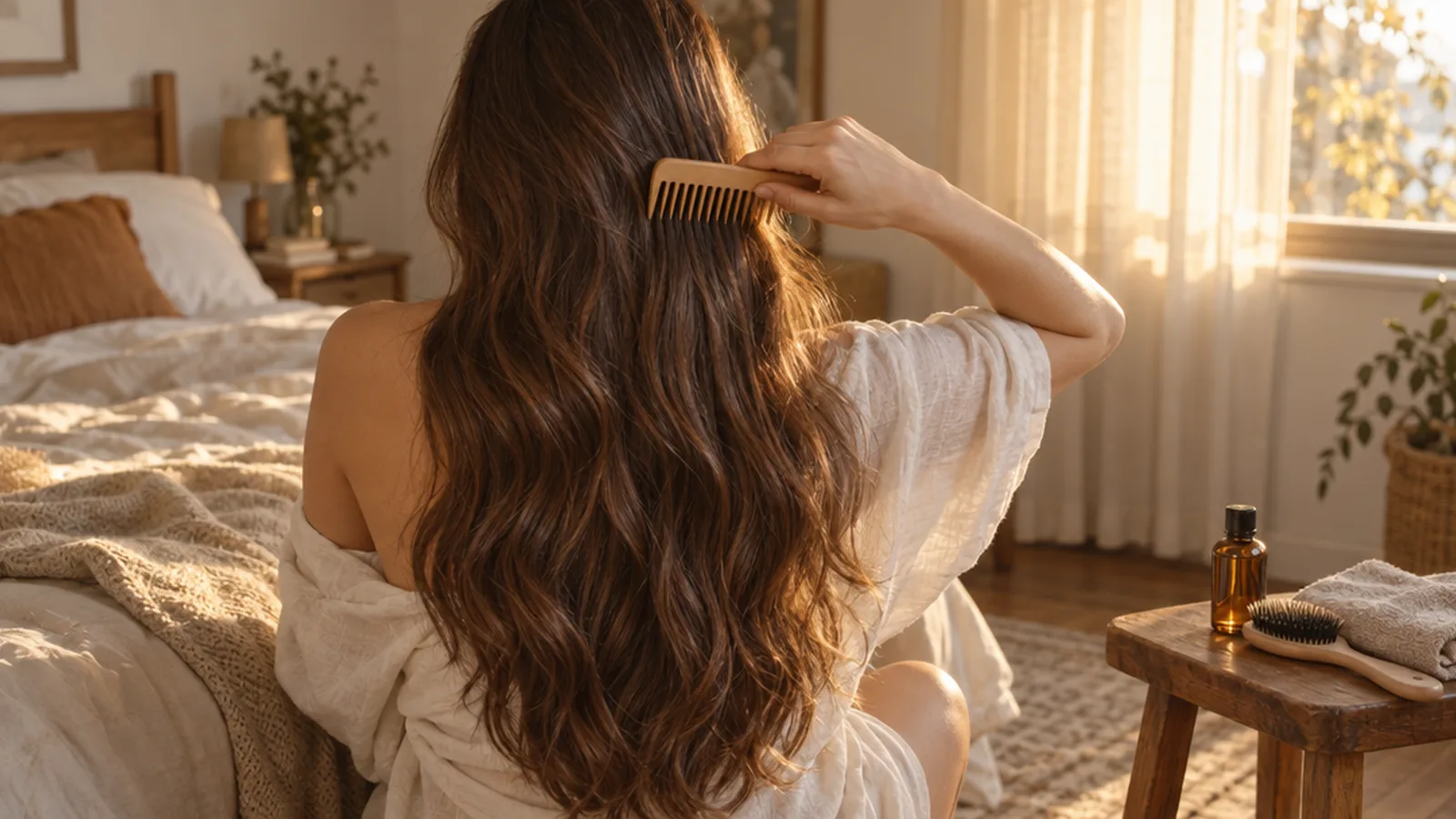
A 2-bottle shampoo and conditioner set costs $8.84 at Walmart.
That’s 36.8 cents an ounce for the 2 products every hair care routine starts with.
So you don’t need a crowded shelf to look after your hair.
Below, you’ll get the routine in order, a wash schedule for your hair type, real prices, and the signs that call for a doctor instead of a new bottle.
What Is Hair Care?
Hair care is how you wash, condition, detangle, protect and trim your hair so it stays clean, soft and easy to manage.
Why split it into those jobs?
Because your scalp and your ends want different things. The Ulta Beauty hair care guide, which comes from a retailer that sells these products, says the ends are where hair tends to be drier.
That’s why shampoo works at the top of your head while conditioner stays toward the bottom. Once you know that, most hair care advice starts to make sense.
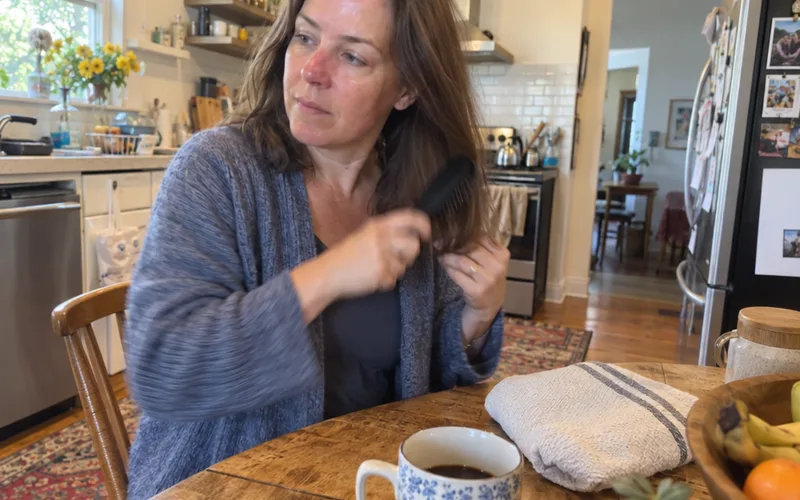
Your hair type decides the rest, including how often you wash and which bottles belong in your cart.
What Is the Best Hair Care Routine?
The best hair care routine is the shortest one that fits your hair type: shampoo, conditioner and a gentle detangle, plus heat protectant whenever you blow dry. Add anything else only when you can name the problem it solves.
That rule also protects your budget. If you buy 5 new things at once and your hair improves, you won’t know which product did it.
So add 1 product, use it for a few weeks, and then decide.
Pacifica Beauty, a hair care brand, sums up a complete routine as shampoo, conditioner, then treatments and styling products. The brand sells all of those, so I’d treat the first 2 as your routine and the last 2 as extras.
The hair care routines and tips section builds on these basics, and its tips for healthy hair go deeper on daily habits.
What Order Do You Use Hair Care Products In?
Hair care products go on from cleansing to treating to styling, with heat coming last, and that’s the order the Ulta Beauty guide gives. Treatments typically go on after your regular conditioner has been rinsed out.
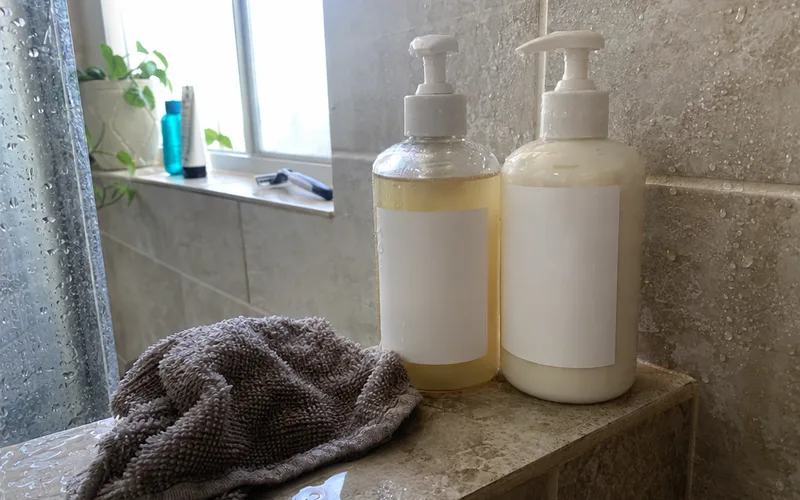
Here’s the full order for wash day:
- Shampoo, picked for your hair type.
- Conditioner, on the mid-lengths and ends only, then rinse.
- Deep conditioner, hair mask or leave-in treatment, if you use one.
- A wide-tooth comb through damp hair, which helps limit breakage.
- Styling products, such as mousse or gel.
- Air drying, or a blow dryer on its lowest setting after heat protectant.
Why does the order matter?
Each step sets up the next one. You comb after conditioning because your hair is still damp, and styling comes after that so a comb doesn’t drag through your mousse.
The one exception is the product label. When a mask or treatment gives its own directions, follow those instead of any general order, including this one.
How Often Should You Wash Your Hair?
How often you should wash your hair depends on your hair type, according to the Ulta Beauty guide: daily or every other day if oily, 2-4 times a week if normal and 2-3 times a week if dry.
Treat those numbers as a starting point from one retailer, not a medical rule.
Your hair will tell you the rest. That same guide says to wash if your hair feels greasy, and to cut back if it feels dry or straw-like.
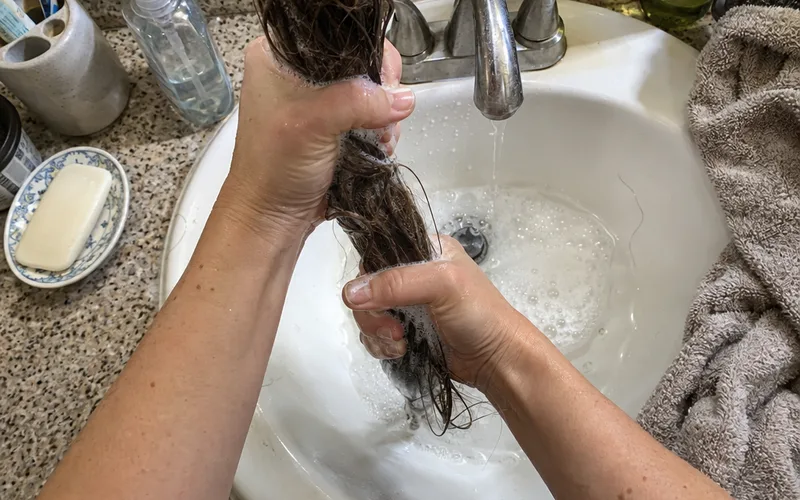
Here’s an easy way to find your number:
Say you wash 4 times a week now and your hair feels like straw by the weekend. For 2 weeks, drop to 3 washes, and pay attention to how your hair feels on the days between.
If it feels better and doesn’t turn greasy, you’ve found your schedule. If your scalp gets oily by day 2, go back up 1 wash.
When you do wash, the method is simple. The Dove shampoo listing at Walmart says to apply it to wet hair, lather and rinse before you use conditioner.
The right wash schedule is the one that leaves your hair neither greasy nor straw-like.
Picking the bottle comes next, and the shampoo and conditioner picks on this site cover different hair types and budgets.
What Hair Care Products Do You Actually Need?
You need 2 hair care products to start, a shampoo and a conditioner, plus a wide-tooth comb and a heat protectant if you blow dry. Everything else is optional until your hair gives you a reason.
Your hair type picks the shampoo. The Ulta Beauty guide sorts it this way:
- Color-treated hair: a gentle cleanser.
- Fine hair: a volumizing formula.
- Dry hair: a nourishing formula.
Labels help too, if you read them closely. For “sulfate-free,” the Joico InnerJoi Strengthen Shampoo on Amazon says it’s free of SLS and SLES, short for sodium lauryl sulfate and sodium laureth sulfate.
If frizz is your main complaint, compare shampoo and conditioner for frizzy hair first.
So when do the extras earn a spot?
A mask makes sense when conditioner alone doesn’t leave your hair soft, and a leave-in detangler helps when combing is a fight. The styling products section can help with the rest, including dry, frizzy hair.
How Much Does a Hair Care Routine Cost?
A basic hair care routine costs about $8.84 for a 2-bottle Dove set at Walmart, or $34 for 3 Pacifica Beauty products, at November 2026 prices. Add-ons push that total up, one bottle at a time.
The Pacifica Beauty page lists its Coconut Vanilla shampoo and conditioner at $11 each and its Coconut Milk Detangle Elixir at $12.
Next, look at the price per ounce, because a shelf price can fool you. The Walmart page shows a 12-ounce Dove Damage Therapy Shampoo at $4.84, down from $7, which works out to 40.3 cents an ounce.
The same page shows the Dove Intensive Repair set at 36.8 cents an ounce, so the 2-bottle deal costs less per ounce even though you’re also getting conditioner. (That single shampoo was listed as out of stock in November 2026, so check before you drive over.)
Now put it over a whole year. Say the Dove set lasts you 3 months, which is a made-up number for this example.
That’s 4 sets and $35.36 a year.
Your own number will differ, but the math takes 1 minute: divide the price by the ounces.
Extras are where the bill climbs. Here’s what Pacifica Beauty lists for 4 common add-ons:
- Curl defining cream: from $5.
- Scalp massager: $9.
- Leave-in detangler: $12.
- Scalp serum: $14.
Add all 4 and you’ve spent $40, more than the basic set costs for a whole year in that example.
So each one should solve a problem you can point to.
Is Expensive Shampoo Worth the Money?
Expensive shampoo is worth the money only when a cheaper bottle has already failed at a job you can name, such as keeping your color bright. A high price alone doesn’t tell you what a formula does.
So what should you check instead?
Read the fine print.
On Amazon, the Joico InnerJoi Strengthen Conditioner says it helps repair damaged hair. A footnote limits that to combing breakage versus a non-conditioning shampoo.
That’s a real claim, but a much smaller one than “repair” sounds like.
Here’s how I’d spend the money:
Start at the low end, such as a 2-bottle drugstore set, and use it for a few weeks. If your hair does what you want, you’re done, and you’ve kept the difference.
If it doesn’t, write down exactly what’s wrong, and then shop for that problem. “My color fades” or “my curls won’t hold” is something you can compare labels against, while “I want better hair” isn’t.
The hair brands section looks at who each line suits, including this Amika review and this Ouidad review for curls.
If your budget is the deciding factor, the drugstore picks for curly hair and picks for dry, damaged hair are good places to compare.
How Do You Nourish Your Hair?
You nourish your hair mainly with regular conditioning, plus a mask or leave-in when it needs more. The Ulta Beauty guide also calls a healthy diet and proper hydration crucial for hair growth.
Conditioning is the everyday step, and it belongs on your mid-lengths and ends. Keeping it off your roots matters, since that same guide specifically says to avoid them.
A mask is the occasional step. It goes on after you rinse out your regular conditioner, and how long it stays on depends on the label.
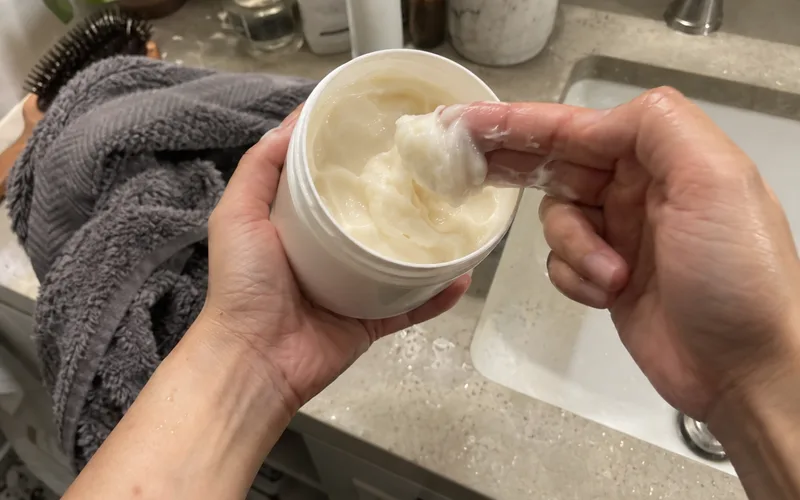
Want a cheap way to try one? A homemade hair mask can use what’s in your kitchen.
And your scalp?
Pacifica Beauty says a scalp serum helps support the scalp environment, but it also sells one at $14, so weigh that advice with the price in mind. If your scalp feels dry, read about scalp oil for dry scalp too.
What you eat counts too. Eat well first, because no conditioner can stand in for a healthy diet.
What Causes Dry Hair?
Dry hair often comes from washing too often, since the Ulta Beauty guide says hair that feels dry or straw-like may be getting washed more than it needs. Heat styling and color treatments are 2 more habits to check.
Start with your wash schedule, because changing it is free.
If you wash daily and your hair feels rough, drop a wash this week and see what changes.
Next, look at your shampoo, since that guide suggests a moisturizing shampoo and conditioner for dry hair. Walmart lists a Dove shampoo designed for dry hair at $4.84, so this fix doesn’t have to cost much.
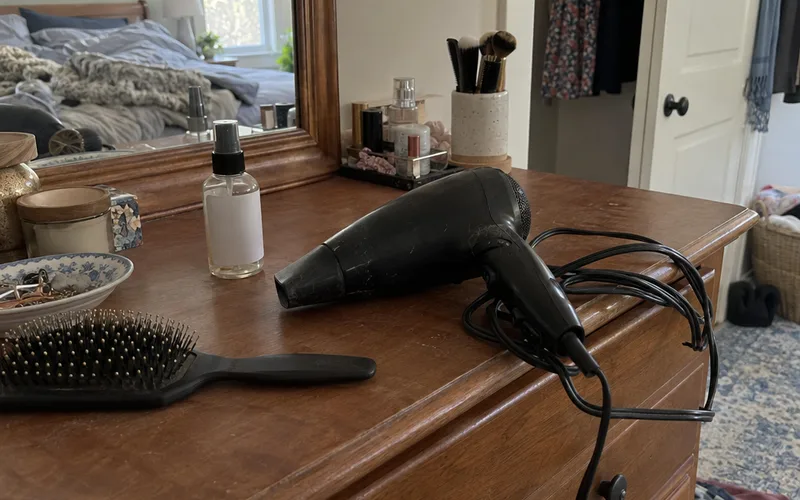
Then count your heat, because every blow dry calls for a heat protectant.
Color matters too, and the guide points color-treated hair toward gentle cleansers. Formulas like the Joico line on Amazon are sold specifically for damaged, color-treated hair.
Your ends also tend to be the driest part, so a trim or more conditioner there may be all you need.
These homemade oil recipes for dry hair cost very little to try. Or compare ready-made hair oils if you’d rather buy one.
In other words, change your habits first and buy a new product second.
How Do You Detangle Hair Without Breakage?
You detangle hair without breakage by working through it while it’s damp with a wide-tooth comb, the Ulta Beauty guide says. Pacifica Beauty adds a leave-in detangler on damp hair, and it sells one for $12.
Why be so careful at this step?
That same guide says your hair is more vulnerable when it’s wet, so this is when rough handling can do real harm. It also suggests a gentle detangling brush if you prefer one to a comb.
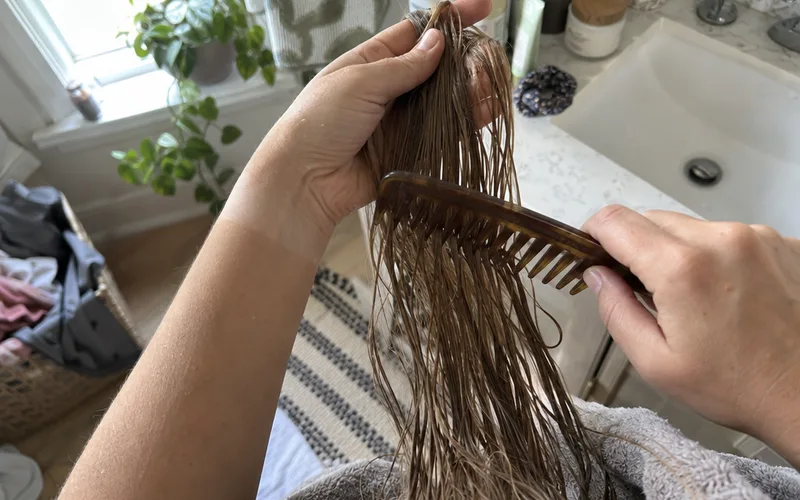
So keep the order simple. Rinse out your conditioner first, then comb while your hair is still damp, and add a detangler only if combing is still a fight.
Go slowly here, because wet hair is at its most vulnerable.
How Do You Protect Your Hair From Heat Damage?
You protect your hair from heat damage by air drying when you can, and using a heat protectant and the lowest setting when you can’t, the Ulta Beauty guide advises.
Say you blow dry 3 times a week. That’s 156 sessions a year, so a small habit here adds up.
Curling and straightening follow the same rule, because a hot tool is still heat. The curling hair section walks through irons, wands and straighteners, and it also covers curls without heat if you’d rather skip the tools.
Choosing a protectant depends on your hair, and there are picks for colored hair and curly hair.
Air drying is the free option, so use it on any day you don’t need a blowout.
How Often Should You Trim Your Hair?
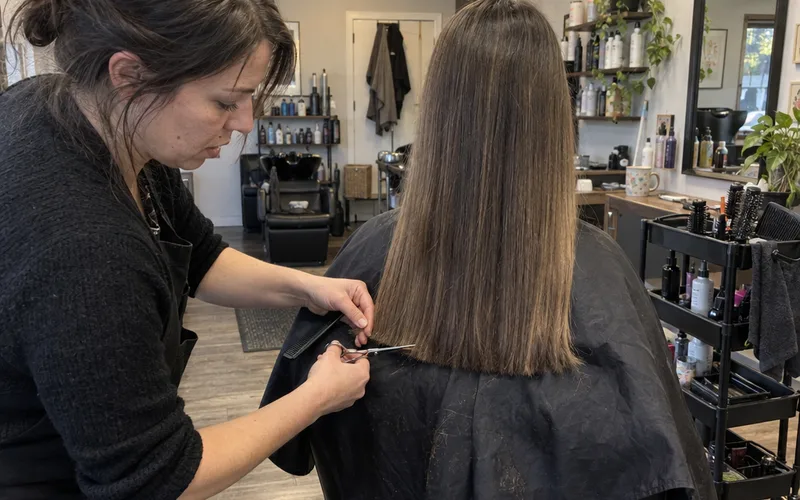
Trim your hair every 6-8 weeks, which is the schedule the Ulta Beauty guide gives for removing split ends. Split ends can travel up the hair shaft and cause more damage, so a small trim now can save you a bigger cut later.
That’s about 7 to 9 trims a year.
Is that realistic on a tight budget?
Maybe not, and that advice comes from a retailer with its own salon, so keep that in mind. If 8 appointments a year won’t fit, watch your ends and book when you see splits.
Pick a cut that’s easy to live with, too, and look through low-fuss haircuts for thin hair and short styles for women over 50.
Ask your stylist how often that cut needs a trim, because that’s the number that matters for your budget.
How Should You Care for Curly Hair?
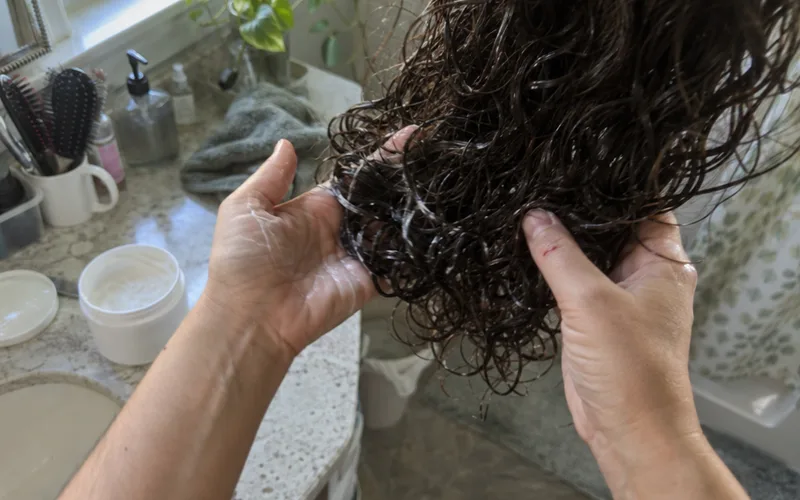
Curly hair care adds 2 steps to the basic routine: a leave-in detangler on damp hair and a curl cream for definition. Pacifica Beauty, which recommends both, sells a curl cream from $5.
The brand says curl creams help enhance natural texture, reduce frizz and improve definition.
Work in order here. Detangle first while your hair is damp, using a wide-tooth comb, and then add your cream.
Wash days are your call. If your curls feel dry, start with the 2-3 washes a week that the Ulta Beauty guide gives for dry hair, and adjust from there.
Curls aren’t all alike, either, and that retailer keeps separate shopping guides for wavy, curly and coily hair. For coily and kinky textures, our guide to Black hair care goes deeper.
Here’s where to go next on this site:
- Shampoo and conditioner for curly hair if you’re starting from scratch.
- Products for curly, frizzy hair if frizz is the main problem.
- Natural oils for curly hair if your ends stay dry.
Start with 1 new curl product at a time, so you can tell what’s working.
Can a Hair Care Routine Help Hair Grow?
A hair care routine can help you keep the length you grow, because trims remove split ends before they travel up the shaft and gentle combing limits breakage. The Ulta Beauty guide ties healthy growth to regular trims, a healthy diet and proper hydration.
Your routine protects the hair you already have, so less of its length goes to breakage.
That’s why I’d be careful with any bottle that promises fast growth on the front label, since the fine print may promise less.
If growth is your goal, this hair care routine for hair growth lays out a full plan.
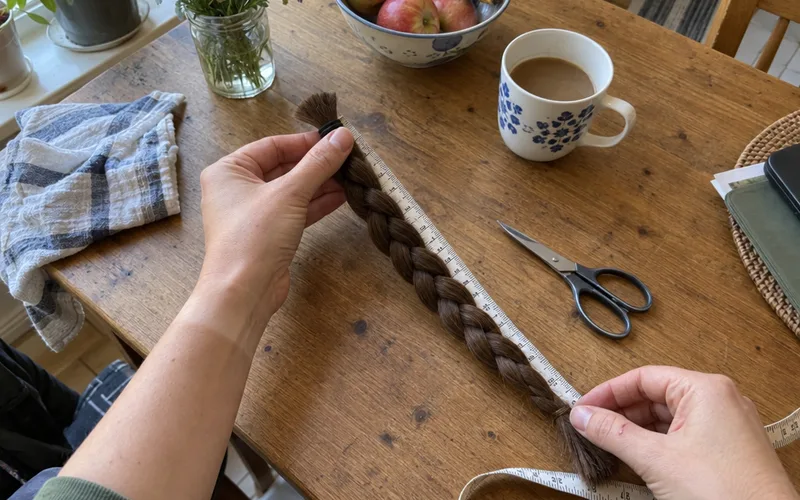
You can also compare hair growth oils, or look at picks for Black hair and 4C hair.
If your hair is thinning rather than growing slowly, that’s a different question, and a doctor is the one to answer it.
When Should You See a Doctor About Hair Loss?
See a doctor about hair loss when it’s sudden, patchy, getting worse or simply worrying you. An exam and lab tests can uncover causes such as malnutrition and autoimmune disease, a 2024 American Family Physician review says.
That review says more than 80 million people in the United States are affected by hair loss, so your doctor has heard this before.
Some kinds do settle down. The review says diffuse shedding is usually self-limited and depends on stopping the underlying cause, with stress as its example.
Your hairstyle can matter as well. Hair loss from constant pulling, called traction alopecia, is treated by decreasing tension on the hair, so give tight ponytails and buns a rest.
Note: This site covers cosmetic hair care only, so it doesn’t cover medical or prescription treatment. A shampoo can’t diagnose hair loss, so please don’t spend months trying to fix it with products.
Before your appointment, write down when the shedding started and anything that recently changed.
What Else Can You Learn About Hair Care?
The Beauty Sensation splits hair care into topics, from what to wash with to how to wear your hair. The main ones are below, each with its own page of deeper help.
Shampoo & Conditioner
Start here if you’re replacing what’s in your shower. It covers sulfate-free formulas, dry scalp shampoo and Korean shampoo.
Routines & Tips
Use routines and tips when you want a plan rather than a product.
Styling Products
Styling products cover creams, sprays and tools, including frizz fighters for humid days and air-dry products for wavy hair.
Curling Hair
Curling hair is for waves on purpose, from using a curling iron to curling short hair.
Hair Color
Hair color covers at-home dye and roots, so you can compare dye for gray hair with gray coverage without dye.
Best Hair Styles For Ladies
Browse styles and cuts before your next appointment, from long hair ideas to Korean wavy hair.
Hair Brands
Check hair brands when you’ve seen a name everywhere, such as Skala hair products.
When you’re ready to look beyond your hair, the same price-first approach runs through skin care, makeup and nail care.
What Should You Do First?
Your first step is to work out your wash schedule, since it costs nothing and shapes everything else.
The biggest takeaway: a shampoo, a conditioner and the right order will do most of the work.
Pick your hair type from the schedule above, and try that number of washes for the next 2 weeks.