
A single cuticle cream can cost $29.
But most of what keeps your nails healthy costs nothing.
Good nail care comes down to a few small habits: when you trim, which way you file and when you moisturize.
Below, you’ll get a simple routine, the cuticle rule plenty of guides get wrong and a recovery plan for nails worn down by gel or acrylics.
What Is Nail Care?
Nail care means keeping your fingernails and toenails trimmed, smooth, clean, dry and moisturized, then protecting them from damage. Amy Ling Lin, founder of the nail brand Sundays Studio, gave Camille Styles the reason: “Nails are protective structures.”
So this isn’t only about looks.
Healthy nails are the goal, and polish is optional.
The hard part you paint is the nail plate, which is built from layers of keratin, a tough protein. Those layers can thin and split, and the habits below help stop that.
What Is the Best Nail Care Routine?
The best nail care routine keeps your nails short, smooth, dry and moisturized, takes 6 steps right after a bath or shower and needs no salon visit or kit. Dermatologists at the American Academy of Dermatology (AAD) back these habits on a page written to teach kids, last updated 11/14/23.
Don’t let that audience put you off.
The same dermatologists say kids of about 9 or 10 can trim their own nails, which tells you how simple this is.
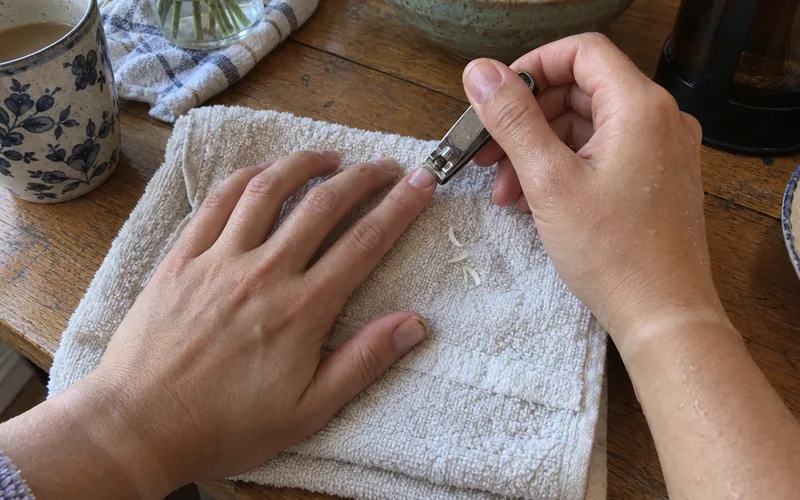
Here’s the order I’d follow:
- Take a bath or shower, so your nails are soft.
- Trim your nails.
- Smooth the edges with a file.
- Dry your hands well.
- Rub in lotion, then cuticle oil if you own it.
- Look over each nail for anything new.
The dermatology advice here doesn’t set a schedule, so repeat the routine whenever your nails feel long or start to snag.
How Do You Trim and File Nails the Right Way?
Trim fingernails almost straight across, round the corners a little and cut toenails fully straight across, according to the American Academy of Dermatology. Then file every stroke in the same direction, because filing back and forth can weaken nails.
Use a nail clipper or nail scissors, right after a bath or shower, when your nails are softer and easier to cut.
Length matters more than you’d think. The same page says short nails stay cleaner and break less often, so if yours keep snapping, go shorter before you buy anything.
Why 2 different cuts? Rounding a little keeps fingernails strong, while a straight toenail cut reduces the chance of an ingrown nail, a nail edge growing into the skin.
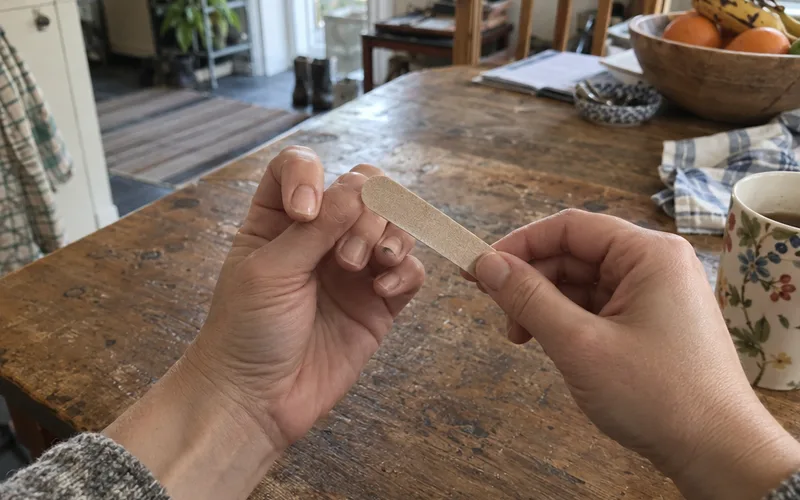
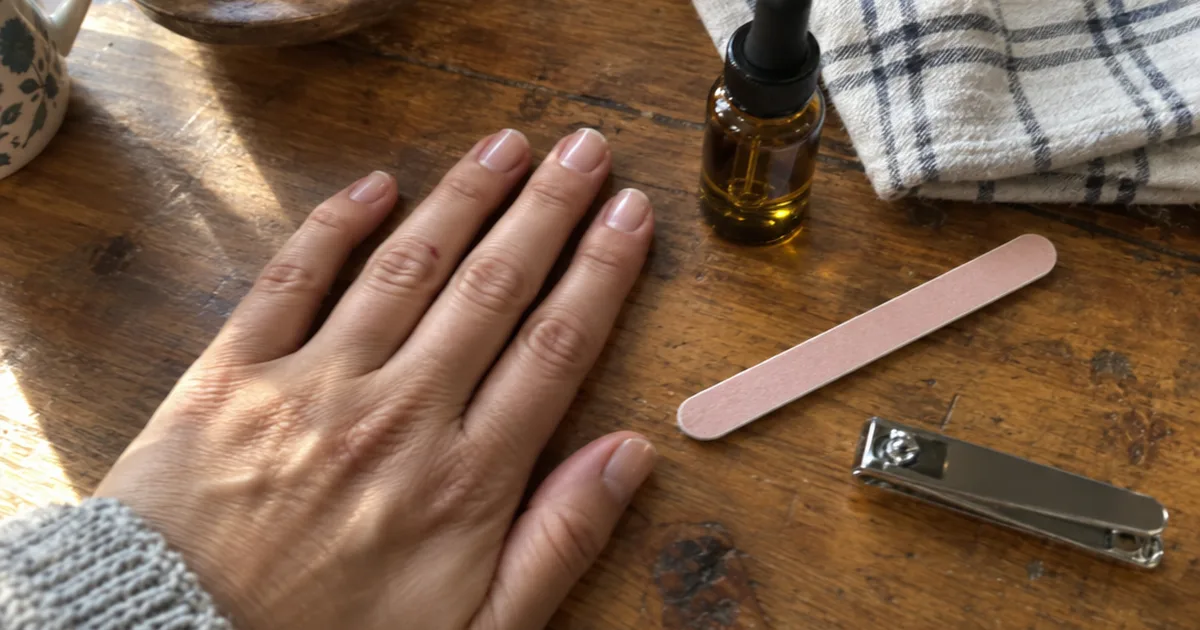
A nail file or emery board does the job, so you can skip most manicure tools and their uses until you want them. Pull the file one way, lift it, and start again.
Should You Cut Your Cuticles?
No, you shouldn’t cut your cuticles, and the American Academy of Dermatology says it’s best not to push them back either, because cuticles protect the nail root. That second part surprises people, since plenty of routines tell you to push them back with a wooden stick.
So leave them alone, and keep them soft with lotion or a cuticle oil.
Picking does harm too. Nail brand founder Lin says biting nails or picking cuticles compromises the nail bed and cuticle barrier, which raises the risk of irritation and infection.
What about a hangnail, that loose strip of skin beside the nail?
Don’t chew it or tear it, since dermatologists warn that can cause an infection. Wash your hands with soap and water, then cut off only the hanging bit with a nail clipper or nail scissors.
How Can I Rehydrate My Dry Nails?
Rehydrate dry nails by rubbing in lotion right after you wash your hands and after every bath or shower, the best time according to the American Academy of Dermatology. Nails need that moisture to stay flexible, and dry nails split more easily, especially when the air is dry.
Treat it as one motion: wash, dry, lotion.
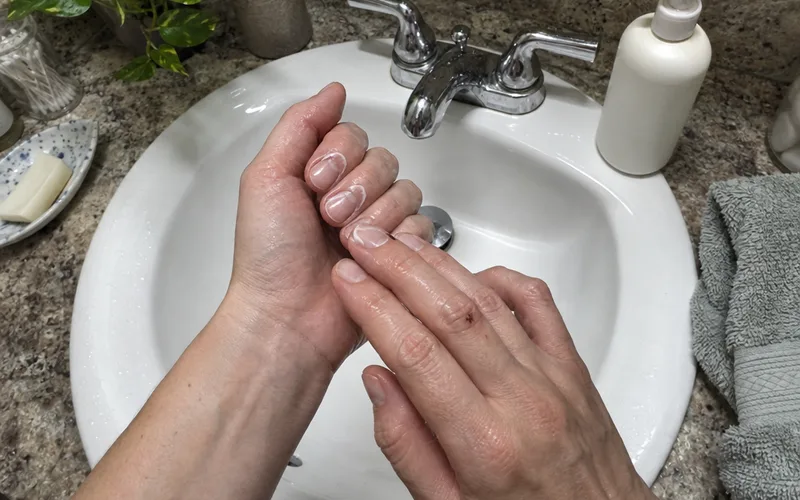
And dry comes first for a reason. The same page warns that a nail infection can develop if nails stay wet for a while, so pat around each nail before you reach for the bottle.
Want something richer?
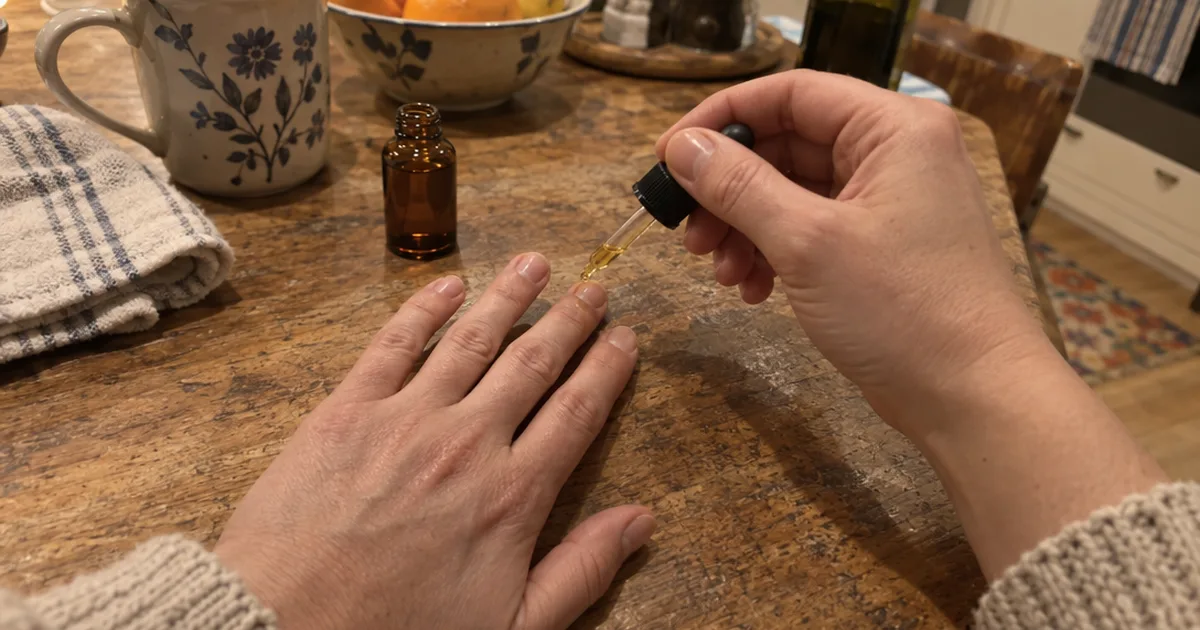
Nail brand founder Lin says cuticle oil and hand cream used regularly help prevent dryness and breakage. Both are fine, and I’d pick whichever one you’ll actually keep by the sink.
Say you wash your hands 6 times a day: that’s 6 chances to moisturize. Consistency beats the price of the bottle.
How Do You Strengthen Weak or Brittle Nails?
Strengthen weak or brittle nails with shorter lengths, gentle shaping, gloves for chores and steady moisturizing, the plan nail brand founder Amy Ling Lin gives Camille Styles. “Simple is often healthiest,” Lin says, and those habits cost almost nothing.
Start there, because nothing you buy can replace them.
Then, if you want a product, Camille Styles names OPI Nail Envy Original as a strengthening treatment for weak or peeling nails with repeated use. That’s one publication’s pick and not a lab result, so compare it with other nail strengthener polish picks.
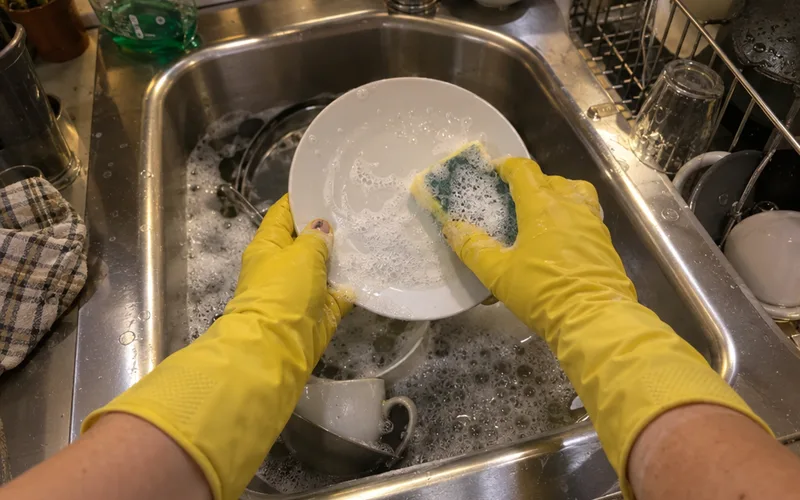
Want nails stronger and thicker over the long run? These habits still come first.
Key Takeaway: Shorter nails and gloves for chores are the cheapest strengtheners you can try this week.
Do Gel Manicures Damage Your Nails?
Yes, gel manicures can damage your nails, mostly through peeling and heavy filing: Amy Ling Lin says peeling off gel can lift layers of the nail plate, leading to thinning, weakness and long-term damage. Lin adds that excessive abrasion, often during gel or acrylic prep and removal, can thin nails over time.
In fact, Lin told Camille Styles that nearly every step of the gel or acrylic process stresses the nail.
That doesn’t mean you have to give gel up, especially since builder gel instead of acrylic needs less filing at prep.
It does mean the way it comes off matters as much as the way it goes on, so never lift a loose edge with your fingers. And if your nails are already thin, weigh gel or acrylic for weak nails before your next set.
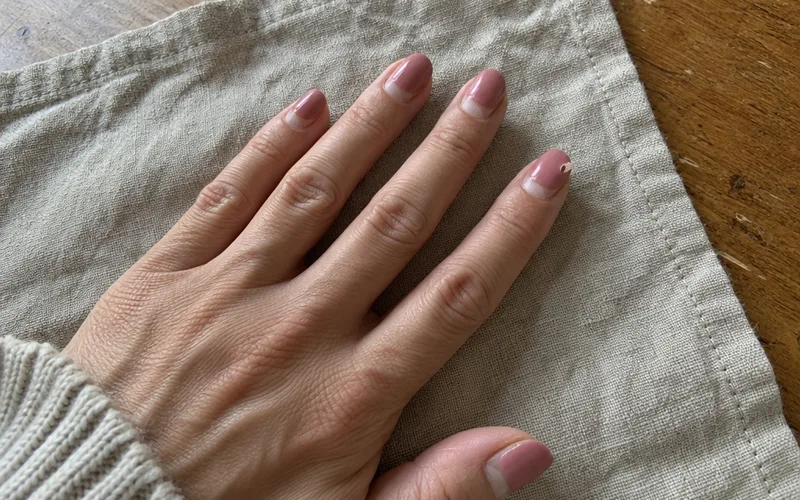
Thinking about dip instead? Read up on the side effects of dip powder first. Each option has its own guide, too: gel nails, builder gel nails, dip powder nails and, for no commitment at all, press-on nails.
How Do You Take Care of Your Nails After Gel or Acrylics?
Take care of your nails after gel or acrylics by removing the product properly instead of peeling it, then using cuticle oil and hand cream daily. Amy Ling Lin recommends that barrier support for dry or brittle nails, and she calls peeling one of the fastest ways to thin the nail.
Here’s the order that makes sense:
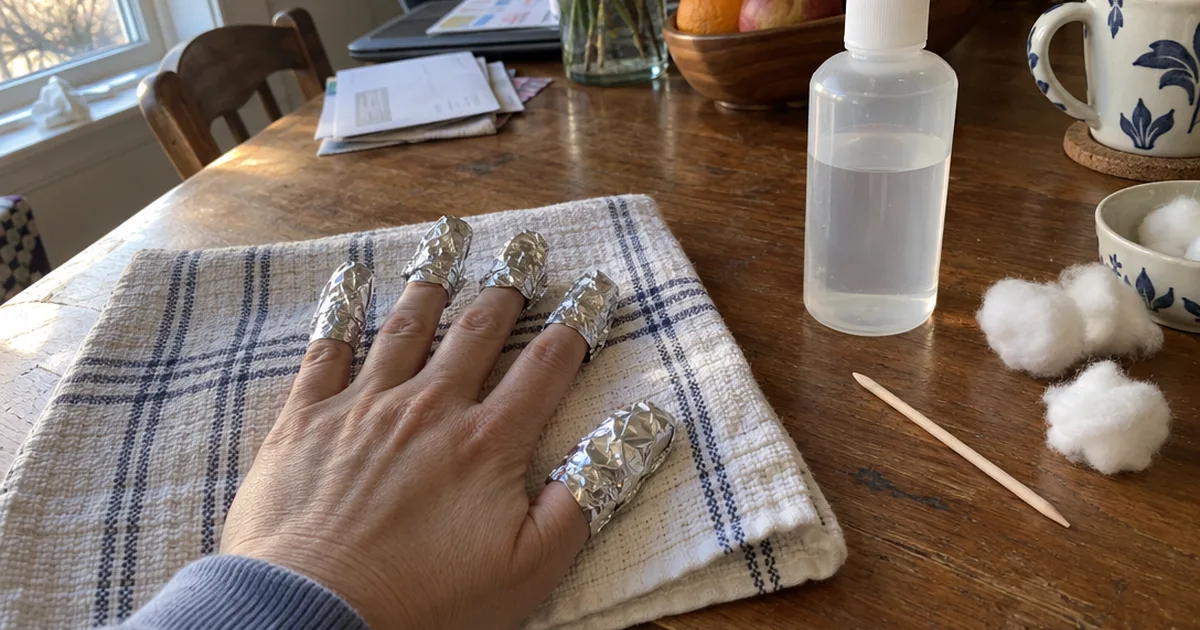
First, take off what’s left the right way, with the steps for removing gel nails.
Next, file gently in one direction and keep the length short, so a thin edge has less chance to snag.
Then moisturize every day while the worn part grows out. Lin also points to clean tools and good salon hygiene, so check both before you book again.
What Nail Care Tools and Products Do You Actually Need?
You need 4 nail care items: a nail clipper or nail scissors, a nail file or emery board, a lotion and gloves for chores. Dermatology advice covers the first 3, and the gloves come from nail brand founder Amy Ling Lin.
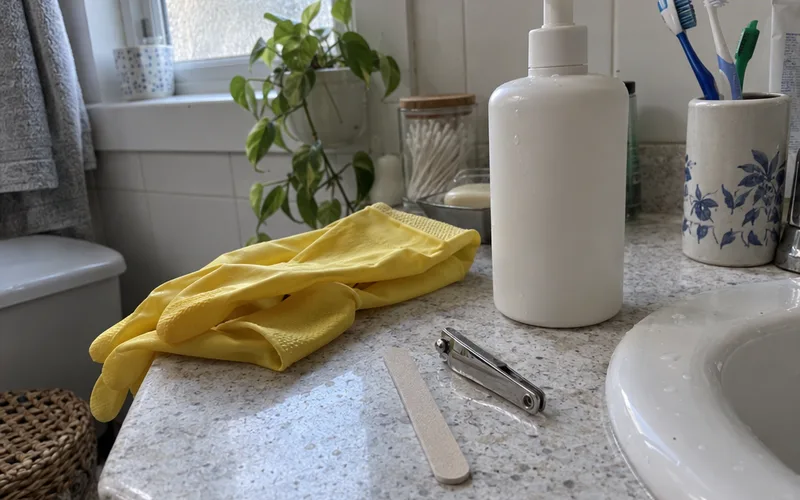
Everything else is optional, so add it only when you have a reason:
- Cuticle oil, if your skin stays dry after lotion.
- A polish remover, if you wear polish.
- A strengthening treatment, if your nails stay weak after you change your habits.
Polish lovers can compare the best nail polish picks and a gentler remover for natural nails before spending much. If you’re unsure how salon polishes differ, our nail polish guide walks through each type.
How Much Does a Nail Care Routine Cost?
A nail care routine can cost almost nothing if you already own a clipper, a file and lotion. Specialty products listed by Camille Styles run from $16 for a cuticle oil to $29 for a cream, and none of these sources gives a total for a full routine.
Here’s what that undated Camille Styles list shows:
- Sunday Studios Quick Dry Oil: $16.
- Sunday Studios Grapefruit Peel Polish Remover: $24.
- Manicurist Paris Day & Night Duo: $25, regular $30.
- Paume All-in-One Cuticle & Nail Cream: $29.
Those are the splurges, not your starting point.
So before you buy, compare the size as well as the price, because a cheap bottle can also be a tiny one.
How Do You Care for Your Toenails?
Care for your toenails by cutting them straight across, choosing shoes with wiggle room and wearing flip-flops in public places, as the American Academy of Dermatology advises. Cramped toes can lead to painful ingrown toenails, and walking barefoot in public can lead to a toenail infection.
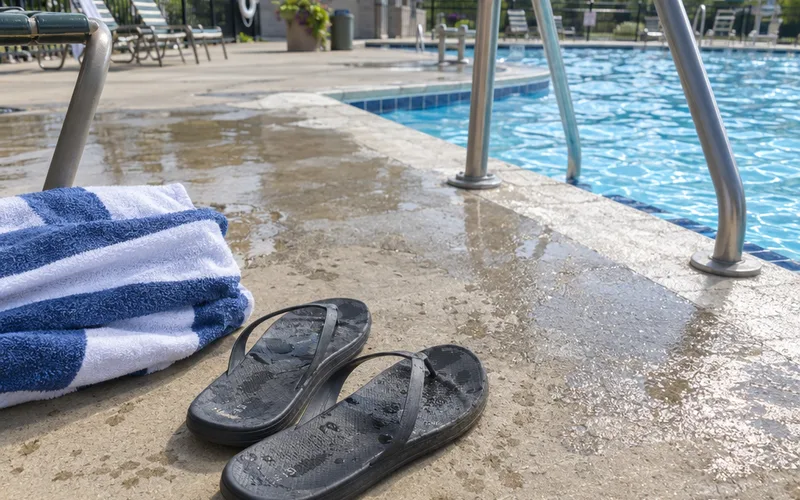
Change your socks daily too, since the same advice says dirty socks can lead to toenail infections.
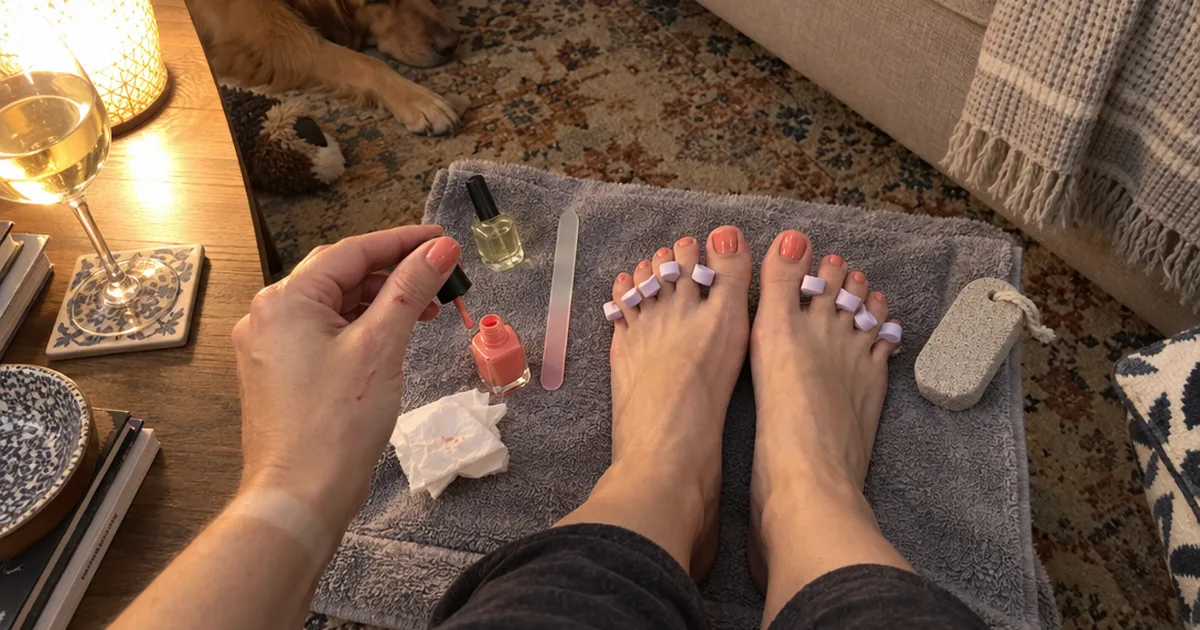
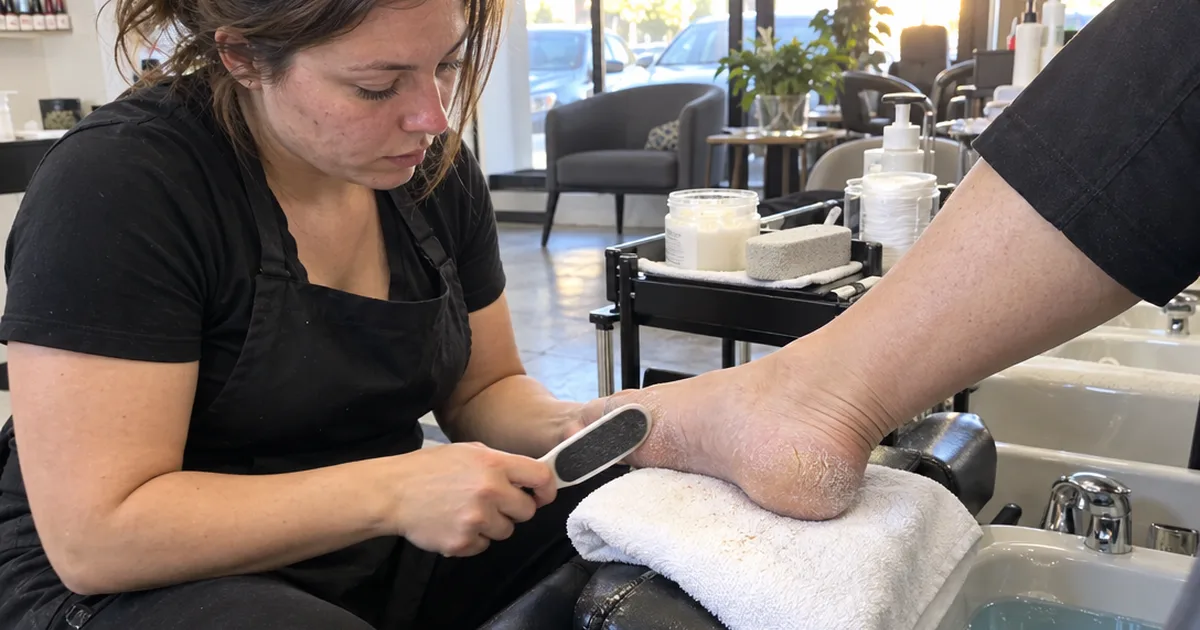
From there, a full at-home pedicure takes care of the polish and the skin. If your heels are the real problem, try a pedicure for cracked heels next.
What Else Can You Learn About Nail Care?
Nail care on The Beauty Sensation is split into topics, from everyday habits to removal, pedicures and designs. Start with the one below that matches what you want to do next.
Natural Nail Care
Natural Nail Care sticks with the nails you already have, including oils, strength and a routine you can keep up.
Nail Removal
Nail Removal walks you through taking off gel, dip powder, acrylics and glued-on nails at home without peeling.
At-Home Pedicures
At-Home Pedicures shows you how to look after your toes and heels without a salon appointment.
Designs For Nail Art
Designs For Nail Art gathers looks for every skill level, from French nails to classy short designs and seasonal fall nail designs.
Press-on fans can start with press-on nails that last, and Korean nail polish is worth a look if you like trying new brands.
What Should You Do First?
The first thing to do for your nails is free: stop cutting your cuticles and stop filing back and forth.
Then, tonight, put a bottle of lotion by the sink you use most.