
Dermatologists boiled healthy nails down to 11 tips, and the first one is free: keep them dry.
That list comes from the American Academy of Dermatology, and its tips were last updated Feb. 10, 2025.
So a good nail care routine starts with habits, not products.
Water, biting and using your nails as tools all make the list of things that damage them.
You’ll get the 7-step weekly session, the daily habits that protect it, the tools you need and the mistakes that quietly undo your work.
Best for: anyone with natural nails who wants them stronger, smoother and less likely to split. Skip it if you have a painful, swollen or changing nail, which needs a dermatologist first.
Cost: Free for the daily habits, plus a basic kit you probably own already.
Time: This week. The daily habits take seconds, and the weekly session fits into one evening.
First step: Put a pair of rubber gloves next to your kitchen sink today.
How to Do a Nail Care Routine at Home, Step by Step
A nail care routine at home takes 7 weekly steps: remove polish, wash and dry, trim straight across, file one way, push back cuticles, buff if needed, then moisturize. Do them in that order, because each step sets up the next.
Here are the nail care routine steps, one evening a week:
Step 1: Take Off Old Polish Gently
Start with bare nails, so you can see what you’re working with.
Soak a cotton pad in an acetone-free remover, press it on the nail for a few seconds and wipe toward the tip. A gentle remover made for natural nails saves you from scrubbing back and forth.
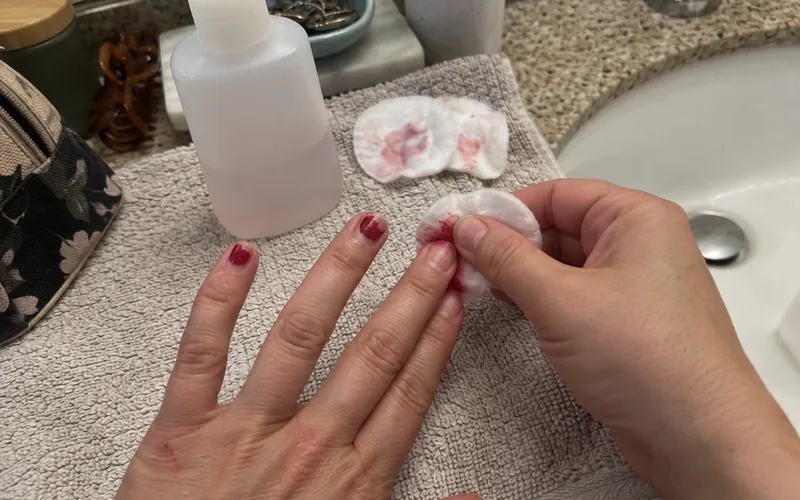
If you’re wearing gel, dip or acrylics, don’t pry them off. Use a proper nail removal method first, then come back to Step 2.
Step 2: Wash, Clean Under Your Nails and Dry Them Fully
Wash your hands with a mild soap and run a soft nail brush under each tip.
Then dry everything, including under the nails and around the cuticles.
Why does drying matter so much?
Bacteria and fungi thrive in moisture, so clean, dry nails keep bacteria from growing underneath, AAD dermatologists explain.
Step 3: Trim Straight Across
Use sharp nail clippers or small nail scissors, which is what AAD dermatologists recommend.
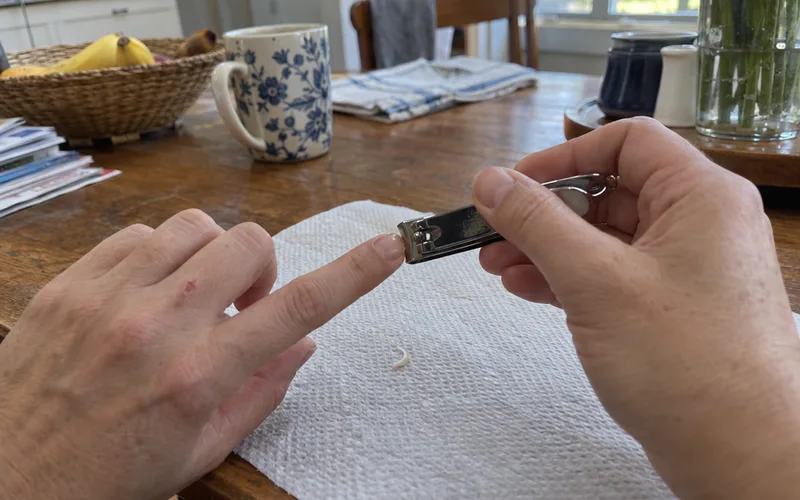
Cut straight across, then round the tips slightly. That rounded tip is what AAD dermatologists recommend “for maximum strength.”
Leave a little white at the tip if you’re growing your nails out. You can always take more length next week.
Step 4: File in One Direction
Filing clears the snags your clippers leave behind.
The AAD advises keeping nails shaped and free of snags by filing with an emery board. Hold the file at the edge and sweep it from the outer corner toward the center, then switch sides.
Don’t saw back and forth.
Short strokes in one direction are easier to control and leave a smoother edge. A fine-grit glass file is a nice upgrade later.
Step 5: Soften and Push Back Your Cuticles
Your cuticle is the thin seal of skin at the base of the nail, known as the eponychium.
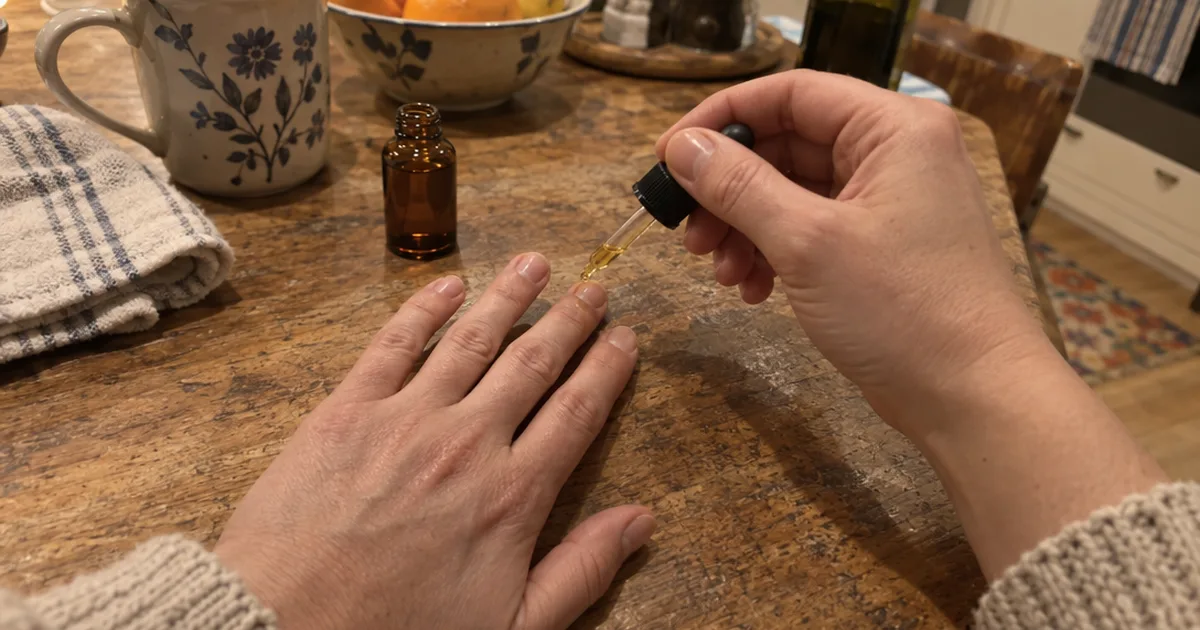
Soften it first with a minute in warm water or a drop of cuticle oil.
Then push it back gently with a wooden orange stick. Clip only a loose hangnail, never the cuticle itself.
AAD dermatologists put it plainly: don’t bite your fingernails or remove the cuticle, because doing so can damage the nail.
Step 6: Buff Lightly, Only If You Need To
Buffing is optional.
Skip it unless the surface feels rough or you want a smooth base for polish.
If you do buff, use the softest side of the buffer and a few light passes. Buffing works by sanding the nail plate, so light is plenty.
Step 7: Moisturize, Then Protect
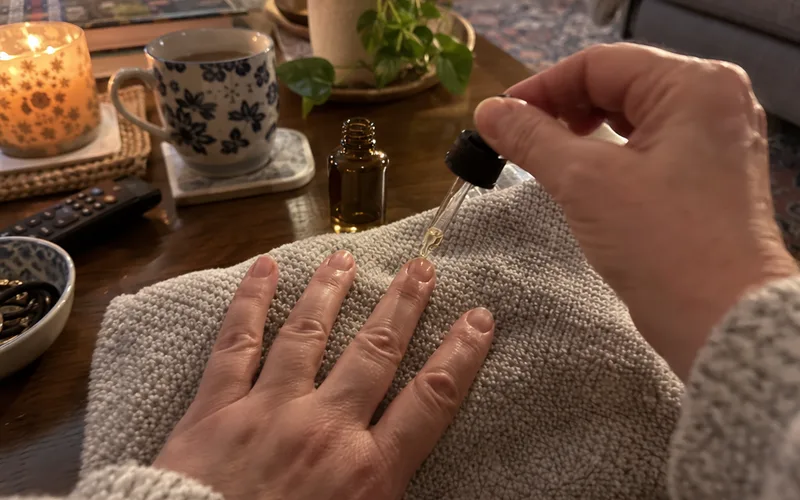
Finish by rubbing a drop of cuticle oil into each nail base, then hand cream over your whole hand.
The benefits of cuticle oil go beyond softer skin. A homemade cuticle oil works too, if you’d rather mix your own.
Wearing polish?
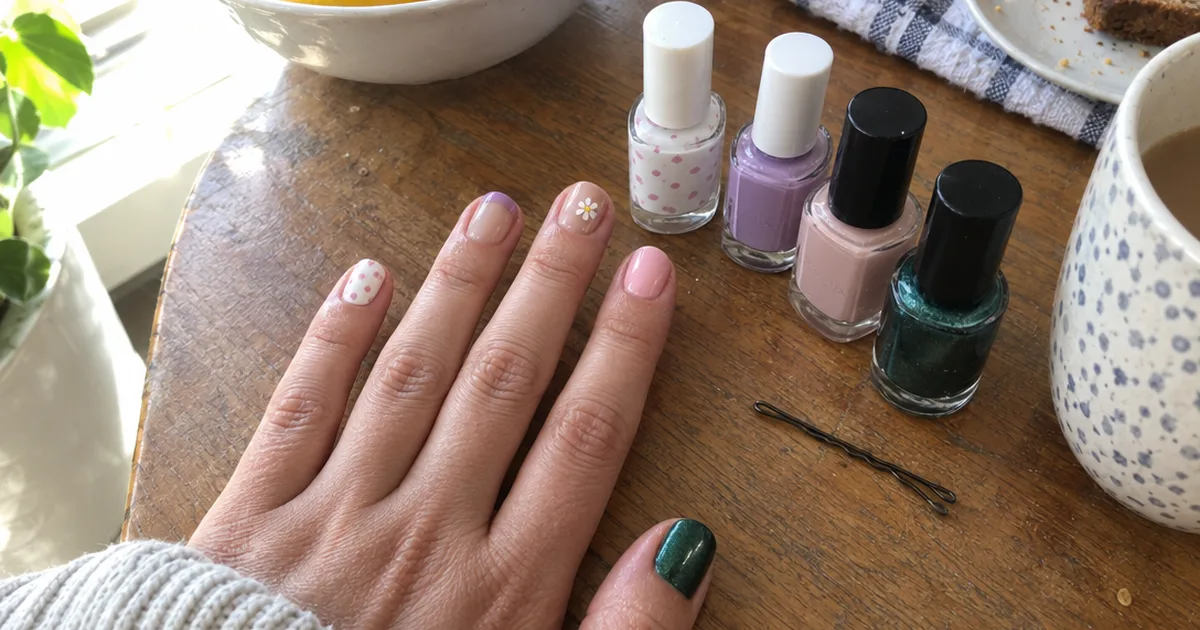
Add a base coat first. If your nails bend or chip easily, a strengthening polish can stand in for the base coat.
Your Daily Nail Care Habits
A daily nail care routine has 4 habits: dry nails fully after washing, moisturize after every wash, wear gloves for wet chores and never use nails as tools. Each takes seconds, and together they protect everything the weekly session builds.
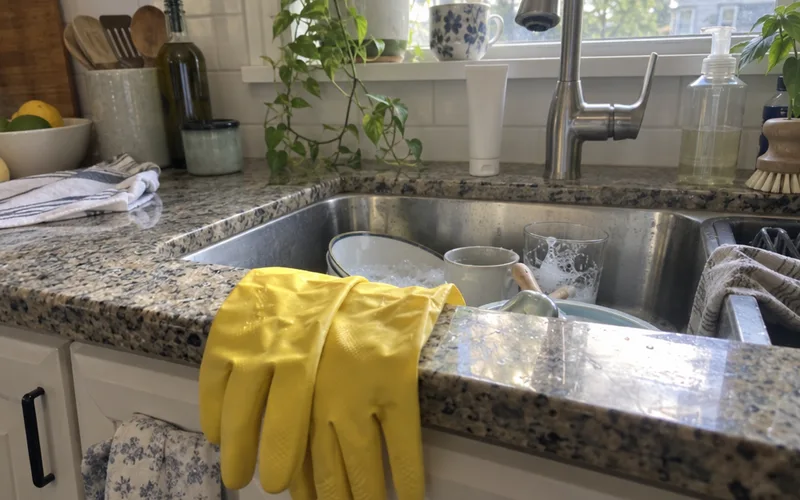
Of all the nail care tips at home, gloves matter most. Here’s why:
Too much water exposure can weaken your nails so they split, peel or break, according to the AAD. Its dermatologists advise wearing gloves to clean or wash dishes and moisturizing after hand washing.
So keep a tube of hand cream by every sink you use.
The second habit is about force.
Using nails to open pop cans or scrape off labels can cause chipping, splitting or lifting of the nail bed, AAD dermatologists warn. Keep a cheap can opener or a butter knife handy instead.
At night, the moisturizing habit gets one extra step: a drop of cuticle oil on each nail before bed.
How Often Should You Do a Nail Care Routine?
A nail care routine works best on 2 schedules: drying, moisturizing and gloves every day, plus one full 7-step session once a week. File any snag the day you notice it, and trim toenails whenever they need it.
This schedule keeps everything in one place:
| Task | How Often | Why |
|---|---|---|
| Dry hands and under nails | Every wash | Moisture lets bacteria grow |
| Hand cream or cuticle oil | After washing and at bedtime | Dermatologists advise it after washing |
| Gloves for dishes and cleaning | Every time | Too much water weakens nails |
| Full 7-step session | Once a week | Keeps length, shape and cuticles in check |
| File a snag | Same day | Keeps nails free of snags |
The daily rows matter most.
In other words, a perfect weekly session can’t make up for nails that soak in dishwater every night.
Here’s an example, with made-up days you can shift to suit your week:
Say Sunday evening is your nail night, so you do all 7 steps once. For the rest of the week, you wear gloves at the sink, dry under your nails after washing and rub in cuticle oil before bed.
If a nail snags on Wednesday, you file that one nail and move on.
What You Need for an At-Home Nail Care Routine
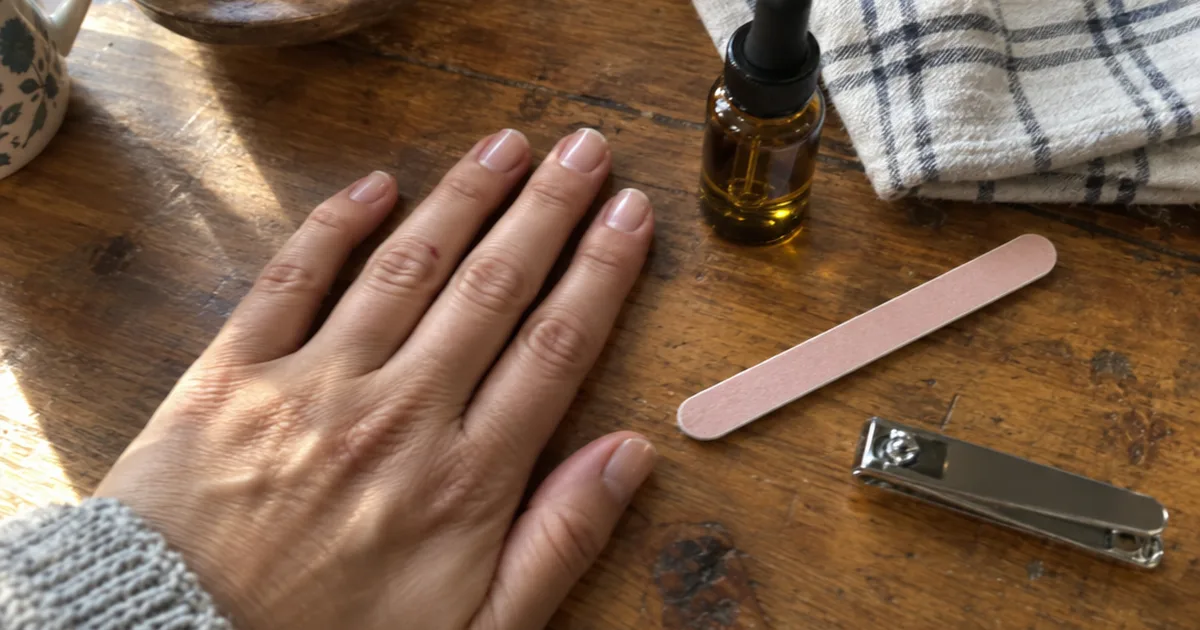
An at-home nail care routine needs just 4 tools: sharp clippers, an emery board or glass file, a wooden orange stick and a soft nail brush. Add cuticle oil, hand cream, gloves and a gentle polish remover, and you have a full kit.
A buffer, a base coat and a nail strengthener are nice extras, not must-haves.
Sharp clippers matter most, since every step after trimming starts from that cut. If yours leave jagged edges, replace them before buying anything else.
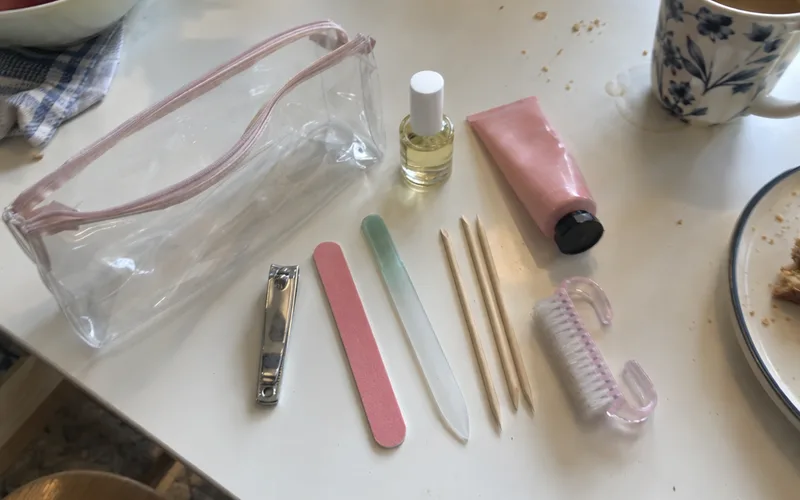
You’ll find each tool’s job explained in this guide to manicure tools, including which ones you can skip.
Keep the kit in one zip bag, and wash the clippers and file after each session.
Should You Push Back or Cut Your Cuticles?
You should gently push back your cuticles after softening them, but never cut or remove them. Dermatologists at the American Academy of Dermatology warn, in tips updated in February 2025, that removing the cuticle can damage the nail.
The safest way to push is after a shower, when the skin is already soft.
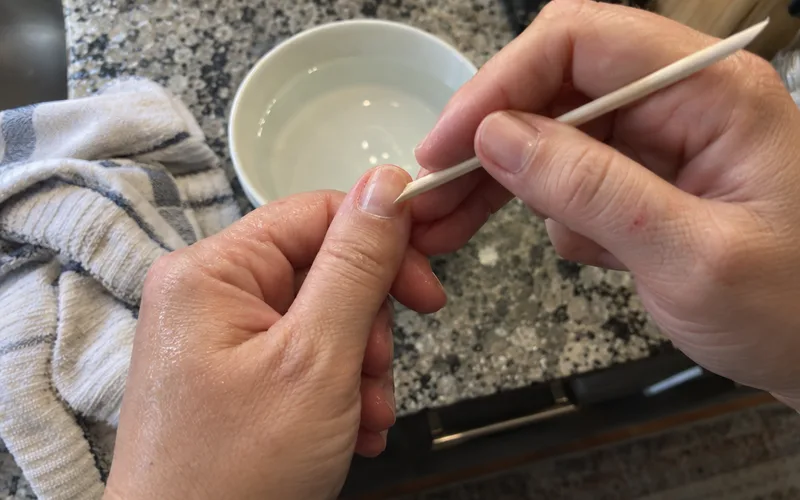
Use a wooden orange stick, not a metal scraper, and press lightly at an angle. If it stings or turns red, stop for the week.
What about the ragged bits?
Trim only the loose, dead edge of a hangnail with clean nippers. Leave everything attached to living skin alone.
Then massage a drop of cuticle oil into the skin you just pushed back, so it stays soft until your next session.
Nail Care Routine for Strong Nails That Grow Longer
The best nail care routine for strong, longer nails protects length instead of speeding growth. Wear gloves for wet chores, moisturize after every wash, round the tips slightly and never use your nails as tools.
Each habit comes from the AAD tips, which link water and using nails as tools to splitting, peeling and breaking.
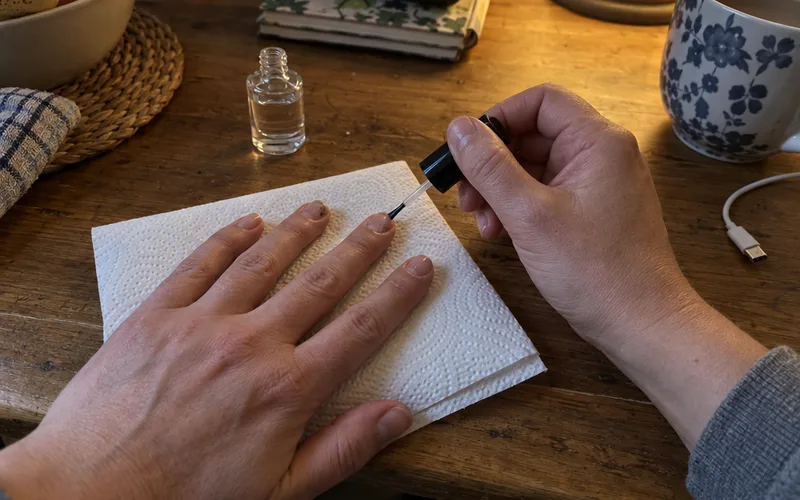
Fewer breaks mean the length you grow actually stays. That’s how to take care of nails naturally: the daily habits, done without exceptions.
Here’s what to add if your nails still bend or snap:
- Keep them a little shorter while they recover.
- Wear a base coat or strengthener as a protective layer.
- File snags the same day they show up.
For deeper fixes, these ways to make nails stronger and thicker go step by step. If you’re choosing between salon options while your nails are weak, compare gel or acrylic for weak nails first.
A Simple Nail Care Routine for Beginners
A simple nail care routine for beginners has 3 parts: moisturize after every wash, trim and file once a week, and push back softened cuticles without cutting them. Add buffing or polish only after those basics feel automatic.
That’s the whole thing.
The easy mistake is buying a big kit and cutting cuticles on day one.
Instead, do the 3 parts for 2 weeks before you add anything.
If you want color afterward, pick a polish made for natural nails and always start with a base coat.
How to Care for Your Nails in Winter
Winter nail care means more moisture and more gloves. Moisturize after every hand wash, rub in cuticle oil at night and wear gloves for dishes, since the AAD says too much water weakens nails.
Keep hand cream in your coat pocket, your car and beside each sink.
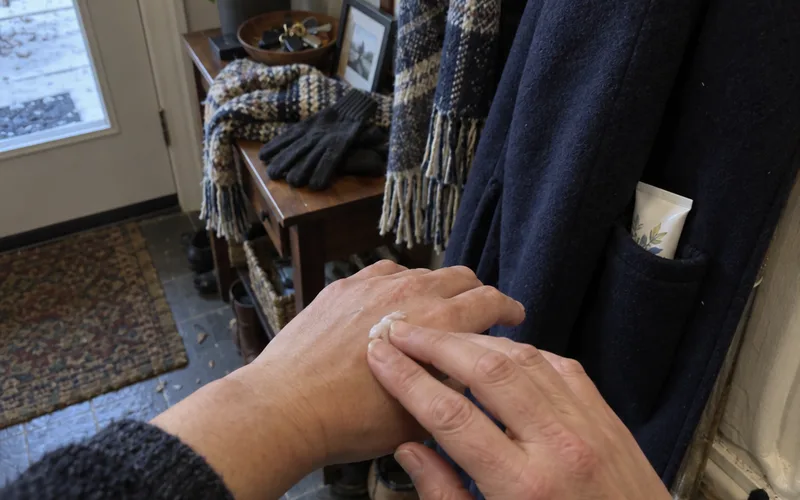
Keep hand soaks short, and dry your hands fully before heading outside.
Winter is also a good time to keep nails a little shorter, so a dry tip has less length to catch and tear.
Don’t Forget Your Toenails
Toenail care follows the same routine with 2 changes: keep toenails short and straight across, and soften thick ones first in warm salt water. AAD dermatologists suggest mixing 1 teaspoon of salt per pint of water and soaking your feet for 5 to 10 minutes.
Short toenails are less likely to get hurt in your shoes, which is why the AAD recommends trimming them regularly.
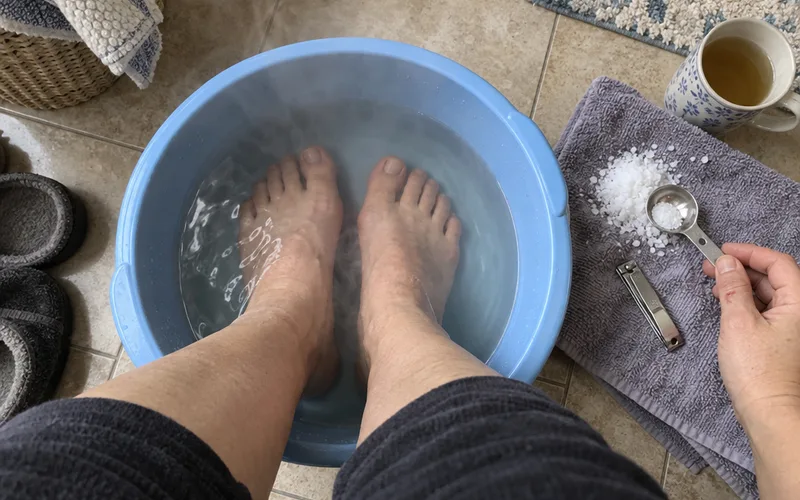
The AAD also suggests flip flops at the pool and in public showers, to cut the risk of a toenail fungus.
AAD dermatologists also advise wearing shoes that fit properly and switching which pair you wear each day.
For a full foot session with the soak, scrub and polish, follow these at-home pedicure steps.
Nail Care Mistakes That Undo Your Routine
The most common nail care mistakes are cutting cuticles, biting or picking, sawing a file back and forth, skipping gloves and using nails as tools. Each one undoes a week of careful work in seconds.
Peeling off polish belongs on that list too, so always take it off with remover.
Here are 3 more to watch:
- Buffing every week when your nails don’t need it.
- Skipping moisturizer after washing, especially in winter.
- Clipping with dull blades instead of sharp ones.
Fix the habit you do most often first.
When to See a Dermatologist About Your Nails
See a dermatologist if a nail changes, swells or hurts, since the American Academy of Dermatology said in February 2025 that these can signal serious nail problems. A nail care routine keeps healthy nails healthy, but it can’t treat a problem.
The AAD says this matters even more if you have diabetes or poor circulation.
Don’t try to dig out an ingrown toenail at home, especially if it’s infected and sore.
A board-certified dermatologist can also answer questions about caring for your nails, even when nothing hurts.
Everything else here is everyday care, and that’s where your routine does its best work.
You’ll find more nail guides, from polish picks to removal, on the Nails hub.
Frequently Asked Questions
Should you push your cuticles back?
You can gently push your cuticles back after they’re softened by a shower or warm water, but don’t cut or remove them. Dermatologists at the American Academy of Dermatology say removing the cuticle can damage the nail, so push gently with an orange stick and stop if it stings.
What kills bacteria under nails?
Keeping nails clean and dry is the best everyday defense against bacteria under nails, because bacteria and fungi thrive in moisture, according to the American Academy of Dermatology. Scrub under your nails with a soft brush when you wash, then dry them fully, including the underside.
What's the healthiest thing to put on your nails?
A moisturizer is the healthiest everyday thing to put on your nails, applied after every hand wash, which is what American Academy of Dermatology dermatologists advise. Cuticle oil and hand cream both do the job, and a base coat adds a protective layer if you wear polish.
How often should you use cuticle oil?
Use cuticle oil once a day as part of your nail care routine, and again after hand washing whenever your cuticles feel dry. Bedtime is easiest, because your hands stay still for hours.
What nail shape is most attractive?
The most attractive nail shape is a matter of taste, but the strongest everyday shape is cut straight across with the tips rounded slightly, which American Academy of Dermatology dermatologists recommend for maximum strength. Filing it with an emery board keeps it free of snags.
Final Thoughts
Healthy nails come from boring habits done every day, not from a cabinet full of products.
If you change one thing this week, dry your hands fully and put on gloves before the next sink full of dishes.
Then block out one evening for the 7-step session and repeat it every week.