
Putting oil on a shiny T-zone sounds backward.
But the Ulta Beauty product listing for one $22.99 Korean cleansing oil (as of November 2026) claims it rinses clean without stripping the skin. That’s the whole trick for combination skin.
A good skin care routine for combination skin cleans and treats the oily parts of your face without punishing the dry parts.
Below are 6 steps in order, a morning and night version, a 3-product starter plan and a clear map of what goes on your T-zone versus your cheeks.
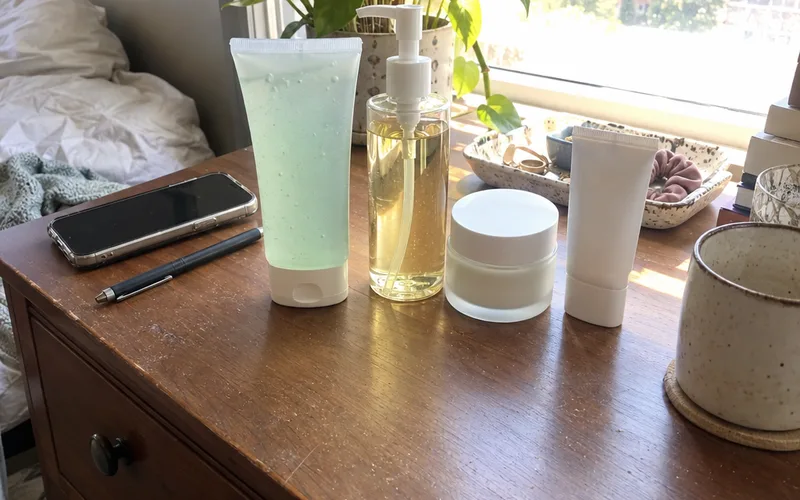
Best for: an oily forehead, nose and chin with normal or dry cheeks. Skip it if your whole face is oily or your whole face is dry, since a one-type routine fits you better.
Cost: 3 basic products to start, and drugstore versions work fine.
First step: Do the bare-face check in the skin type section below before you buy anything new.
Skin Care Routine for Combination Skin, Step by Step
A skin care routine for combination skin has 6 steps: cleanse, tone if you like, apply one serum, moisturize by zone, finish with sunscreen in the morning and exfoliate your T-zone a few nights a week. The goal is less shine on your forehead, nose and chin without tight, flaky cheeks.
Work from the thinnest product to the thickest, which is the usual layering order. Steps 2, 3 and 6 are optional, so a busy morning can be just 3 products.
Step 1: Cleanse Gently, and Double Cleanse at Night
Use one gentle, non-stripping cleanser morning and night. If your face feels squeaky or tight afterward, the cleanser is too harsh for your cheeks.
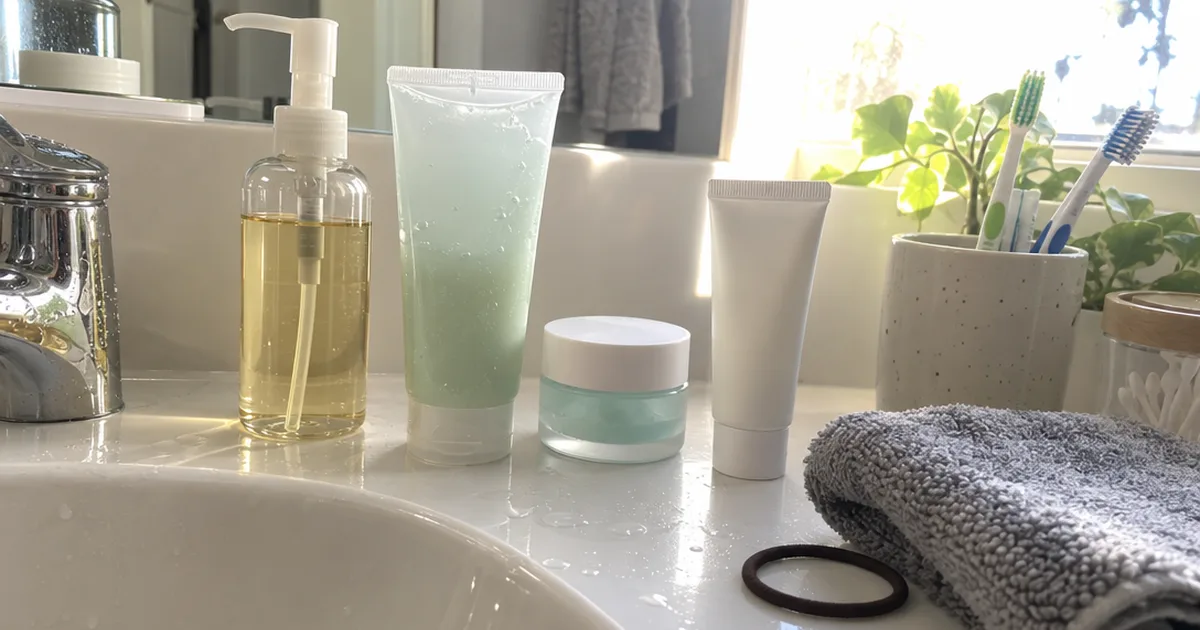
At night, if you wore sunscreen or makeup, start with an oil cleanser and follow with your regular cleanser. That two-part wash is called double cleansing.
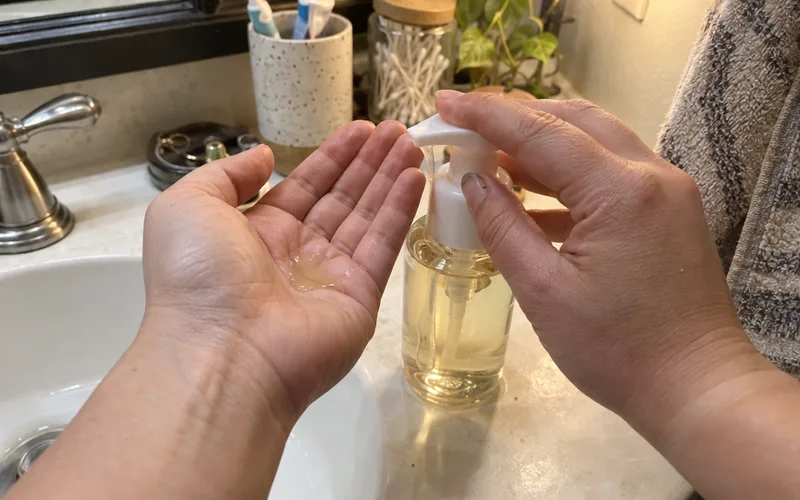
The oil breaks down sunscreen and makeup, so your second cleanser only has to clean your skin.
The same Ulta Beauty listing says the ROUND LAB 1025 Dokdo Cleansing Oil removes sunscreen, makeup and daily impurities in a single cleanse. Here’s how the listing says to use it:
- Put 2 to 3 pumps into dry hands and massage over a dry face.
- Add a little water and keep massaging until the oil turns milky.
- Rinse thoroughly with lukewarm water.
Start on a dry face, and add water only at the end, when it turns the oil milky so it rinses away. For the second wash, a gel suits a very oily T-zone, while a cream formula suits tight cheeks.
As of November 3, 2026, that ROUND LAB bottle holds 6.76 oz and is rated 4.7 from 140 reviews on Ulta. You’ll find more Korean oil cleansers and gentle cleansers for combination skin if you want options.
Step 2: Use an Alcohol-Free Toner (If You Like One)
Toner is optional for combination skin. If you use one, pick an alcohol-free, hydrating formula and press it in with your palms right after cleansing.
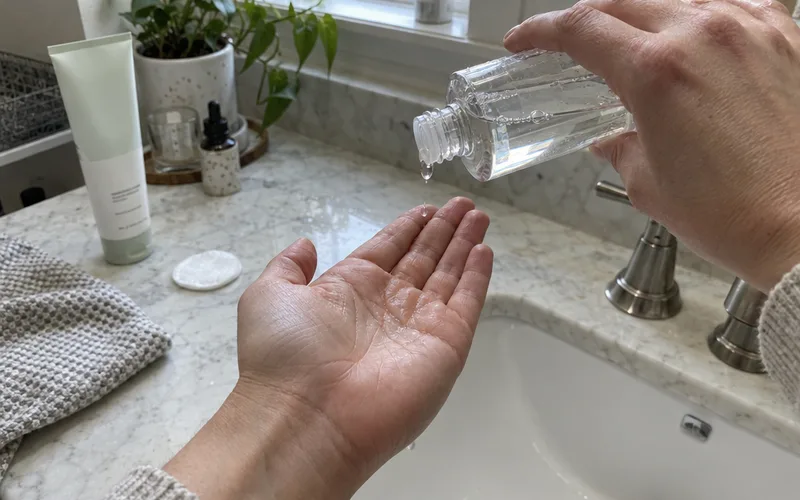
Skip strong astringent toners that promise to “dry up” oil. They can leave dry cheeks even drier, and they don’t stop your T-zone from getting shiny later in the day.
These Korean toners include gentle, watery formulas that fit this step.
Step 3: Apply One Targeted Serum
Choose one serum for your main concern instead of layering three. One well-chosen serum is easier on your skin, and it makes it obvious which product is helping.
For shine and the look of large pores, niacinamide serums are a common pick. For dry cheeks, hyaluronic acid is a humectant, which means it pulls water into the skin without an oily feel.
So if your T-zone bothers you most, go with niacinamide. If your cheeks bother you most, go with hyaluronic acid.
Retinol is a night-only serum for later, once your routine is steady. Introduce it on its own, on a night you don’t exfoliate.
Step 4: Moisturize by Zone
Moisturize your whole face, but change how much goes where. Use a lightweight gel or lotion everywhere, then add a second thin layer, or a small dab of richer cream, only on dry cheeks.
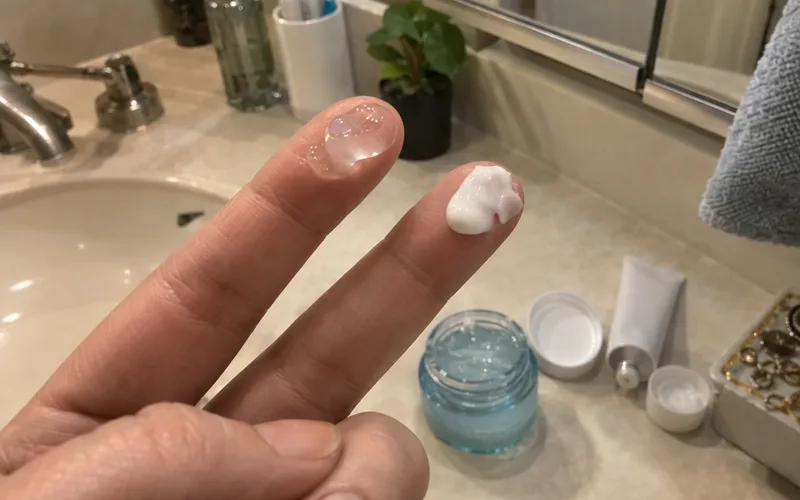
Look for the word non-comedogenic on the label. It means the formula is made not to clog pores, which matters most on your nose and forehead.
Ceramide moisturizers help the dry areas, because ceramides are fats your skin barrier is built from. In fact, the ROUND LAB oil lists hyaluronic acid and ceramide NP among its ingredients, so a cleanser can carry hydrators too.
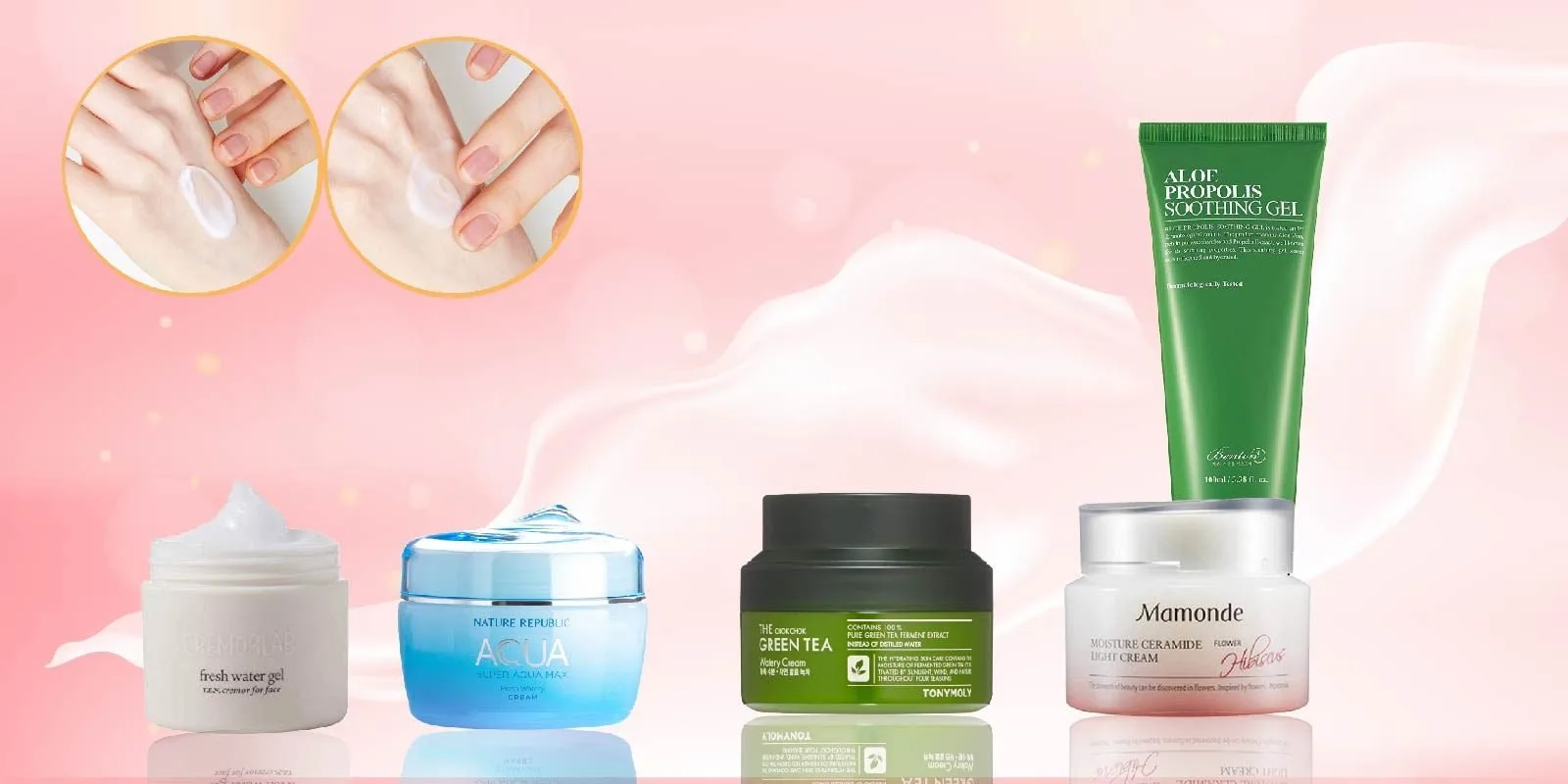
Don’t skip moisturizer on your T-zone, just use less of it there. For specific gel creams, see these moisturizers for combination skin.
Step 5: Finish With Broad-Spectrum Sunscreen
Sunscreen is the last step of every morning routine. Broad-spectrum means it protects against both UVA and UVB rays.
Fluid or gel textures usually feel best on combination skin, since thick creams can look greasy on the T-zone. Apply it over your whole face, cheeks included.
If one formula leaves your nose shiny, try a matte or oil-free version before you give up on sunscreen. You can compare options in this face sunscreen guide.
Step 6: Exfoliate Your T-Zone a Few Nights a Week
Exfoliate combination skin at night with a chemical exfoliant on the T-zone, and I’d start with 1 night a week. Salicylic acid, a BHA, works inside oily pores, which makes it the usual choice for blackheads on the nose and chin.
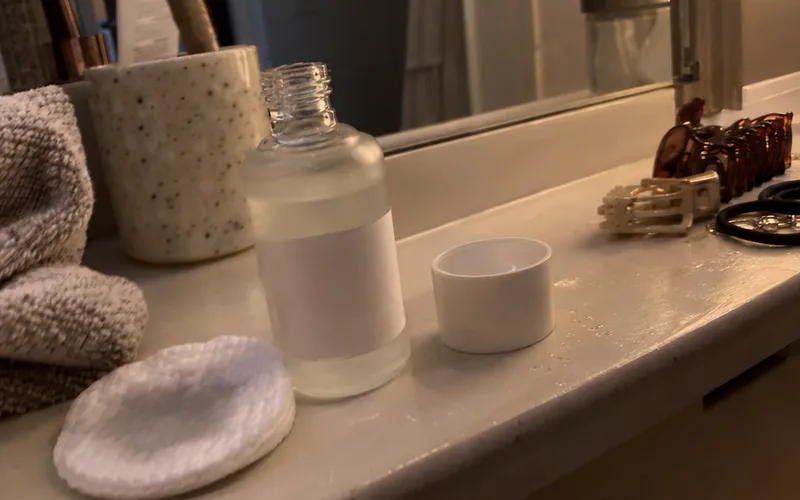
Add a second night only if your cheeks stay calm. Stop and drop back if you notice stinging, redness or peeling.
Skip gritty scrubs. They’re rough on dry cheeks, and a liquid or gel exfoliant is easier to keep to one area.
For strengths, read up on salicylic acid for oily skin, and for gentler acids, browse these Korean exfoliators.
Key Takeaway: Exfoliate the oily areas on purpose, never the whole face by default.
Morning and Night Routine for Combination Skin
A morning routine for combination skin is cleanse, optional toner, serum, light moisturizer and broad-spectrum sunscreen. A night routine adds an oil cleanse first, drops the sunscreen and fits in exfoliation a few nights a week.
The two routines share most products, so you don’t need a separate set for each.
Morning Routine for Combination Skin
Here’s the morning order:
- Gentle gel or cream cleanser.
- Alcohol-free toner (optional).
- One serum, such as niacinamide.
- Lightweight moisturizer, a little extra on dry cheeks.
- Broad-spectrum sunscreen.
If your cheeks feel dry in the morning, a quick rinse with lukewarm water can replace the cleanser. Save the full wash for the T-zone, or for night.
Night Routine for Combination Skin
Here’s the night order:
- Oil cleanser, if you wore sunscreen or makeup.
- Gentle water-based cleanser.
- Exfoliant on the T-zone, only on exfoliation nights.
- One serum, such as hyaluronic acid.
- Moisturizer, with a richer layer on dry cheeks.
Night is where you treat, and morning is where you protect. Keep strong steps, such as exfoliants and retinol, at night only.
How to Tell If You Have Combination Skin
Combination skin shows up as a shiny forehead, nose and chin with larger-looking pores, while the cheeks feel normal, tight or flaky. That oily center is called the T-zone, because it forms a T across your face.
The shine comes from sebum, the natural oil your skin makes, and the T-zone simply makes more of it than your cheeks.
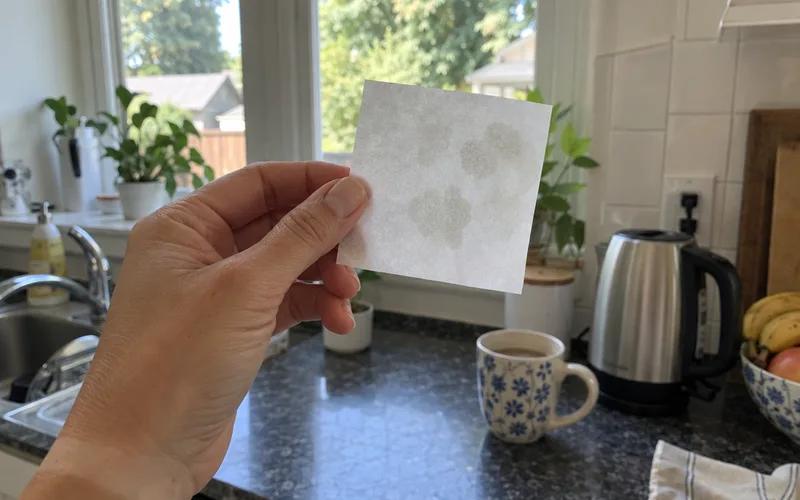
Here’s a quick bare-face check:
- Wash with a gentle cleanser and pat dry.
- Put nothing on, no moisturizer and no makeup.
- After a while, look in natural light and touch each area.
Shine only on your T-zone plus tight or comfortable cheeks points to combination skin. Shine everywhere points to oily skin, and tightness everywhere points to dry skin.
Your pattern can shift with seasons, stress and your cycle, so do the check in more than one season. For a deeper look at the skin type itself, read what combination skin really is.
Best Ingredients for Combination Skin
The best ingredients for combination skin are hydrators for dry cheeks, such as hyaluronic acid and ceramides, plus oil-control and pore-clearing ingredients for the T-zone, such as niacinamide and salicylic acid.
Here’s what each one does:
- Hyaluronic acid: pulls water into the skin with no greasy feel.
- Ceramides: support the skin barrier on dry, flaky spots.
- Niacinamide: a common pick for shine and the look of large pores.
- Salicylic acid: clears oil inside pores, best on the nose and chin.
- Glycerin: a simple, budget-friendly hydrator found in many basics.
You don’t need 5 separate bottles, since many gentle moisturizers already mix several of these.
How to Treat Your T-Zone and Cheeks Differently
Combination skin can use the same cleanser and sunscreen on the whole face, with exfoliants and oil-control serums only on the T-zone and richer moisturizer only on the cheeks.
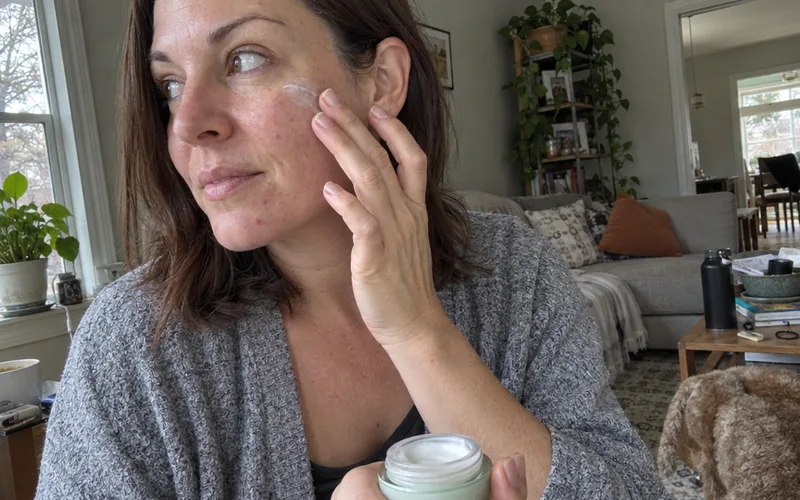
That approach is sometimes called zone treating, and it uses less product on each area.
Here’s the simple map:
- Whole face: cleanser, light moisturizer, sunscreen.
- T-zone only: salicylic acid exfoliant, clay mask, blotting.
- Cheeks only: extra moisturizer layer, richer night cream.
Pro Tip: Apply the T-zone product first and wash your hands before you touch your cheeks. That way, an exfoliant never ends up on the dry areas by accident.
Beginner Skincare Routine for Combination Skin
A beginner skincare routine for combination skin needs only 3 products: a gentle cleanser, a lightweight moisturizer and a broad-spectrum sunscreen. Use all 3 in the morning, and the cleanser and moisturizer at night.
Stick with those 3 for a few weeks before adding anything. That way, if your skin reacts, you know exactly which product caused it.
Then add one step at a time, in this order: an oil cleanser for nights after sunscreen, a serum for your main concern and finally a T-zone exfoliant.
Common Mistakes With Combination Skin
The most common mistakes with combination skin are using harsh cleansers or alcohol-heavy toners, scrubbing too often and putting one heavy cream over the whole face. Each one fixes one area while it hurts the other.
Very hot water is another one, so rinse with lukewarm water, as the ROUND LAB directions also say.
Piling on products is a mistake too. A long Korean skincare routine can work, but combination skin usually does better with fewer, better-placed steps.
So if your skin suddenly feels worse, strip the routine back to the 3 beginner basics and rebuild slowly.
Adjusting Your Routine as Your Skin Changes
Your combination skin routine should shift with the seasons. In winter, add a richer cream to your cheeks, and in summer, switch to a lighter gel and keep blotting papers handy for your T-zone.
If your skin leans mostly oily for months, borrow ideas from a routine for oily skin. If it leans mostly dry, a routine for dry skin fits better.
Note: If a breakout, rash or irritation doesn’t settle after you simplify your routine, see a dermatologist instead of adding more products.
For the basics that apply to every skin type, the main skincare routine page walks through product order step by step.
Frequently Asked Questions
What does it mean to have combination skin?
Combination skin means your face has two skin types at once, usually an oily forehead, nose and chin (the T-zone) with normal or dry cheeks. It’s a skin type, not a skin problem, so the fix is a routine that treats each area for what it needs.
What is not ideal for combination skin?
Harsh, stripping cleansers, alcohol-heavy toners, gritty scrubs and one thick cream spread over your whole face are the least ideal choices for combination skin. Each one either dries out your cheeks or weighs down your T-zone.
Does combination skin need moisturizer?
Yes, combination skin needs moisturizer on every part of the face, including the oily T-zone. Use a lightweight gel or lotion everywhere and add a little more, or a richer cream, only on the dry spots.
Is combination skin the same as oily skin?
No, combination skin is oily only in some areas, usually the T-zone, while oily skin is shiny across the whole face. So a combination routine keeps oil-control products on the T-zone only.
What is 7 step Korean skin care?
7 step Korean skin care is a layered K-beauty routine built around cleansing, toning and hydrating steps. Combination skin doesn’t need all 7 layers, so start with the core steps and add one product at a time.
Final Thoughts
The biggest change for combination skin is treating your T-zone and cheeks as two areas, not one.
Tonight, wash your face, put your moisturizer mostly on your cheeks and only a thin layer on your T-zone, then see how both areas feel in the morning.