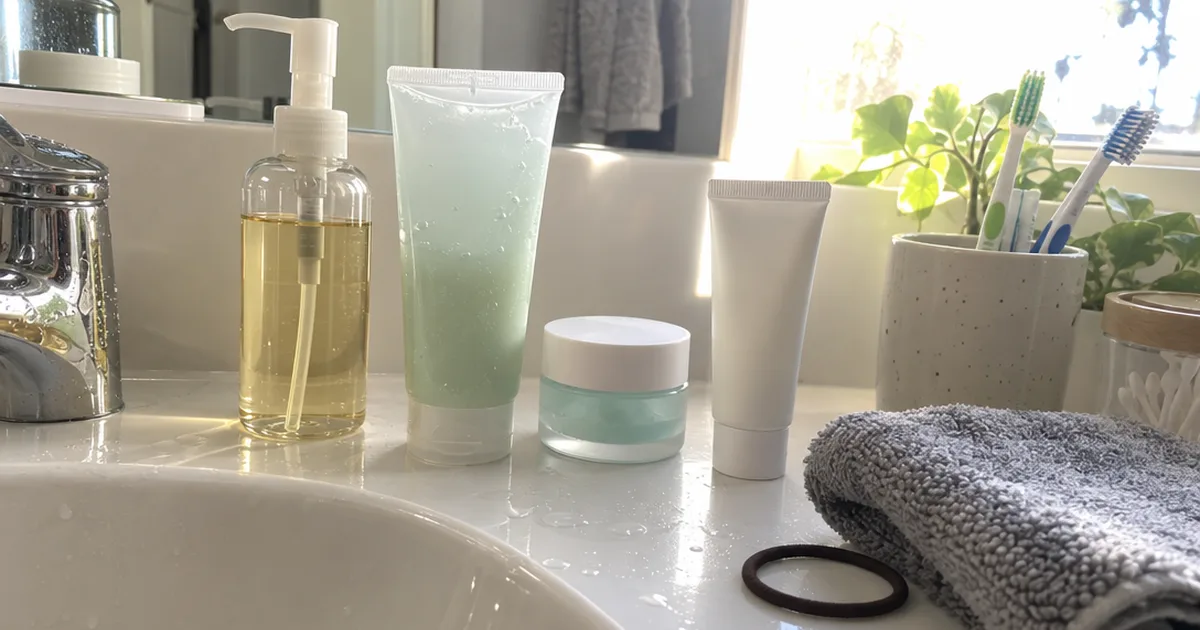

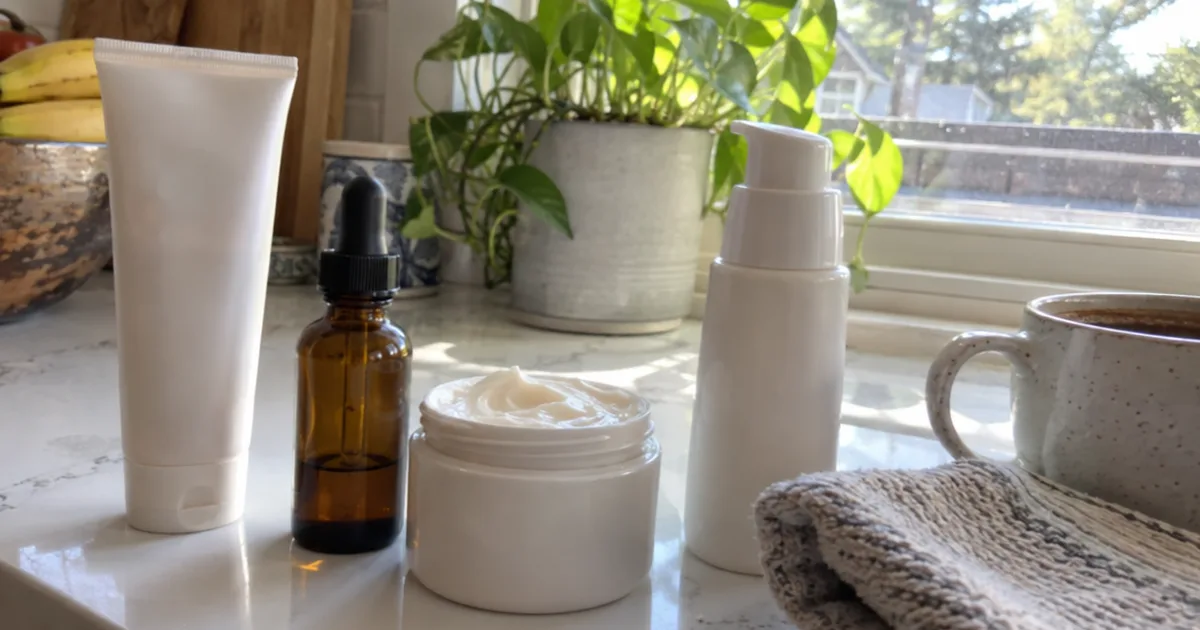
Most anti-aging products need 2 to 6 months before you see a real change.
That timeline comes from board-certified dermatologist Supriya Rastogi, MD, in a Consumer Reports guide to anti-aging skin care published in August 2026. So the anti aging skin care you pick matters a lot, because you’ll be living with it for months.
Here’s how to spend those months well.
It comes down to 6 ingredients with real backing, a short routine for morning and night, and a few changes as your skin gets older.
What Anti-Aging Skin Care Can and Can’t Do
Anti-aging skin care can soften fine lines, even out dark spots and keep skin hydrated, but no cream stops aging or erases deep wrinkles. The realistic goal is skin that looks smoother and brighter, plus less new sun damage from here on.
Two things change in your skin over time.
First, collagen, the protein that keeps skin firm, slowly declines as the years go by.
Second, your skin barrier gets weaker, so skin turns drier and more easily irritated.
That’s why a good anti-aging routine does 2 jobs: it protects what you have and slowly rebuilds what’s fading.

Which signs can you actually change?
Retinoids are the best-studied option for fine lines, rough texture and uneven tone, and a review in the journal Clinical Interventions in Aging concluded they show promise for treating aging skin.
Hydrating ingredients ease the dry look that makes lines stand out. Deeper wrinkles, sagging and the changes that come from your genes are much harder to change with any cream, so keep your hopes modest there.
Everything in this guide fits one of those 2 jobs. Sunscreen protects, retinol rebuilds, and moisturizers with ceramides keep the barrier strong while the slower ingredients do their work.
For the bigger picture on cleansers, skin types and basic steps, start with the main skin care guide on this site.
Why Sunscreen Is the Most Important Anti-Aging Product
Sunscreen is the most important anti-aging product because UV exposure is the leading cause of premature skin aging, as Consumer Reports reported in August 2026. A broad-spectrum SPF of 30 or higher, used every single morning, prevents the damage every other product is trying to repair.
In fact, Dr. Rastogi calls daily sunscreen the best anti-aging habit you can start.
Here’s the part people skip: it goes on even when it’s gray outside.
The same guide says sunscreen should be the final step of your morning routine, even on cloudy days.

And if you use retinol, sunscreen stops being optional.
Retinoids can irritate skin and make it more likely to burn. So the night product that smooths your lines needs a morning product that protects them.
Sunscreen protects your skin’s health too: the American Academy of Dermatology recommends it to help prevent skin cancer.
What should you look for?
- Broad-spectrum on the label, which means it blocks both UVA and UVB rays
- SPF 30 or higher
- A texture you’ll actually wear every day, whether that’s a lotion, gel or tinted formula
If a white cast or greasy feel is why you skip it, a tinted formula can fix both. Compare options in the face sunscreen guide, or go straight to tinted mineral sunscreens for mature skin if you’d like light coverage too.
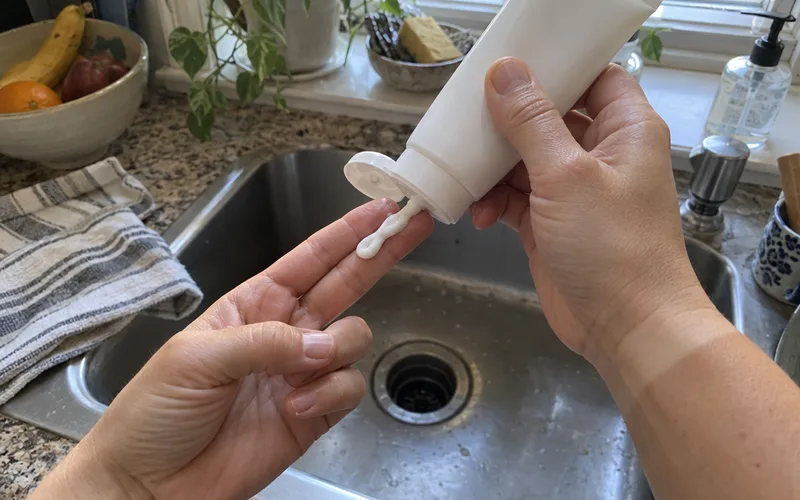
Key Takeaway: If you only buy one anti-aging product this year, make it a sunscreen you like enough to wear daily.
The 6 Anti-Aging Ingredients With Real Evidence
The 6 anti-aging ingredients with the best evidence are retinoids, vitamin C, hyaluronic acid, ceramides, peptides and niacinamide. Retinoids have the strongest proof for wrinkles, while the others brighten, hydrate or protect the skin barrier.
Walk down any skin care aisle and you’ll see hundreds of creams with bigger promises.
But dermatologists say some ingredients have far stronger science behind them than others. These 6 are the ones worth your money:
- Retinoids speed up cell turnover and build collagen
- Vitamin C is an antioxidant that protects and brightens
- Hyaluronic acid pulls water into skin so fine lines look plumper
- Ceramides repair the skin barrier
- Peptides may support collagen and elastin
- Niacinamide evens skin tone and calms redness
You don’t need all 6 at once. Most people do well with sunscreen, one retinoid and a good moisturizer, then add one more if they have a specific goal.
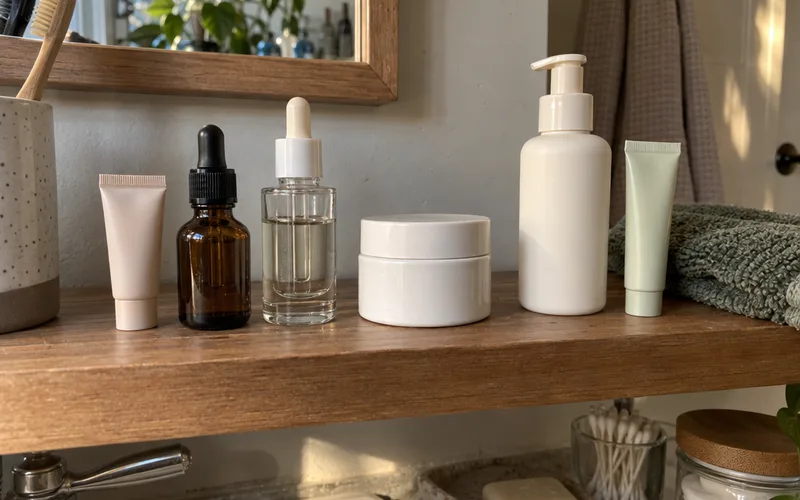
If firmness is your main worry, the skin firming ingredients breakdown goes deeper on that one goal.
Retinol and Retinoids
Retinol is the over-the-counter form of vitamin A, and it’s one of the most widely used retinoids for fine lines, uneven texture and discoloration. Retinoids work by speeding up skin cell turnover and stimulating collagen production.
That’s why retinoids are often called the superheroes of anti-aging. Prescription tretinoin is among the strongest and best-studied, but it’s a doctor’s call and outside this guide.
The catch is irritation.
Using too much, or using it too often, can leave skin red, flaky and painfully irritated. In severe cases it can even damage the skin barrier.
Dr. Rastogi suggests choosing retinol or retinal (short for retinaldehyde), the 2 forms she says have the strongest evidence for fine lines, texture and uneven tone. She also likes formulas that add ceramides, glycerin or allantoin, which help cut irritation.
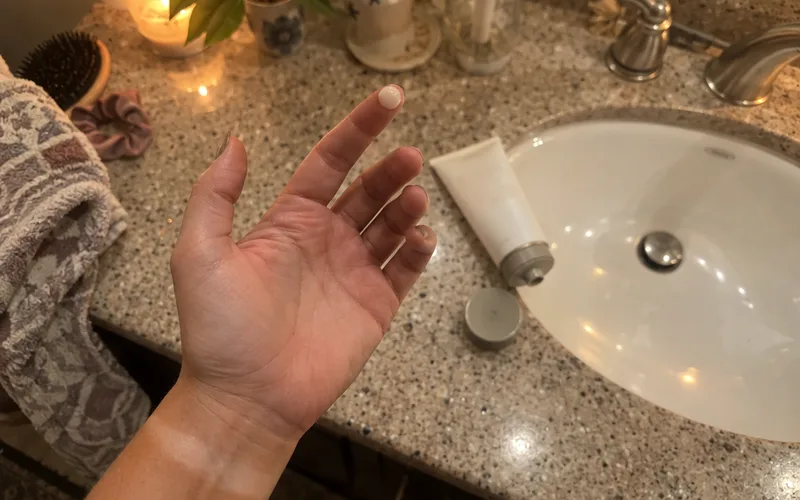
Packaging matters too. Cosmetic chemist Ginger King points out that straight retinol is unstable, so look for words like “encapsulated” and an opaque, airtight bottle or tube.
Note: If you’re pregnant, trying to get pregnant or breastfeeding, talk to your doctor before starting any retinoid.
The full how-to, including purging and what not to mix it with, is in the retinol for beginners guide.
What Strength of Retinol Should a Beginner Use?
A beginner should start with the lowest retinol strength they can find, then build up slowly. Over-the-counter retinol ranges from about 0.01% to 2%, and Consumer Reports says beginners typically start low and increase as their skin builds tolerance.
How you use it matters as much as the percentage.
Dermatologist Alexandra Bowles, DO, recommends a pea-sized amount just 1 to 2 nights a week. Then you add nights slowly as your skin adjusts.
Here’s how she puts it: “Consistency is far more important than using the strongest product available.”
So a gentle formula you use for 6 months beats a strong one you quit after 2 weeks.
If you want a starter pick, see the best retinol for beginners. Once your skin is used to it, the best retinol for face list covers stronger options.
Vitamin C
Vitamin C is an antioxidant that protects skin from free radicals, the unstable molecules made by UV rays and pollution that damage collagen. It also helps your skin make collagen and can help fade dark spots for a more even complexion over time.
Dr. Rastogi says the most researched form is L-ascorbic acid at 10% to 20%.
It should come in a dark, airtight bottle, because vitamin C breaks down quickly in air and light.
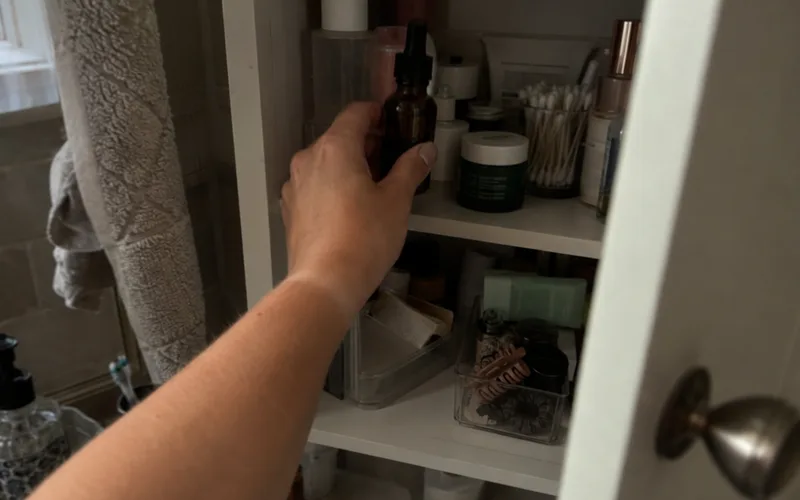
Got sensitive skin?
Dr. Rastogi suggests gentler forms called tetrahexyldecyl ascorbate (THD) or sodium ascorbyl phosphate (SAP). They tend to be more stable on the shelf and less irritating.
One thing vitamin C can’t do is replace sunscreen. It may help protect against UV damage, but it’s an extra layer, not a substitute.
For budget-friendly serums, the Korean vitamin C serum roundup is a good place to compare.
Hyaluronic Acid
Hyaluronic acid helps with wrinkles only in the short term: it’s a humectant that pulls water into the skin so fine lines from dryness look smaller. Unlike retinol, it isn’t a collagen builder.
Think of it as a drink of water for your face.
It works fast and it feels great, but the plumping fades if you stop.
The way you apply it changes how well it works. Dr. Bowles recommends putting hyaluronic acid on damp skin, then following right away with moisturizer to lock that water in.
Dr. Rastogi adds that it works best next to moisture-sealing ingredients like ceramides, glycerin, squalane or dimethicone.
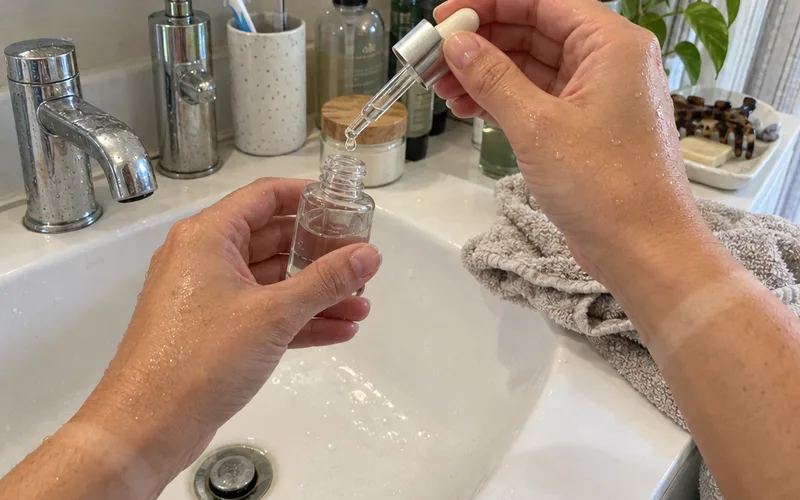
In other words, a hyaluronic serum with no moisturizer on top is only doing half the job.
Ceramides
Ceramides are waxy fats that make up about half of the lipids in your skin’s outer layer, and they hold your skin barrier together. As ceramide levels drop with age and sun exposure, skin gets drier and more easily irritated.
That’s why ceramides earn a spot in an anti-aging routine even though they don’t fight wrinkles directly.
A strong barrier is what lets you use retinol without your face falling apart.
Dr. Bowles suggests skipping products that list a single ceramide. Instead, look for several ceramides mixed with cholesterol and fatty acids, which copy your skin’s natural barrier more closely.
On a label, those fatty acids often show up as linoleic acid, palmitic acid or stearic acid.
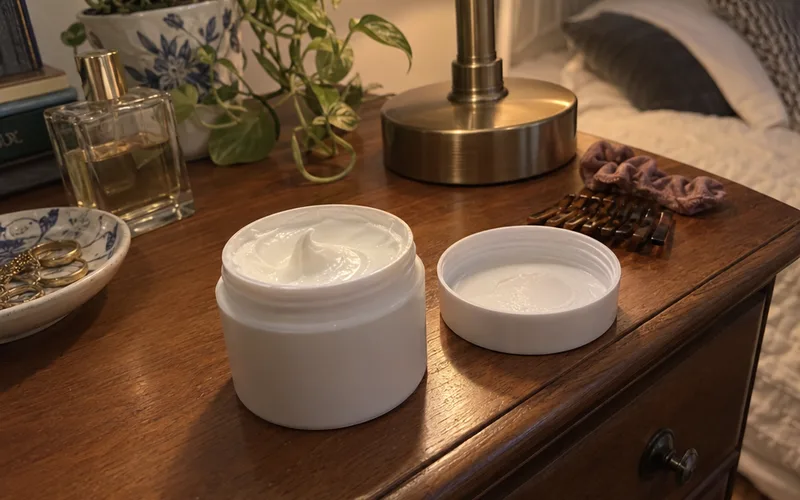
You’ll find ceramides mostly in moisturizers, so the face moisturizer guide is the easiest place to shop for them.
Peptides
Peptides may help with wrinkles, but the proof is still thin. They’re short chains of amino acids that some research suggests support collagen and elastin, and experts say more high-quality, long-term studies are needed before calling them proven.
They’re also often one of the pricier ingredients in a formula.
So should you buy them?
Only as a helper. Dr. Rastogi says peptides work best alongside a retinol or retinoid, not as a stand-alone fix.
A good peptide product also pairs them with hydrating ingredients like glycerin, hyaluronic acid or ceramides.
My advice: put your money into sunscreen and retinol first, then add a peptide cream if your budget has room.
Niacinamide
Niacinamide is good for aging skin as a gentle helper: it’s a form of vitamin B3 that brightens uneven tone, calms redness and strengthens the skin barrier. It doesn’t build collagen the way a retinoid does, but most skin tolerates it well.
That makes it one of the easiest actives to add.
It can also slowly fade dark spots, because it blocks pigment from spreading to nearby skin cells.
What strength should you look for?
Cosmetic chemist Ginger King recommends about 5%: “Five percent is ideal as beyond that, people may experience irritation.” Other testing has found it well tolerated at up to 10%.
So a 5% serum is a safe middle ground, especially if your skin is sensitive. Look for one that also has ceramides, hyaluronic acid or glycerin to back up your skin barrier.
A Simple Anti-Aging Skin Care Routine
The most effective anti-aging skin care routine is short: cleanser, vitamin C, moisturizer and sunscreen in the morning, then cleanser, a retinoid and moisturizer at night. Daily SPF 30 and a slowly added retinol do most of the work.
Vitamin C goes in the morning and retinol at night, and that one split shapes the whole routine. You’ll see why it works in the next section.
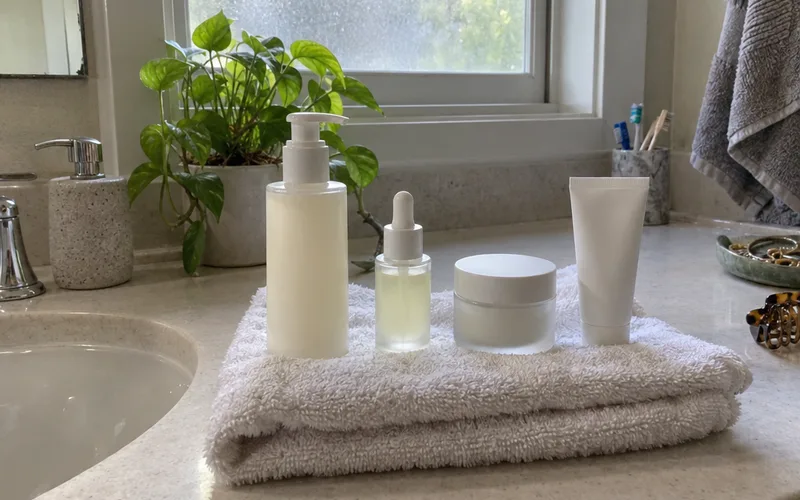
Here’s what that looks like.
Morning Routine
- Gentle cleanser. Use one that doesn’t leave your skin tight or squeaky.
- Vitamin C serum. A few drops on dry skin, then let it sink in.
- Moisturizer. Pick one with ceramides or glycerin, and apply hyaluronic acid first on damp skin if you use it.
- Sunscreen, SPF 30 or higher. This is always the last step.
Night Routine
- Cleanser. Take off makeup and sunscreen first, with an oil cleanser if you wear a lot of makeup.
- Retinol. A pea-sized amount, only on your retinol nights.
- Moisturizer. A richer cream works well here, and it cushions the retinol.
On nights you skip retinol, just cleanse and moisturize. A toner is optional, since none of the anti-aging actives depend on it.
Simple.
That’s the anti-aging version of a basic routine. If you’re starting from zero, the skincare routine guide walks you through the basic steps first.
Do You Need a Serum, a Cream or an Eye Cream?
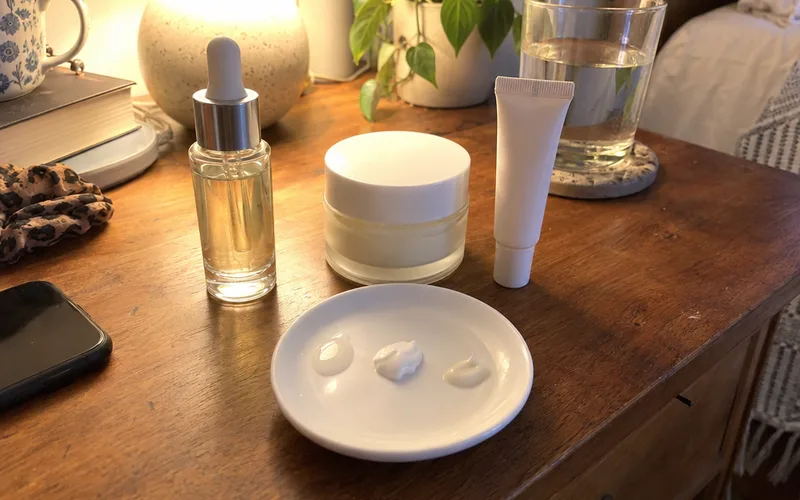
You don’t need a separate serum, night cream and eye cream for anti-aging skin care, because the active ingredient matters far more than the product type. A retinol serum and a retinol cream do the same job, so pick the texture you’ll use every night.
Here’s a simple way to choose.
Serums feel thin and light, and they layer easily under moisturizer. Creams feel richer, which makes them the easier pick if your skin is dry or gets irritated by retinol.
What about eye creams?
If your regular retinol stings near your eyes, a gentler eye formula is one easy fix. But an eye cream isn’t a must if your face products already sit comfortably there.
Before you buy another jar, check whether its main active is something you already use.
If it is, you’re paying twice for the same ingredient. If you want to compare formats, browse the face serum picks and the eye cream guide.
Can You Use Vitamin C and Retinol in the Same Routine?
Yes, you can use vitamin C and retinol in the same routine, as long as you split them by time of day. Dermatologists typically recommend vitamin C in the morning and retinoids at night, as Consumer Reports reported in August 2026.
That split does 2 things.
Vitamin C sits under your sunscreen in the daytime, when UV rays and pollution create free radicals. And retinol works overnight, away from the light that breaks it down.
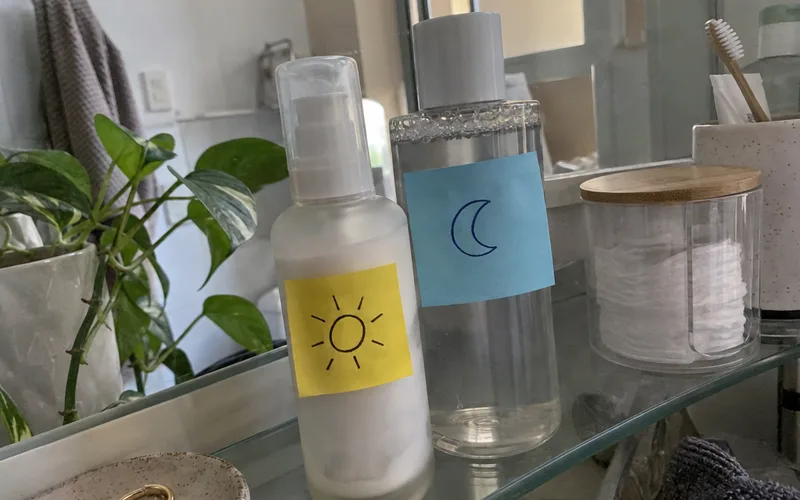
It also keeps irritation down, since you’re not stacking 2 strong actives in one layer.
If your skin still gets red or flaky, cut back one product at a time. That way you’ll know which one is the problem.
How to Add New Products Without Irritating Your Skin
To add anti-aging products without irritation, start one active ingredient at a time and wait about 1 to 2 weeks before adding the next, as Consumer Reports advises. That way, if your skin reacts, you’ll know exactly which product caused it.
It’s tempting to buy a full routine at once.
That’s a mistake.
Say you start retinol, vitamin C and a peptide cream in the same week, and your cheeks turn red. Now you have to stop all 3 and guess.
Products that exfoliate count as actives too, so give glycolic acid, lactic acid and salicylic acid the same one-at-a-time treatment.

Here’s a slower plan that works:
- Week 1: Sunscreen every morning and a gentle moisturizer.
- Weeks 2 to 3: Add retinol 1 to 2 nights a week.
- Weeks 4 to 5: If your skin is calm, add vitamin C in the morning.
- After that: Add more retinol nights slowly, and only then try a third active if you want one.
Watch for redness, stinging, flaking or a tight, hot feeling.
If you see any of those, go back a step and give your skin a week before trying again. A product that stings every time you use it is not “working harder”; it’s hurting your barrier.
At What Age Should You Start Anti-Aging Skin Care?
You can start anti-aging skin care at any age with sunscreen, and many people add active ingredients like retinoids or vitamin C in their mid-20s to early 30s. Dermatologist Supriya Rastogi says that’s when collagen production naturally starts to decline.
Sunscreen has no starting age.
Dr. Rastogi’s advice is to begin daily sunscreen “as early as possible.”
Actives are different. In your 20s, a retinol or vitamin C is prevention, not repair, so a low strength used a few nights a week is plenty.
And if you’re starting at 45, 55 or 65?
That’s fine. You’ll follow the same slow plan, just with a little more attention to moisture.
Curious when the biggest changes show up? The guide to when your face changes most covers the age-by-age shifts.
How to Change Your Skin Care Routine in Your 40s, 50s and Beyond
In your 40s and 50s, keep sunscreen and retinol and put more effort into moisture and the skin barrier, because ceramides drop with age and skin gets drier. Richer creams, gentler cleansers and slower retinol increases usually help most.
The core doesn’t change. Sunscreen still comes first, and a retinoid is still the main active.
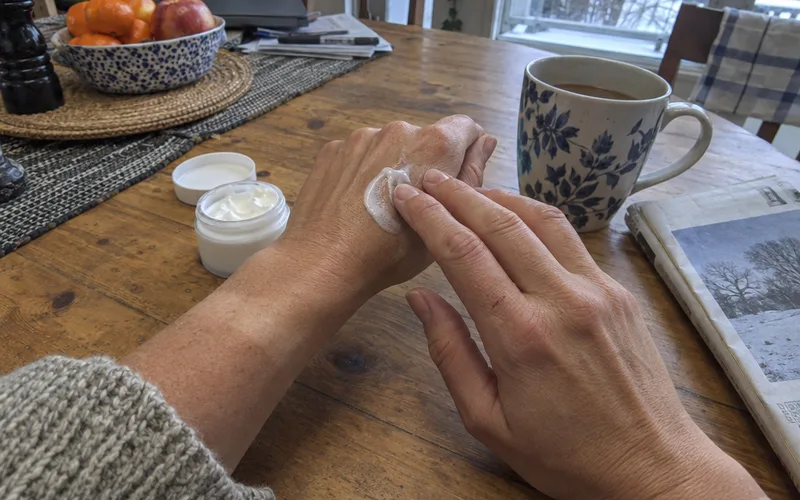
What changes is how much support your skin needs around them:
- Switch to a richer moisturizer with several ceramides, cholesterol and fatty acids
- Pick a gentle, non-stripping cleanser if your face feels tight after washing
- Go slower with retinol, since drier skin can get irritated faster
- Keep vitamin C if your main worry is dark spots
If your skin feels tighter than it used to, start your shopping with moisturizers for aging skin over 50.
For full routines by decade, see the routine for women over 40, the 40s routine on a budget and the routine for your 60s and 70s.
How Long Does Anti-Aging Skin Care Take to Work?
Anti-aging skin care takes anywhere from a few days to 6 months to work, depending on the ingredient. Dermatologist Supriya Rastogi told Consumer Reports in August 2026 that hydrating products can show results within days, while retinoids, vitamin C and wrinkle or dark-spot treatments often need 2 to 6 months.
So if your skin looks plumper after a week, that’s the moisture.
The deeper changes come much later.
Here’s a realistic timeline for each type of product:
- Moisturizers and hyaluronic acid: within days
- Retinol: often 2 to 6 months
- Vitamin C for dark spots: often 2 to 6 months
- Sunscreen: starts protecting from day 1, but the payoff shows over years
That’s why it’s a bad idea to judge a retinol after 3 weeks.
Pro Tip: Take a photo of your face in the same window light on day 1, then again at 3 months. Changes this slow are hard to see in the mirror every morning.
Is Expensive Anti-Aging Skin Care Better Than Drugstore Products?
No, expensive anti-aging skin care isn’t automatically better than drugstore products. Dermatologist Supriya Rastogi said in August 2026 that formulation matters most and price isn’t always an indicator of quality.
That’s great news if you’re on a budget.
A well-made drugstore retinol in airtight packaging can beat a pricey jar that’s poorly formulated. Drugstore brands such as CeraVe, Neutrogena and L’Oréal all sell retinol and ceramide products.
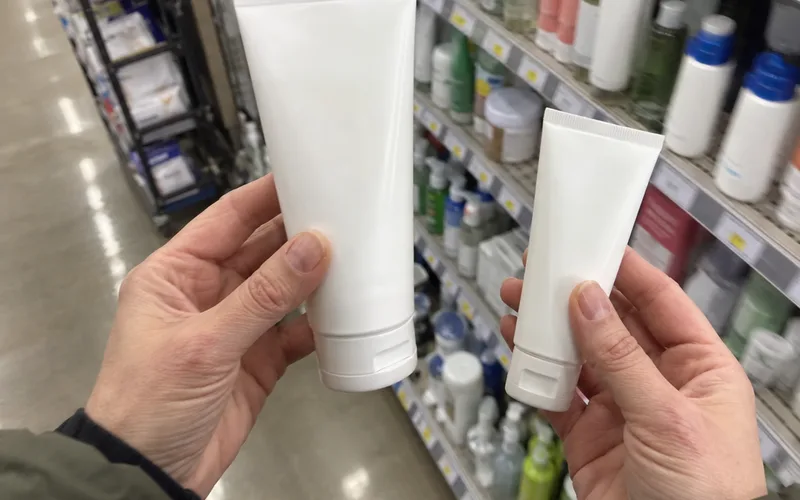
Ginger King adds a second point: a higher percentage isn’t always better. Beauty products can’t sink very deep into skin, so sometimes the extra percentage is just a waste.
Here’s where I’d spend and where I’d save:
- Spend a little more on: a sunscreen you love wearing, and a retinol in opaque, airtight packaging
- Save on: cleanser and a basic ceramide moisturizer
- Skip until later: peptide creams, since they’re often pricey and their proof is still thin
Before you buy, do the math on size, not just the sticker price. A cheaper tube that’s half the size isn’t a deal.
For budget picks, the Ordinary products for aging skin list is a good start. You can also compare dermatologist recommended products or the Medicube line for aging skin.
How to Read an Anti-Aging Product Label
To read an anti-aging label, check 3 things: the active ingredient by name, what it’s paired with and how it’s packaged. Dermatologists Supriya Rastogi and Alexandra Bowles pair each active with barrier-friendly ingredients and favor opaque, airtight packaging for unstable ones.
Here’s a cheat sheet for each active:
- Retinol: retinol or retinal, plus ceramides, glycerin or allantoin, in an opaque, airtight container
- Vitamin C: L-ascorbic acid, THD or SAP, in a dark, airtight bottle
- Hyaluronic acid: listed as hyaluronic acid or sodium hyaluronate, next to ceramides, glycerin or squalane
- Ceramides: several ceramides with cholesterol and fatty acids
- Niacinamide: among the first several ingredients
There’s a catch with that last one.
Keep in mind that an ingredient’s spot on the list can’t tell you its exact percentage. So if a product doesn’t print the strength, treat a high spot on the list as a good sign, not a promise.
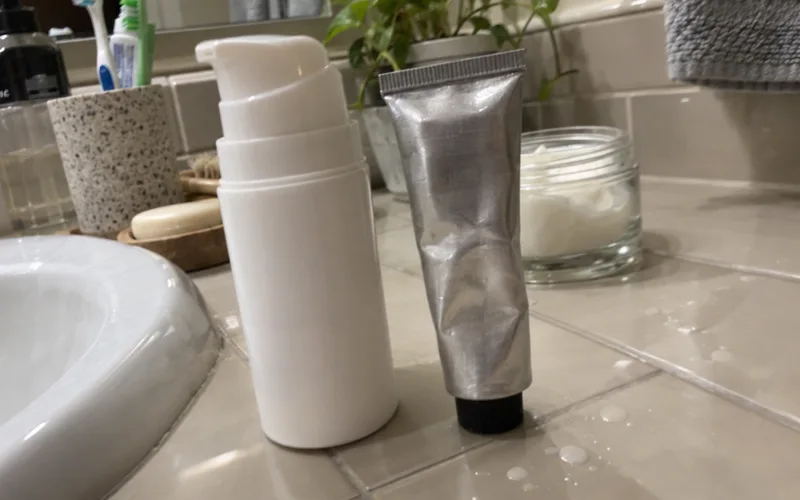
Jars and clear bottles are a red flag for retinol and vitamin C. Both break down in light and air, so the last half of the jar may not do much.
Home Habits That Help Your Skin Look Younger
The home habits that do the most for younger-looking skin are wearing sunscreen every day, using a retinoid consistently and keeping skin moisturized. None of them work overnight, but together they slow new damage and slowly smooth what’s already there.
Notice what’s not on that list: a 10-step routine.
Most of the visible difference comes from doing the same 3 or 4 steps for months.
A few small habits help those steps work:
- Put sunscreen on your neck and the backs of your hands, not just your face
- Give each product the full 2 to 6 months before you swap it out
- Keep your retinol and vitamin C closed tight and out of the sun
- Be gentle when you wash, with no scrubbing or rough towels
For kitchen-cupboard ideas and other simple tricks, see home remedies for a younger-looking face.
Where to Start This Week
The best anti-aging step is still the cheapest one: sunscreen, every morning.
This week, buy an SPF 30 you like, and wear it daily. Then pick one active, retinol for most people, and give it a full 3 months before you judge it.
Frequently Asked Questions
What makes you look 10 years younger?
No cream takes 10 years off your face, but daily sunscreen, a retinoid at night and a good moisturizer come closest. UV exposure is the leading cause of premature skin aging, so SPF 30 or higher every morning prevents new damage while retinol slowly smooths fine lines over a few months.
What are the best anti-aging products?
The best anti-aging products are a broad-spectrum sunscreen with SPF 30 or higher, a retinol for night, a vitamin C serum for morning and a moisturizer with ceramides. Start with the sunscreen, then add one active at a time, waiting 1 to 2 weeks between each new product.
Should you put anti-aging products on damp or dry skin?
Hyaluronic acid works best on damp skin, followed right away by moisturizer to hold the water in. Dermatologist Alexandra Bowles recommends that order, while retinol goes on clean skin at night in a pea-sized amount.
Do you need sunscreen on cloudy days?
Yes, you need sunscreen on cloudy days too. A broad-spectrum SPF of 30 or higher should be the last step of every morning routine, cloudy or not, and that matters even more if you use retinol, which makes skin more likely to burn.
Is niacinamide or retinol better for wrinkles?
Retinol is better for wrinkles, because it stimulates collagen and niacinamide does not. Niacinamide is the gentler helper: it evens skin tone, calms redness and supports the skin barrier, so many people use both, niacinamide in the morning and retinol at night.
Can vitamin C replace sunscreen?
No, vitamin C can’t replace sunscreen. Topical vitamin C may help protect skin against UV damage and improve sun-damaged skin, but Consumer Reports says it shouldn’t be used as a substitute, so wear it under a broad-spectrum SPF 30 or higher every morning.
How long should you try an anti-aging product before giving up?
Give an anti-aging product at least 2 to 6 months before you judge it, unless it irritates your skin. Dermatologist Supriya Rastogi says retinoids, vitamin C and wrinkle or dark-spot treatments often need that long, while moisturizers can show a difference within days.
Is retinal better than retinol?
Retinal and retinol are about equal picks for anti-aging, since dermatologist Supriya Rastogi names both as the forms with the strongest evidence for fine lines, texture and uneven tone. Cosmetic chemist Ginger King calls retinal another good option because straight retinol breaks down easily, so choose whichever comes in opaque, airtight packaging at a low strength.
How much retinol should you use at a time?
A pea-sized amount of retinol is enough for your whole face. Dermatologist Alexandra Bowles suggests using it just 1 to 2 nights a week at first, then adding nights slowly as your skin adjusts.