
Over-the-counter retinol comes in strengths from 0.01% to 1%.
That’s a 100-fold spread, per GoodRx Health, and US labels don’t even have to tell you where a product falls.
That’s what makes retinol for beginners so confusing. It’s easy to grab a strong bottle, use it every night and end up red and flaky.
There’s a better way.
Dermatologists use a low-and-slow plan, and every step below comes with the source behind it.
What Retinol Does for Your Skin
Retinol is a form of vitamin A that speeds up how fast your skin replaces its surface cells and boosts collagen, which evens out skin tone and softens fine lines and wrinkles over time.
That’s how the American Academy of Dermatology (AAD) sums up retinoids. Retinol is part of that vitamin A family.
Here’s why that matters.
Your skin sheds and rebuilds itself all the time, but that natural rejuvenation slows down as you age. Retinol nudges it back up, so fresher cells reach the surface sooner.
The AAD lists 3 problems retinoids handle well:
- Mild acne
- Mild pigmentation irregularities, like uneven patches and dark spots
- Mild fine lines and wrinkles
Notice the word “mild” in every line.
Retinol is a slow, steady fix for everyday skin concerns, not a replacement for a dermatologist when a problem is severe.
Here’s how it works, according to GoodRx Health:
- It exfoliates. It unclogs pores and swaps old skin cells for new ones.
- It boosts collagen. That’s what softens fine lines and wrinkles.
- It slows melanin. Less of this pigment means dark spots fade and skin tone evens out over time.
Pores get a boost too. When dead skin cells and oil clog a pore, it looks bigger, and GoodRx Health says retinol can help unclog pores so they look smaller.
That’s why it shows up in so many anti-aging skin care routines, from drugstore night creams to pricey serums.
There’s one catch.
Retinol doesn’t do anything until your skin converts it into its active form, retinoic acid. That extra step is part of why it acts more slowly and more gently than the prescription versions you’ll read about next.
Retinol vs. Retinoids Like Tretinoin
Retinol is one type of retinoid, the family name for vitamin A ingredients used on skin. It is milder than prescription retinoids such as tretinoin, because your skin has to convert it first.
People mix these words up all the time, so here’s the family in plain English.
Retinoids are the whole group. Retinol is the over-the-counter member you’ll find in most skincare aisles.
Tretinoin is the famous prescription one. In fact, the AAD notes it was approved by the FDA as a topical acne treatment back in 1971, and dermatologists soon noticed it smoothed fine lines too.
So why not just start with the strong stuff?
Irritation.
A peer-reviewed review of retinoids for skin aging found that irritation is more of a problem with tretinoin and tazarotene. The same review says retinol and retinaldehyde are much less irritating.
That’s the trade-off in one line: higher potency hits harder, while gentler is easier to stick with.
How big is the gap? GoodRx Health reports that pure retinoic acid, like Retin-A, is about 20 times stronger than retinol, and it’s prescription-only.
Tretinoin isn’t technically a retinol, either. GoodRx Health explains it’s a lab-made molecule designed to be similar to retinol, and both belong to the same vitamin A family.
On drugstore labels, retinol can show up under several names. GoodRx Health lists these forms to look for:
- Retinol
- Retinaldehyde, also called “retinal”
- Retinyl esters, such as retinyl palmitate
- Retinyl propionate
There’s one more retinoid you can buy without a prescription. The AAD notes that adapalene, a treatment for breakouts, comes in both prescription and drugstore forms, and GoodRx Health names the nonprescription version: Differin Gel.
That makes Differin a breakout product first. If your main goal is smoother texture or fewer fine lines, a retinol is the more usual first step.
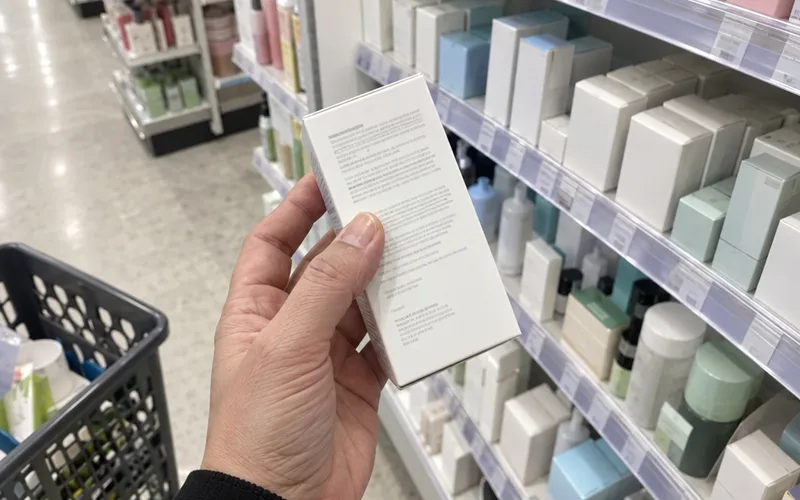
For a first product, a plain drugstore retinol is the sensible place to start. Prescription options are a conversation for a dermatologist, not a drugstore experiment.
Tina Alster, a board-certified dermatologist quoted by the AAD, puts it bluntly: many patients want to start right off with tretinoin, and the ones who rush end up irritating their skin.
What Percentage of Retinol Should a Beginner Start With?
A beginner should start with a low-strength retinol of 0.1% or 0.2%, says GoodRx Health. That matters most if your skin is dry or sensitive, or if you’ve never used a retinoid.
For context, over-the-counter retinol products range from 0.01% to 1%, per GoodRx Health.
So a 0.1% product sits near the bottom of what you’ll find on the shelf. That’s the point.
You can always move up once your skin is happy. Going down after a bad week of redness is harder, because you lose time waiting for your skin to calm down first.
Here’s how I’d think about the range:
- 0.01% to under 0.1%: the very bottom of the shelf
- 0.1% to 0.2%: the beginner range GoodRx Health recommends, especially for dry or sensitive skin
- Above that, up to 1%: a concentration to work toward later, not to start with
Once nightly use at your starting strength feels easy, GoodRx Health says you can slowly increase the concentration as needed.
If you’d rather skip the label reading, our picks for the best retinol for beginners are all low-strength starters.
When the Label Doesn’t List a Percentage
Many US retinol products don’t print a percentage, and that’s allowed.
Anne Chapas is a board-certified dermatologist. She told the AAD there’s no standard rule that over-the-counter products list their retinol percentage on the label or box.
Her advice is simple: use the lowest formulation you can find.

So what do you do when the box is silent?
Look for the clues a brand does give you. If it sells several strengths, pick the one it labels as its lowest or its starter option.
When in doubt, treat an unlabeled retinol as a high concentration and start slowly. Your schedule, not the bottle, is what protects your skin in the first weeks.
How Often Should a Beginner Use Retinol?
A beginner should use retinol 1 or 2 nights a week to start, says GoodRx Health. Then work up to every other night, and to nightly use after a few weeks.
Retinol works best with daily use, GoodRx Health notes. But daily use is the goal, not the starting line.
Here’s a simple starter schedule built from that guidance:
| Stage | How often | Move on when |
|---|---|---|
| Start | 1 or 2 nights a week | No redness, dryness or flaking |
| Next | Every other night | Skin still feels comfortable |
| Goal | Every night | Nightly use feels easy |
| Setback | Use it less often | Irritation has settled |
There are no fixed week numbers in that table on purpose. Your skin sets the pace, and the AAD quotes Tina Alster advising every other night to start, slowly building up.
So which signal tells you to slow down?
GoodRx Health is clear: if your skin gets red, dry or flaky, you may be moving too fast. Drop back to fewer nights until the irritation clears, then increase again slowly.
The fastest way to reach nightly retinol is to never rush it. Pushing through irritation only means more nights off while your skin recovers.
You’ll see a “1-2-3 rule” online that turns this into week-by-week numbers. The idea is the same: start with a few nights and add more only as your skin allows.
How to Use Retinol for the First Time, Step by Step
To use retinol for the first time, cleanse at night and let your face dry completely. Then apply a pea-sized amount, follow with moisturizer and wear sunscreen the next morning.
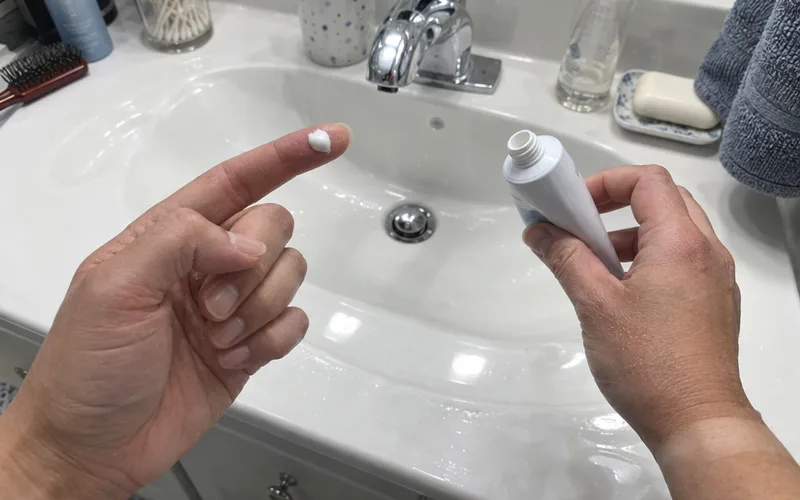
Each step has a reason, so here’s the full routine:
- Cleanse gently at night. Retinol belongs in your evening routine only, since it makes skin more sensitive to sunlight.
- Let your skin dry completely. GoodRx Health says to apply retinol right after cleansing and after your skin has completely dried.
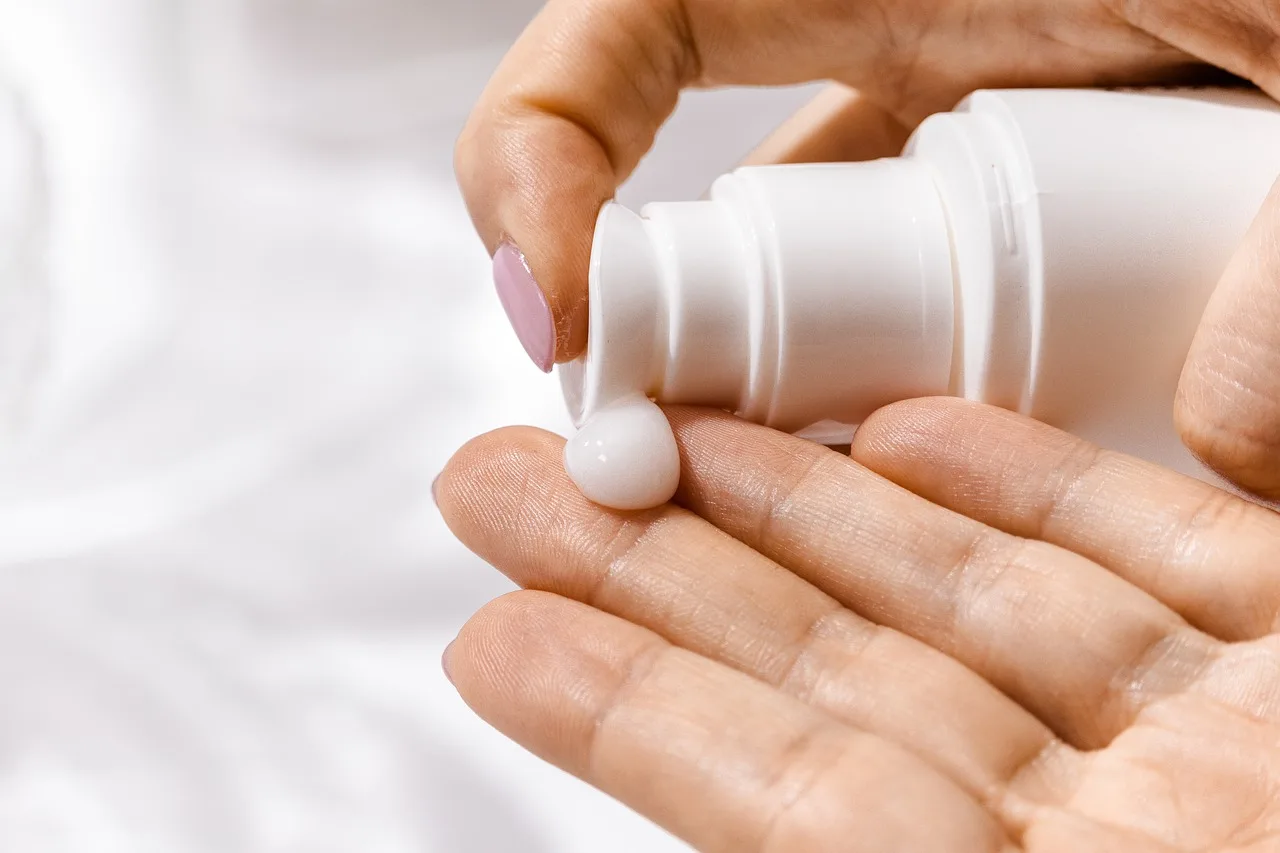
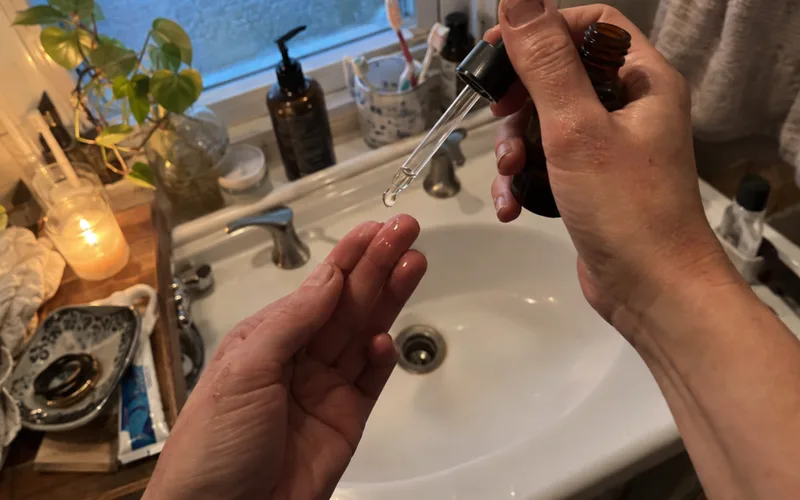
- Use a pea-sized amount. That’s enough for your whole face, per GoodRx Health. Dab it on your forehead, nose, cheeks and chin, then rub it in.
- Moisturize. A plain moisturizer goes on after the retinol to cut down on dryness.
- Wear sunscreen every morning. Even though you applied it at night, your skin stays more sun-sensitive the next day.
That’s the whole thing.
More product doesn’t mean faster results. A bigger dollop just spreads more irritation across your face.
If your night routine already has a serum or two, GoodRx Health suggests applying them after the retinol and before the moisturizer. For the rest of your morning and night steps, a basic skincare routine for beginners is a good frame to fit retinol into.
Should Retinol Go on Before or After Moisturizer?
Retinol usually goes on before moisturizer, on clean, dry skin. If your skin is dry or sensitive, you can put moisturizer on first or use a “retinol sandwich.”
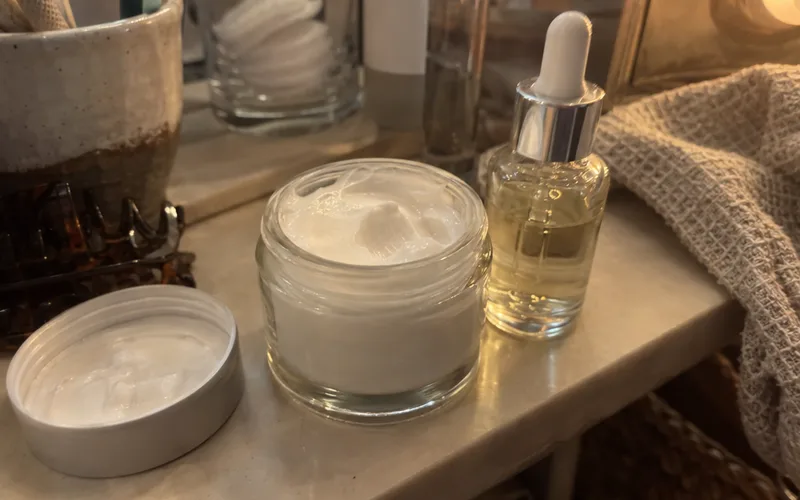
The sandwich is simple: a thin layer of moisturizer, then your retinol, then another layer of moisturizer. GoodRx Health suggests it when retinol starts to irritate your skin.
Here’s what that looks like on a real night:
- Cleanse and pat your face dry.
- Smooth on a thin layer of moisturizer.
- Apply your pea-sized amount of retinol.
- Finish with a second layer of moisturizer.
The extra layer acts as a cushion between the retinol and your skin.
Pro Tip: Pick a fragrance-free formula with ingredients like ceramides, glycerin, squalane or hyaluronic acid. If you need one, our roundup of face moisturizers covers options for every skin type.
Is a Retinol Serum or Cream Better for Beginners?
Neither a retinol serum nor a cream is best for every beginner. GoodRx Health matches the format to your skin type, such as a gel or lotion for oily skin.
The real difference is moisture. GoodRx Health explains that serums tend to be thinner and absorb quickly, but unlike creams and lotions, serums don’t provide any moisturization.
Here’s the GoodRx Health guide by skin type:
- Oily or acne-prone skin: a gel or lotion
- Dry skin: a serum, cream or oil
- Combination skin: switch by season, with a serum or cream in winter and a lighter lotion in warmer months
So if you pick a serum, plan on a moisturizer after it. A cream already carries some of that moisture with it.
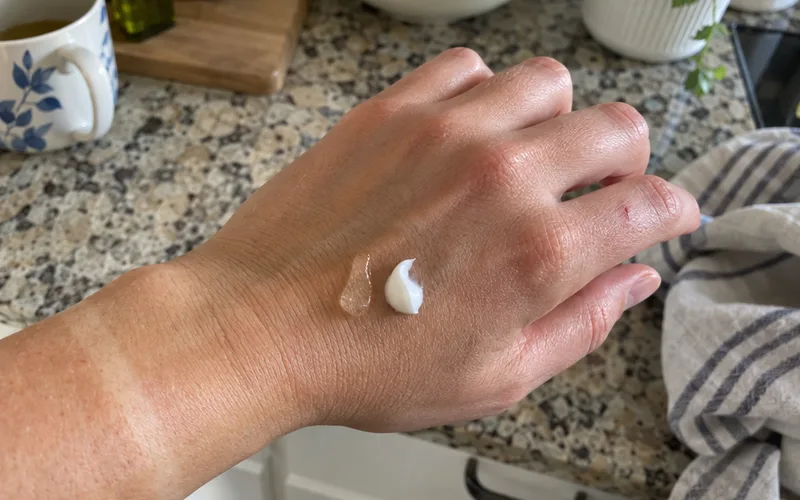
Concentration still matters more than texture. Whatever format you choose, start at the 0.1% or 0.2% level GoodRx Health recommends for first-timers.
For example, our CeraVe retinol serum review walks through one popular drugstore option in detail. If you have oily skin, these retinol serums for oily skin keep the texture light.
What About Encapsulated Retinol?
Encapsulated retinol wraps the retinol in tiny carriers, and early research suggests this can make retinol gentler and more stable.
The peer-reviewed review on PubMed Central found that nanoparticles show good potential for improving the stability, tolerability and results of retinoids like retinol. But its authors also say more detailed clinical studies are needed to confirm the benefit.
So treat “encapsulated” as a nice extra, not a guarantee of better efficacy. A low strength and a slow schedule still do most of the work of keeping your skin calm.
What Not to Mix With Retinol
Don’t use retinol on the same night as exfoliating acids, benzoyl peroxide or scrubs. GoodRx Health also says to stop it 5 to 7 days before waxing, peels or lasers.
Retinol already exfoliates. Pile another exfoliant on top and you’re asking for redness.
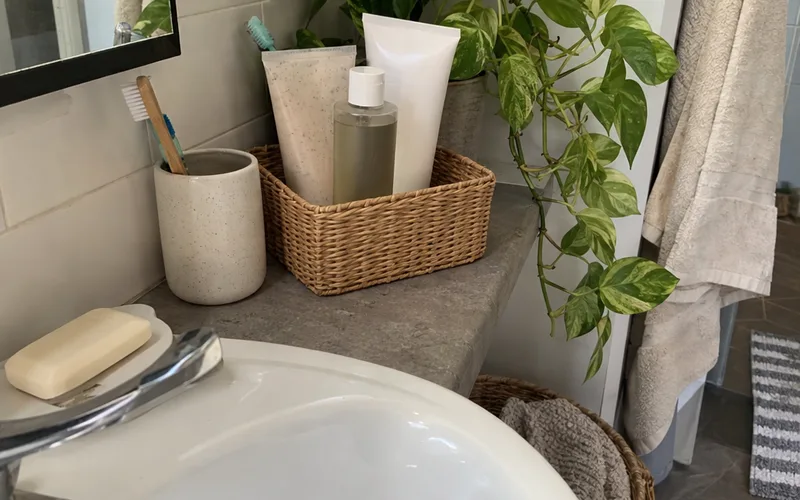
GoodRx Health lists the irritants to keep away from retinol, especially at first:
- Benzoyl peroxide
- Salicylic acid
- Alpha hydroxy acids
- Scrubs and exfoliators
You don’t have to give these up for good. You just need to keep them apart.
Here’s how to handle the most common ingredients you might pair with it.
Vitamin C: both are anti-aging ingredients, and GoodRx Health says the best way to combine them is vitamin C serum in the morning and retinol at night. A vitamin C serum fits neatly into your morning routine before sunscreen.
Salicylic acid (BHA) and glycolic or lactic acid (AHAs): these exfoliate too. GoodRx Health suggests using salicylic acid in the morning or alternating it with retinol on different nights.
Hyaluronic acid: a safe pairing. It hydrates and helps keep a healthy skin barrier, which can balance retinol irritation.
GoodRx Health says you can apply hyaluronic acid right after retinol, or even before it if your skin is very dry.
Niacinamide: another friendly match. GoodRx Health says combining it with retinol can boost the anti-aging benefits, so start it every few days and build up.
Benzoyl peroxide: keep it off your retinol nights. If you use an acne wash with benzoyl peroxide, move it to the morning so the two never meet on your skin.
Waxing, peels and lasers: stop retinol 5 to 7 days before any of these, since it leaves skin more sensitive.
Key Takeaway: Keep retinol nights simple, with a gentle cleanser, your retinol and a moisturizer, and move your other actives to the morning.
Peeling, Dryness and Purging: What’s Normal When You Start
Some dryness, flaking and redness is normal in your first few weeks of retinol. If you’re prone to acne, you may also get a short-lived breakout, often called “purging.”
In fact, around 20% of people who use retinoids get a flare during the first few weeks, GoodRx Health reports. Its advice is not to give up, since full results can take up to 12 weeks.
But normal adjustment and real irritation are different things.
The review on PubMed Central names the irritant reactions that make people quit retinoids: burning, scaling and dermatitis. Those are signs to slow down, not push through.
Here’s how to tell them apart:
- Usually normal: mild dryness, light flaking and, if you’re prone to acne, a few extra breakouts
- Time to slow down: redness that lasts, burning or scaling that keeps getting worse
- Time to stop and see a dermatologist: a rash, swelling or pain
So what should you do when your skin pushes back?
Drop to fewer nights, add the moisturizer sandwich and skip other actives until things settle. Then restart at your old schedule and build up again, more slowly.
There’s one group that needs extra care here.
People of all skin colors can benefit from retinoids, the AAD says. But dermatologist Sonia Badreshia-Bansal warns that in skin of color, irritation can leave dark marks known as hyperpigmentation.
Starting slowly and using moisturizer helps prevent that, she says.
If you have a deeper skin tone, avoiding irritation matters even more, because irritation is what triggers those dark marks.
Do You Need Sunscreen When Using Retinol?
Yes, you need a broad-spectrum sunscreen of SPF 30 or higher every day when you use retinol. Retinoids make skin more sensitive to the sun, even when you only apply them at night.
Tina Alster advises using these products only at night and always using sun protection during the day, the AAD reports. That includes shade, a wide-brimmed hat and sunscreen on any skin your clothes don’t cover.
That SPF 30 bar comes from GoodRx Health, which also says your sunscreen should cover both UVA and UVB rays. Put it on every morning before makeup, and reapply it often when you’re outside.
Why be so strict?
Because the sun undoes the work. The same review on PubMed Central calls solar UV radiation the single major factor responsible for skin aging.
In other words, skipping sunscreen cancels out much of what your retinol is working on.
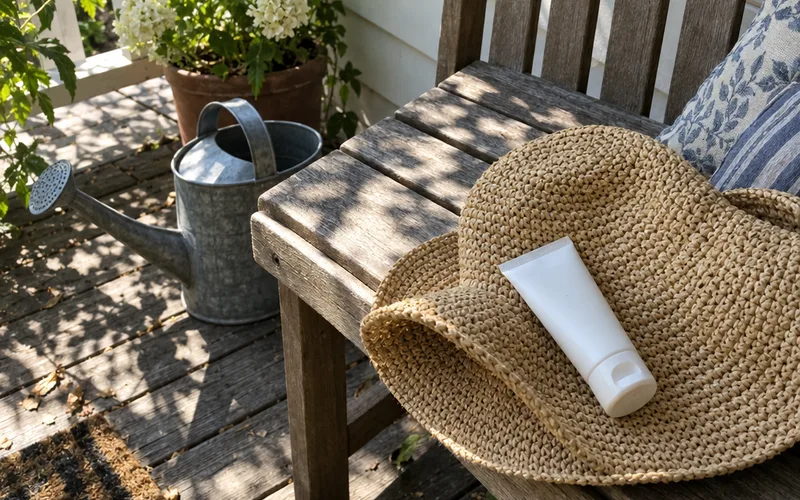
If your skin is sensitive, the AAD suggests a physical sunscreen with titanium dioxide and/or zinc oxide. You’ll find mineral and everyday picks in our guide to sunscreen for your face.
Note: Skip tanning beds entirely while you use retinol. GoodRx Health lists them among the things to avoid.
Can You Use Retinol If You Have Sensitive Skin?
Many people with sensitive skin can use retinol if they start at the lowest strength, 1 or 2 nights a week, with moisturizer as a buffer. Skin allergies, very dry skin or constant redness are the exceptions.
The AAD is direct about that last group. People who have skin allergies or dryness are probably not good candidates for a retinoid product.
Lots of redness or inflammation is another warning sign. In that case, Chapas advises skipping retinoids and asking a dermatologist about rosacea treatments instead.
If you’re not in those groups, sensitive skin just changes your plan:
- Concentration: the low end, around 0.1% or lower, as GoodRx Health suggests for sensitive skin
- Schedule: 1 night a week at first, with more space between nights
- Buffer: the moisturizer sandwich from your very first night
- Sunscreen: a physical formula with titanium dioxide or zinc oxide, as the AAD suggests
Sensitive skin doesn’t rule out retinol, but it does rule out rushing.
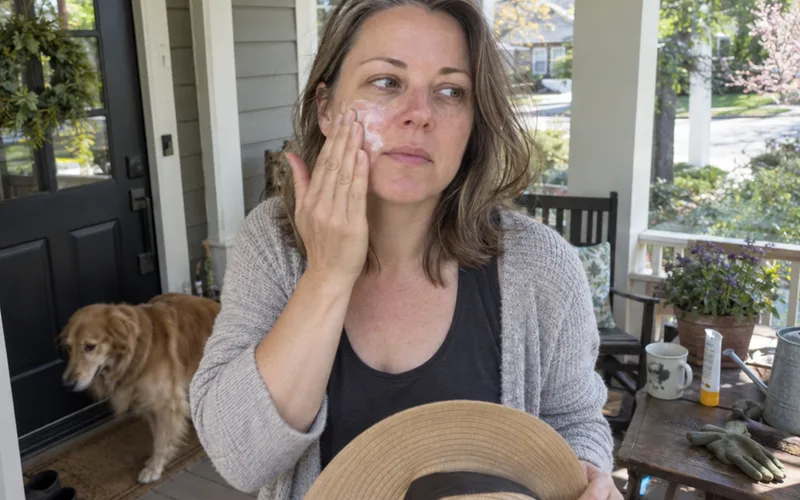
If you’d like a product made with reactive skin in mind, we’ve rounded up retinol serums for sensitive skin to start with.
At What Age Should You Start Using Retinol?
There is no set age for starting retinol: GoodRx Health says you can begin in your 20s as a preventive step for skin aging, or even younger if you’re using it for mild acne.
So you don’t need to wait for your first wrinkle.
Starting in your 20s is about prevention. Starting in your 30s, 40s or later is about treatment, and the AAD lists mild fine lines and pigmentation among the things retinoids help.
Here’s a rough guide by goal rather than by birthday:
- Mild acne: retinol can help even before your 20s, though GoodRx Health notes many people with breakouts need a dermatologist’s help
- Prevention: your 20s are a reasonable time to add it
- Visible fine lines or sun spots: start whenever you notice them, since GoodRx Health says retinol can reverse many signs of aging no matter your age
Curious when the biggest changes in your face tend to happen? We cover how your face changes with age decade by decade.
The best age to start retinol is the age when you’ll wear sunscreen every day to protect the results.
Who Should Not Use Retinol
You should not use retinol if you are pregnant, could be pregnant or are breastfeeding. Pause it before facial procedures, and see a dermatologist first for acne scarring or hormonal acne.
The AAD states it plainly: retinoids should not be used during pregnancy.

GoodRx Health says most experts advise against retinoids while you’re breastfeeding too, and it adds anyone who could be pregnant. For acne during that time, it points to over-the-counter alpha hydroxy acids, like glycolic or lactic acid.
Here’s the full “check first” list:
- Pregnant, trying to conceive or breastfeeding: skip retinol and ask your doctor about alternatives
- Skin allergies, very dry skin or lots of redness: the AAD says you’re probably not a good candidate
- Moderate or severe acne scarring, or acne tied to periods or hormonal changes: see a board-certified dermatologist before trying a retinoid, per the AAD
- A wax, peel or laser coming up: stop 5 to 7 days before
If none of those apply, you’re the person retinol is made for.
A Simple Retinol for Beginners Plan
The single biggest rule for retinol for beginners: start lower and slower than you think you need to.
This week, pick a low-strength retinol, put 2 nights on your calendar and buy a sunscreen you’ll actually wear.
Then let your skin tell you when it’s ready for more retinol treatment nights, and a smoother, more even complexion will follow.
Frequently Asked Questions
Can I use retinol every day as a beginner?
Most beginners should not use retinol every day at first. GoodRx Health suggests starting once or twice a week at night and working up to nightly use after a few weeks, as long as your skin is not red, dry or flaky.
How long does retinol take to work?
Retinol can take up to 12 weeks to show its full results, according to GoodRx Health. The first few weeks are mostly about getting your skin used to it, so judge your retinol after about 3 months of steady use, not after a few nights.
Can I use retinol while pregnant?
No, you should not use retinol while pregnant. The American Academy of Dermatology says retinoids should not be used during pregnancy, and GoodRx Health adds breastfeeding and anyone who could be pregnant, so ask your doctor about acne alternatives such as glycolic or lactic acid.
Can retinol help with dark spots?
Yes, retinol can help fade dark spots, including those from sun damage. GoodRx Health explains that retinol slows the production of melanin, the main pigment in skin, so dark spots become less noticeable and skin tone evens out over time.
Where should you put retinol on your face?
Retinol goes over the whole face in a thin layer, using a pea-sized amount. GoodRx Health suggests dabbing it on your forehead, nose, cheeks and chin, then rubbing it in gently so it spreads evenly.
Can you use retinol for acne?
Yes, an over-the-counter retinol can help with mild acne, such as a few whiteheads, blackheads or pimples. The American Academy of Dermatology lists mild acne among the problems retinoids suit, while more severe breakouts usually need a dermatologist.
Is retinol dangerous?
Retinol is not dangerous for most people, but it can irritate skin and it is not for use during pregnancy. A peer-reviewed review notes that irritation like burning, scaling and dermatitis keeps many people from sticking with retinoids, which is why a slow start matters.
Should I use retinol in the morning or at night?
Retinol belongs in your night routine. Dermatologist Tina Alster advises using it only at night and wearing sun protection during the day, because retinoids make skin more sensitive to the sun.