
Soaking off a full set of acrylics at home can take up to an hour.
That’s what one nail technician told readers on wikiHow Forums, and it’s why patience protects your nails more than any tool does.
Nail removal at home works the same basic way for acrylic, gel and dip powder: file, soak in the solvent acetone, then push off only what softened.
Below are the 7 steps, what changes for each nail type and press-ons, and how to get nails off without acetone.
Here’s the job at a glance:
At a glance
- Best for
- Acrylic, soak-off gel, dip powder and press-on nails. Skip it if a nail is painful or your gel is the file-off kind.
- Cost
- Low. You need 100% acetone, cotton, foil and a file.
- Time
- Same day. Plan on 20 to 30 minutes of soaking, and up to an hour for a thick acrylic set.
- First step
- Check that your acetone bottle says 100% acetone.
How to Remove Fake Nails at Home Step by Step
Most artificial nails come off at home in 7 steps: clip them short, file off the shine, protect your skin, wrap each nail in acetone and foil, wait, push off the softened product, then buff and moisturize. The method fits acrylic, soak-off gel and dip powder.
Press-ons usually need only a warm, soapy soak, which gets its own section further down.
Step 1: Clip the Length Down
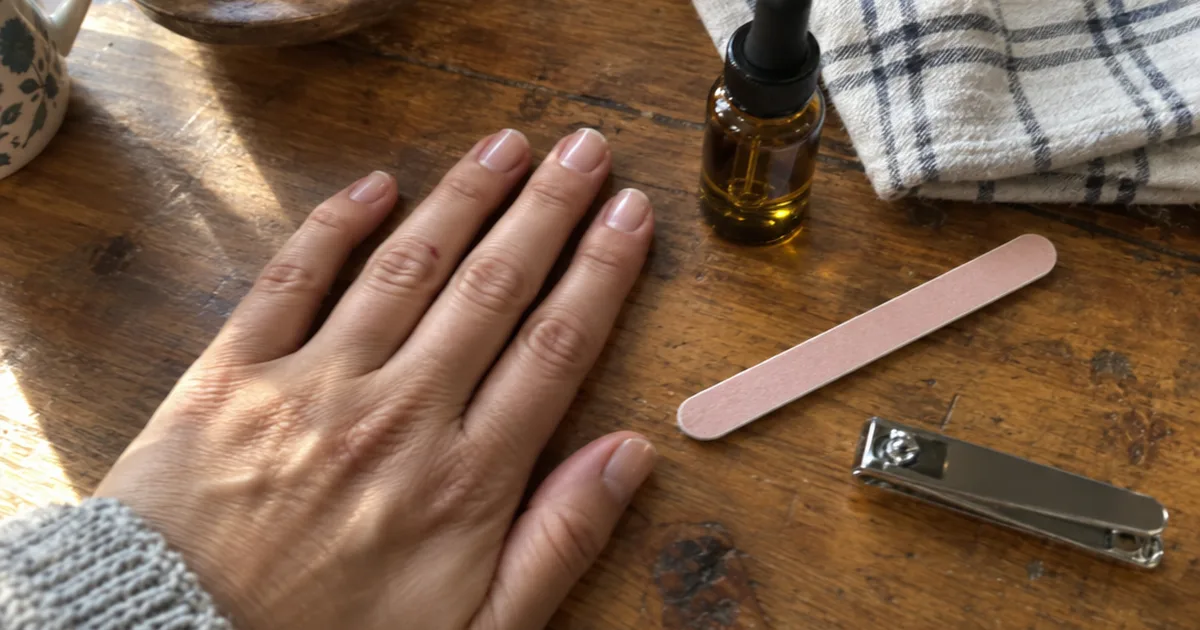
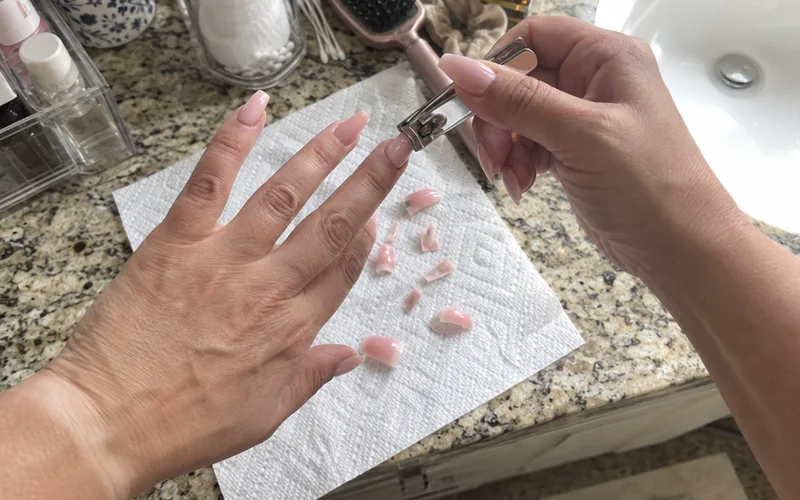
Cut the fake nails as short as you comfortably can with nail clippers, stopping before you reach your real nail. Less product means less for the acetone to break down.
Step 2: File Off the Shiny Top Layer
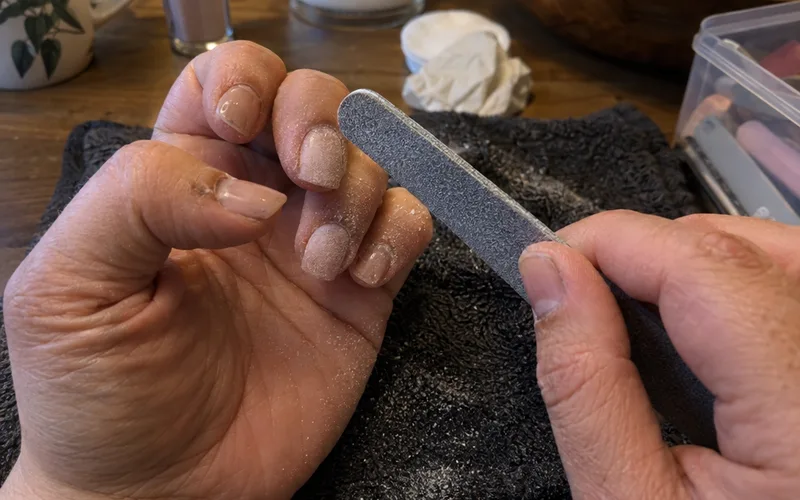
Use a coarse nail file to buff the glossy top coat until the whole surface looks dull and dusty. That rough surface lets acetone soak in instead of sliding off the seal.
Stop as soon as you see a thin, even layer of product left. Filing into your natural nail is the one mistake no soak can undo.
Step 3: Protect Your Skin
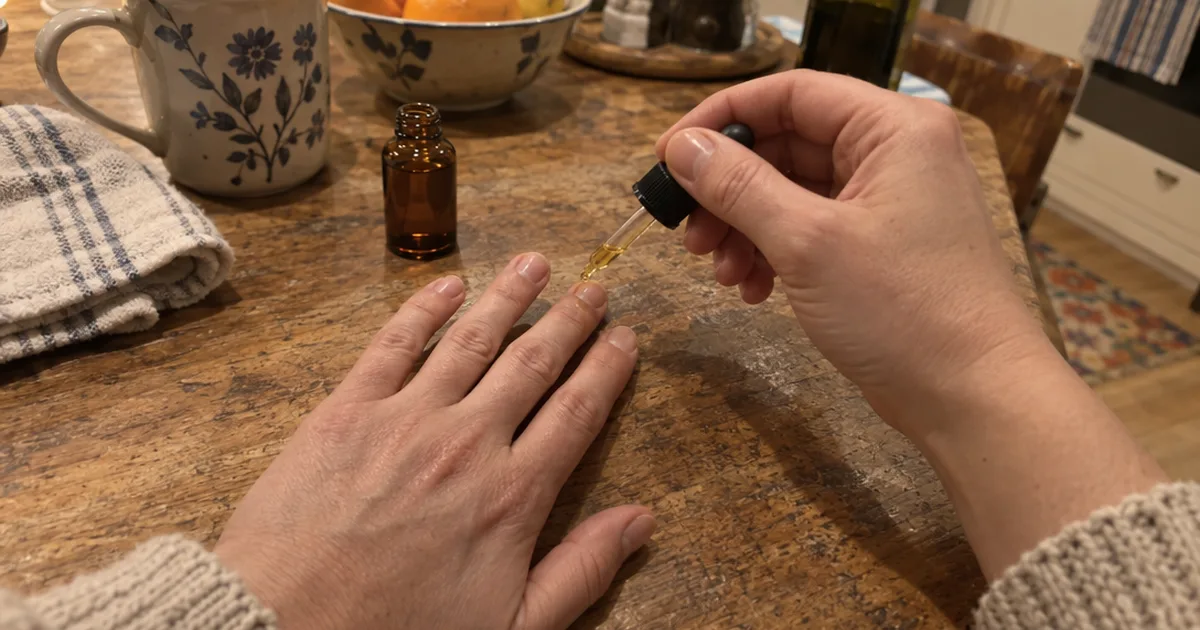
Rub petroleum jelly or cuticle oil on the skin around each nail, but keep it off the nail itself. That barrier keeps the drying acetone on the product and away from your cuticles.
Step 4: Wrap Each Nail in Acetone and Foil
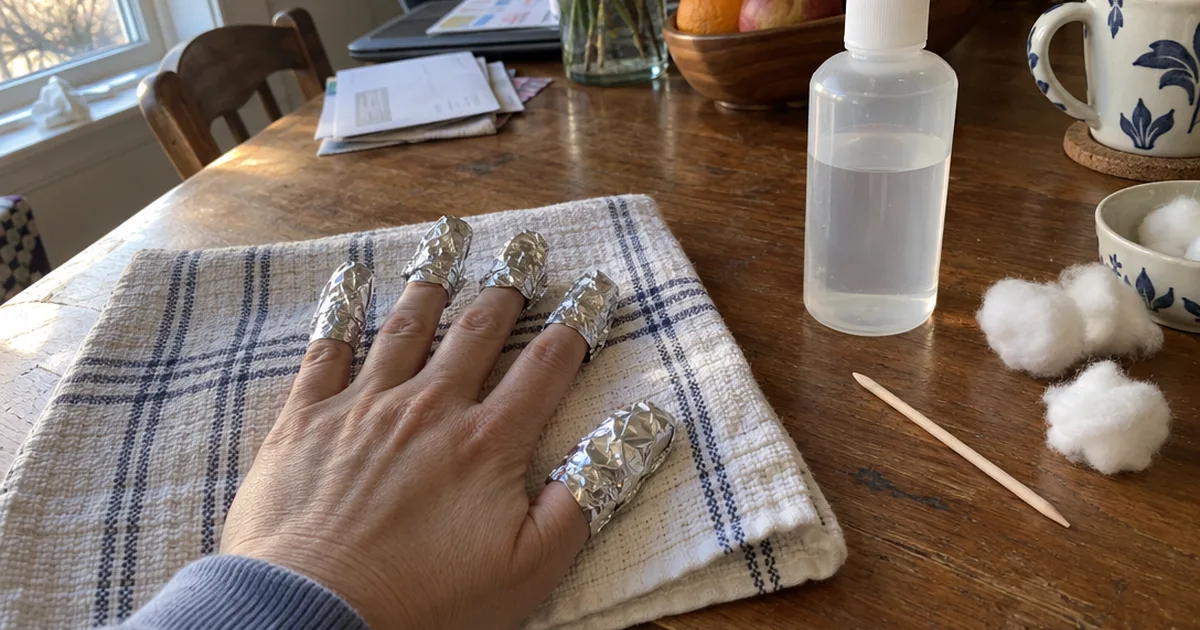
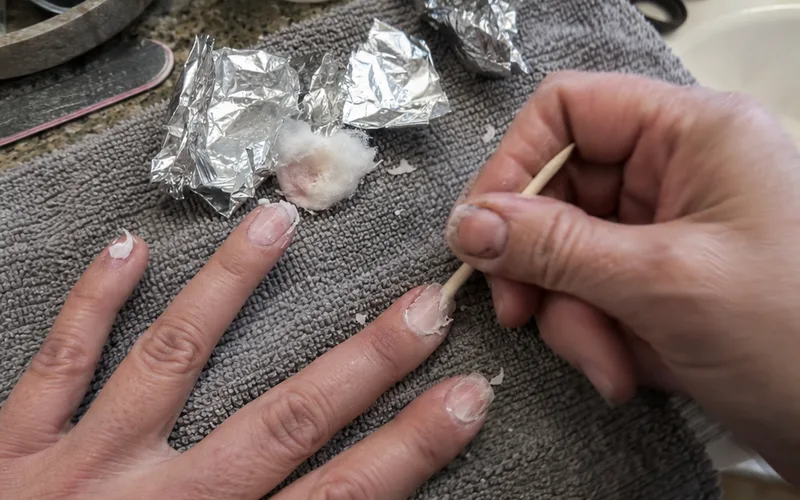
Soak a cotton ball in 100% acetone, press it onto the nail, then wrap the fingertip in a small square of aluminum foil. The foil holds the cotton tight against the nail so it stays wet while it works.
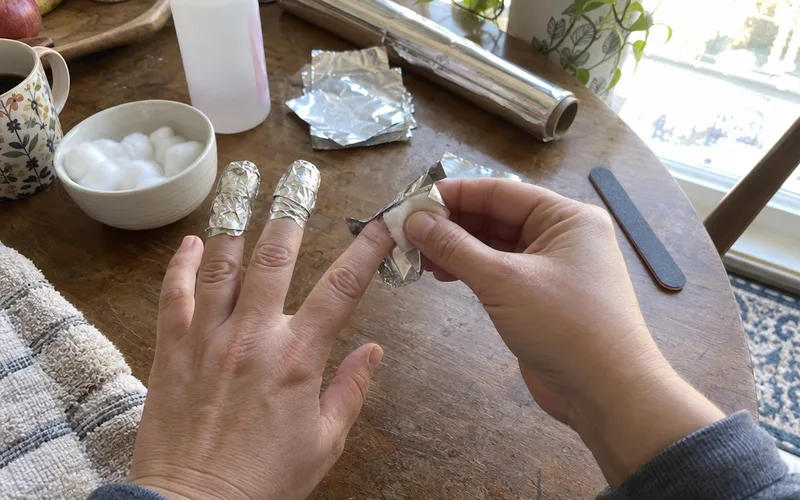
Prefer a bowl soak? The beauty and skincare specialist on the same wikiHow thread says to use a glass or ceramic bowl, because acetone can dissolve plastic.
Step 5: Wait 20 to 30 Minutes
Leave the wraps on for 20 to 30 minutes, the window that the wikiHow beauty specialist gives for acrylics. Then unwrap one nail to check before you take off the rest.
If the product still feels hard, rewrap that nail for another 10 minutes.
Step 6: Push the Softened Product Off Gently
Slide an orange stick or cuticle pusher from the cuticle toward the tip, lifting only what has turned soft and gummy. Anything that resists goes back under the foil instead of being scraped.
Step 7: Buff, Wash and Moisturize
Smooth any leftover residue with a fine buffer, then wash the acetone off with soap and water. Finish with cuticle oil and a thick hand cream, since acetone leaves skin and nails dry.
What You Need for Nail Removal at Home
Nail removal at home needs 100% acetone, cotton balls, aluminum foil, nail clippers, a coarse file, a buffer, an orange stick and petroleum jelly. Press-ons often need nothing more than a bowl of warm, soapy water and a little oil.
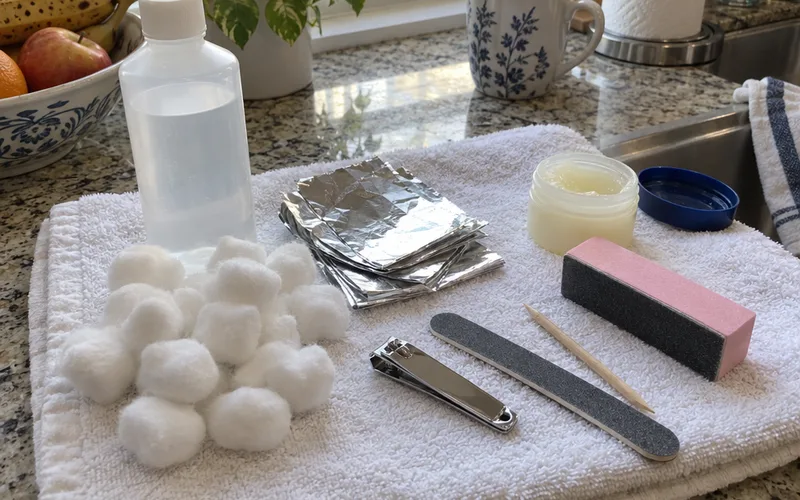
The acetone is the item to get right. One reader on the same wikiHow thread struggled with cheap drugstore remover, then found pure acetone from a beauty supply store worked much better.
Once your nails are bare, switch to a gentler polish remover for natural nails for everyday color changes.
How Long Does Acetone Take to Remove Acrylic Nails?
Acetone usually takes 20 to 30 minutes to soften acrylic nails, says a beauty and skincare specialist on wikiHow Forums. A nail technician on the same thread says a full set can take up to an hour.
So work in rounds: soak, push off what’s soft, then rewrap what isn’t.
Key Takeaway: Block out a full hour, and you won’t be tempted to pry.
What Changes for Each Type of Nail
Every type of fake nail uses the same acetone soak with one twist each. Acrylic needs the most filing, gel depends on whether it’s soak-off or file-off, dip powder needs its top coat filed through, and press-ons usually lift in warm, soapy water.
Acrylic Nails
Acrylic nails come off at home with the full 7-step acetone soak, after you file away as much bulk as you safely can. A thinner layer softens faster and needs less scraping.
If your set is extra long or layered, the full acrylic removal walkthrough covers the bowl soak and filing by hand.
Gel Nails
Gel nails come in 2 kinds, and only one comes off with acetone at home. The American Academy of Dermatology (AAD) advises asking for gel nails that soak off rather than ones that must be filed off, so ask your salon which you have.
A soak-off gel follows the same 7 steps, with a few extra tips for removing gel nails. There are slower ways to take off gel polish without acetone.
A file-off gel, such as many builder gel nails, is a salon job.
Dip Powder Nails
Dip powder nails come off with the same acetone wraps, but their sealed top coat has to be filed until it’s fully dull, or the acetone can’t reach the color.
If acetone bothers your skin, there are ways to take off dip powder without acetone, though they take longer.
Press-On and Glued-On Nails
Press-on nails held by adhesive tabs or light glue usually loosen in a bowl of warm, soapy water with a little oil, no acetone needed. Once an edge lifts, wiggle the nail gently from the side, and soak longer if it holds on.
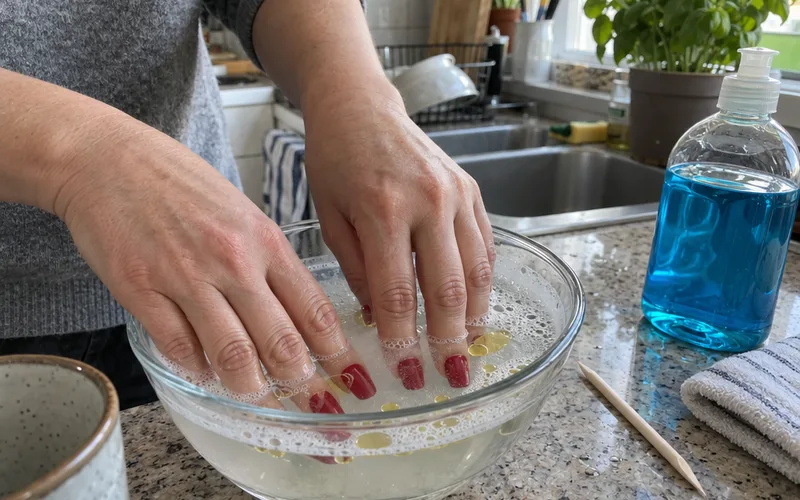
A set stuck with strong nail glue may need the acetone wrap instead, as with these tips for taking off glued-on nails.
How to Get Fake Nails Off Without Acetone
Fake nails come off without acetone only when the bond is weak, as with press-ons and light glue-ons: soak them in warm, soapy water with oil, then ease them off as the glue lets go.
Acrylic and cured gel are different. The AAD says that to remove artificial nails, you often need to soak them in acetone or file them off.
In other words, if your set is acrylic or gel, acetone or a salon is the realistic choice.
Is It Bad to Peel Off Acrylic or Gel Nails?
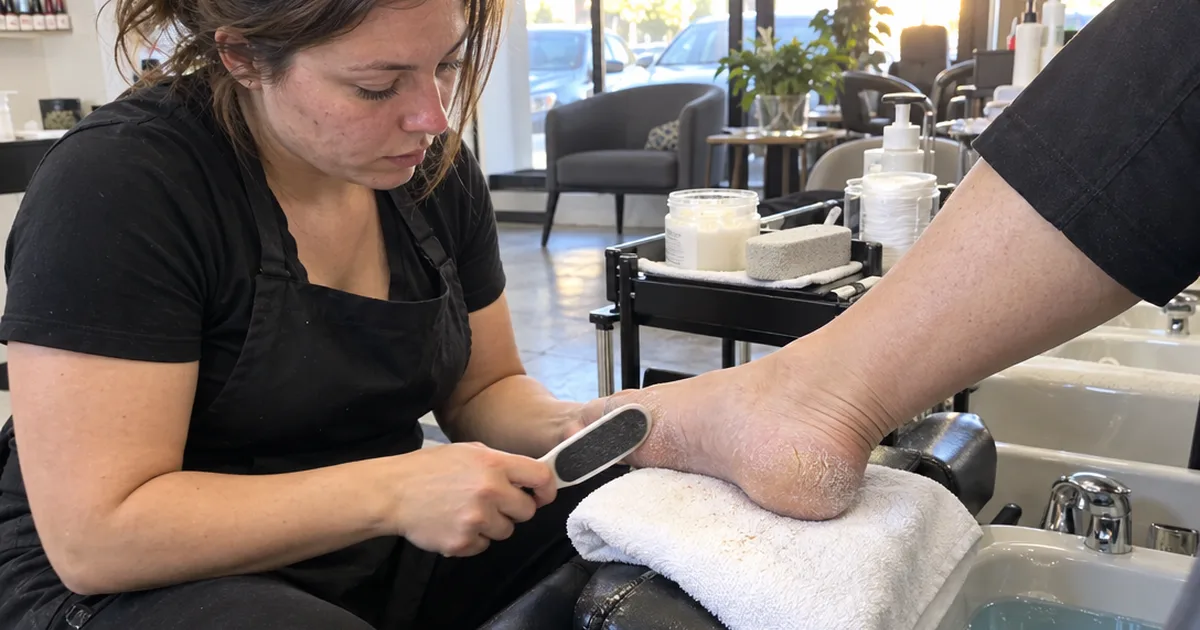
Yes, peeling off acrylic or gel nails is bad, because the product pulls up the top layers of your natural nail and leaves it thinner. One wikiHow Forums commenter who peeled a set off says their nails took a long time to grow back healthy.
That damage piles on top of what application already did. The AAD explains that acrylics only stick after the natural nail surface is filed rough, which thins the nail and makes it weaker.
So treat a lifting edge as a reason to soak, never a handle to pull.
Is Acetone Safe for Your Nails and Skin?
Acetone is the standard solvent for nail removal at home, but it dries skin and catches fire easily, so use it briefly and away from any flame. Medical News Today, in a medically reviewed article updated November 8, 2023, warns that acetone liquid and vapor catch fire easily.
So keep candles, stovetops and cigarettes away while you soak, and open a window.
The same article calls acetone an irritant that can irritate the skin, which is why some people can’t use acetone removers at all. If your fingertips sting or turn red, stop and wash your hands.
How to Care for Your Nails After Removal
Nails right after removal need moisture, a short length and a break: use cuticle oil and hand cream twice a day, keep them short and wait before your next set. The AAD says time without artificial nails gives your nails a chance to repair themselves.
Fold those habits into your nail care routine while they grow out. If they stay bendy, try ways to make nails stronger or a nail strengthener polish.
When to Get Your Nails Removed at a Salon Instead
Get your nails removed at a salon when your gel is the file-off kind, when the product won’t soften after a long soak, or when a nail is painful, lifting badly or already damaged. A technician can thin the product safely before it ever touches acetone.
One salon owner on wikiHow Forums explains that techs file off the top layers with an electric file, then soak the rest.
Planning your next set? Compare gel or acrylic for weak nails first, and keep up the nail care basics between appointments.
Frequently Asked Questions
Will gel nails eventually come off on their own?
Gel nails don’t come off cleanly on their own: they grow out and lift at the edges, and picking at that edge pulls up layers of your natural nail. Soak soak-off gel with 100% acetone and foil instead, or have a salon remove a file-off gel.
Does Dawn dish soap remove gel nail polish?
Dawn dish soap doesn’t dissolve cured gel polish, because soapy water only loosens the glue under press-on and glue-on nails. For gel, file off the shine and use 100% acetone wraps.
How do you use acetone for nails?
Acetone works on nails when you press acetone-soaked cotton onto each filed nail and wrap it in foil, with petroleum jelly on the skin around it. Work near an open window, away from any flame, and wash and moisturize your hands afterward.
Final Thoughts
The safest nail removal at home is the slow one: file, soak and only push off what’s already soft.
Before your next removal, check your bottle says 100% acetone and set aside a full hour.