
One Reno salon books cracked heels for a pedicure every 2 weeks, not once a month.
That’s the schedule on the service page from Foxy Nails, which moves clients to monthly visits once their skin feels smooth.
A pedicure for cracked heels is a repair job, not a quick polish.
Here’s what to ask for, what to refuse and when a doctor beats a salon.
Does a Pedicure Help Cracked Heels?
A pedicure helps cracked heels when the cracks are shallow and nothing is bleeding, because filing off dead skin and sealing in moisture leaves heels smoother the same day. A pedicure won’t keep them smooth on its own, though.
Why not?
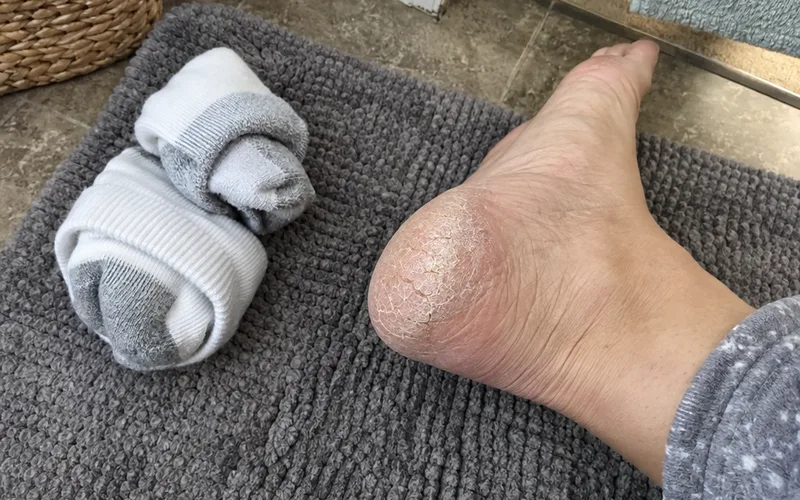
Thick, dry skin on the heel doesn’t stretch, so it splits under the pressure of each step. Your moisturizer at home keeps the new skin soft enough to bend instead of crack.
Note: Deep, bleeding or red and sore cracks need a podiatrist (a foot doctor) before any pedicure.
Which Pedicure Is Best for Cracked Heels?
The best pedicure for cracked heels depends on how thick the hard skin is: a dry pedicure suits thick, rough heels, a paraffin pedicure suits dry heels with light cracks, and a medical pedicure suits heels that hurt or bleed.
A basic spa pedicure softens and moisturizes, which is fine for mild dryness but too light for real cracks. Here’s how the options compare:
| Pedicure | Best for | Skip it if |
|---|---|---|
| Basic spa pedicure | Mild dryness | Heels are thick and hard |
| Dry pedicure | Thick, hard heels | Cracks are open |
| Paraffin pedicure | Dry skin after filing | Cracks are open |
| Medical pedicure | Painful heels, diabetes | Heels are only dry |
Not sure which row fits? Ask the technician to look at your heels before you pick a service.
Ask for a Dry Pedicure for Thick Callus
A dry pedicure skips the foot bath and files the thick callus while the skin is still firm. Foxy Nails says its cracked-heels rescue add-on, meant for thicker callus or active cracking, uses dry prep filing before any moisturizing step.
The same salon explains that soaked skin swells and hides the true edges of a crack.
Add Paraffin for Dry, Tight Skin
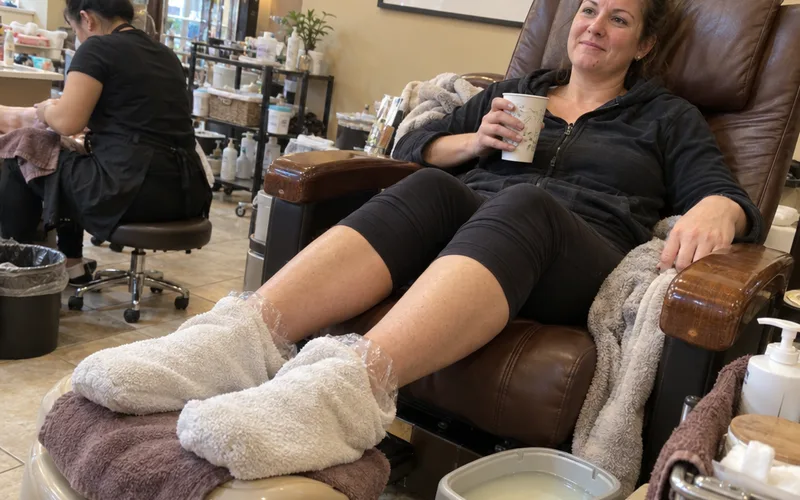
A paraffin pedicure coats your feet in warm wax that traps moisture and softens dry skin, and it works best right after filing. At the Reno salon, the spa pedicure with paraffin runs about 45 to 60 minutes and is built for hydration and comfort.
The softness fades within days, so keep moisturizing at home.
What Happens During a Pedicure for Cracked Heels
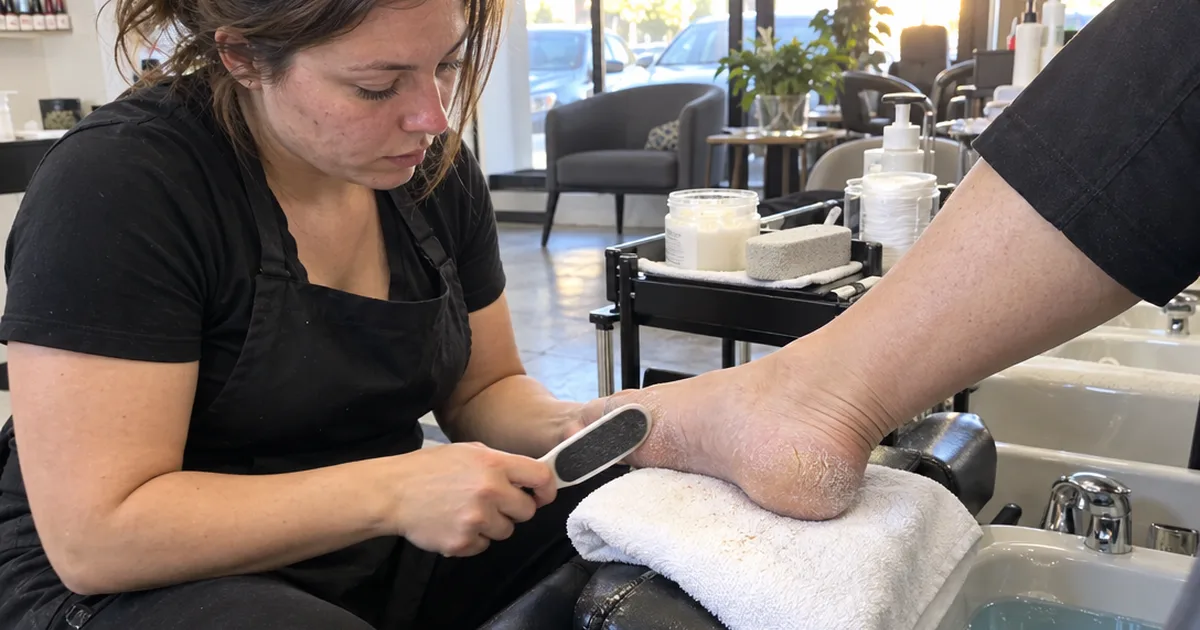
A pedicure for cracked heels spends most of its time on the heel, not your nails, and a good one removes hard skin in thin layers instead of one deep pass.
Here’s the order a careful appointment follows:
- Check. The technician looks for bleeding or redness that should go to a doctor.
- Soften or dry prep. Mild callus gets a short warm soak, while thick callus may be filed dry.
- File in layers. A foot file takes off dead skin a little at a time.
- Treat. A softening cream or mask goes on the heel.
- Seal. Paraffin wax or a thick balm locks moisture in.
- Finish. Nails get trimmed and shaped, often with a short massage, then polished if you want.
Foxy Nails, for one, builds its cracked-heel service around 20% to 40% urea, one of the humectants that pull in moisture and soften thick skin. If your appointment jumps from a long soak straight to hard scraping, ask the technician to go gentler.
Why a Razor or Credo Blade Has No Place on Your Heels
A pedicurist should never use a razor or credo blade on cracked heels, because a blade can slice into live skin and open a path for infection. A credo blade is a small razor tool for shaving off hard skin.
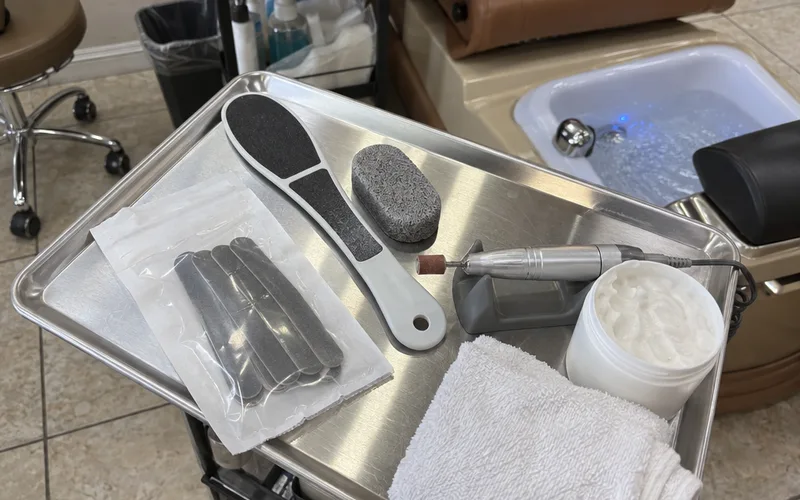
Cracked skin already has openings. Add a fresh cut, and bacteria or fungus from shared tools or a foot bath have an easy way in.
Pro Tip: Ask if the tools are single-use or sterilized in an autoclave, a heat-and-pressure sterilizer, before the technician starts.
If a blade comes out, say no and ask for a file.
How Often to Get a Pedicure for Cracked Heels
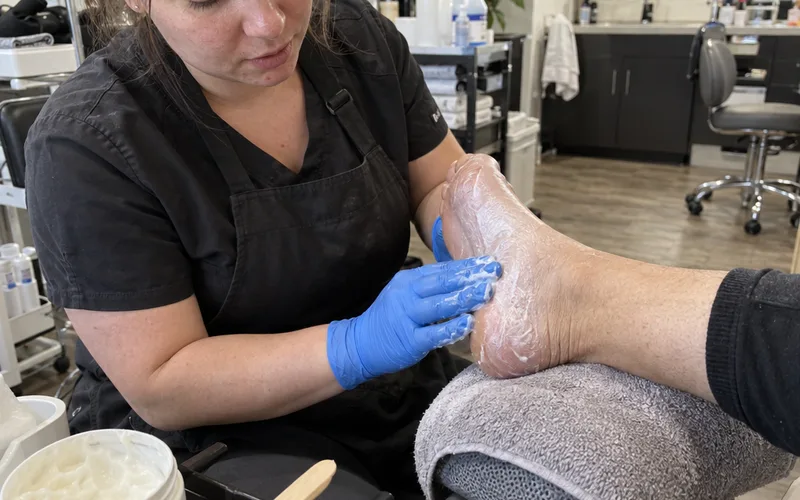
A cracked-heel pedicure every 2 weeks while the heels are actively cracked, then once a month after the skin feels smooth, is the schedule Foxy Nails recommends on its service page. Treat it as one salon’s plan, not a rule.
Short gaps let the technician take off a little hard skin each visit instead of a lot at once. Filing the same spot too often only leaves it tender.
In other words, book your second visit before you leave the first.
What to Say When You Book
Telling the salon about your cracked heels when you book changes the service you get, so name the treatment and any health condition up front. The Reno salon asks clients to request a “dry cracked-heels rescue,” a “spa pedicure with paraffin and a urea follow-up” or a “medical-style pedicure” by name.
Here’s what to say:
“Hi, I’d like a pedicure for cracked heels. They have thick callus and a few shallow cracks, nothing bleeding. Can you file them dry with no blades, then finish with paraffin or urea?”
The same salon asks clients with diabetes or painful, bleeding heels to mention it so it can set up a medical-style pedicure with the right precautions.
How to Do a Pedicure for Cracked Heels at Home
You can do a gentle pedicure for cracked heels at home, as long as you file lightly, never cut the skin and finish with a thick moisturizer under socks.
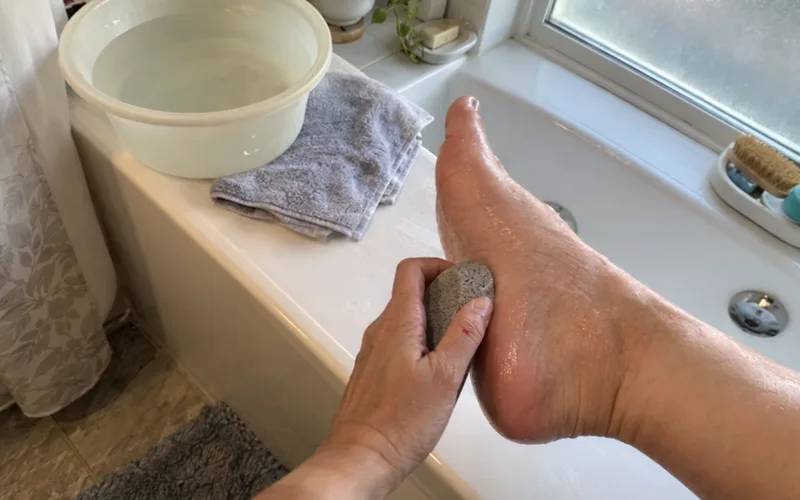
Here’s a simple routine:
- Soak your feet in warm, not hot, water with a little mild soap for a few minutes, or try a homemade foot soak.
- Pat dry and rub a pumice stone over the heel in one direction, stopping at any tender spot.
- Smooth on a thick cream or petroleum jelly.
- Pull on clean cotton socks and sleep in them.
On sensitive skin, a gentle homemade foot scrub can replace the pumice. For very built-up skin, these home remedies for thick dead skin go deeper than one session.
The full steps for an at-home pedicure add trimming and cuticles, and a white polish for toes makes an easy finish.
What Cream to Use on Cracked Heels After a Pedicure
A thick over-the-counter cream with urea, or petroleum jelly over your regular moisturizer, is the best thing to put on cracked heels after a pedicure. Apply it every night under cotton socks so it stays on your heels instead of your sheets.
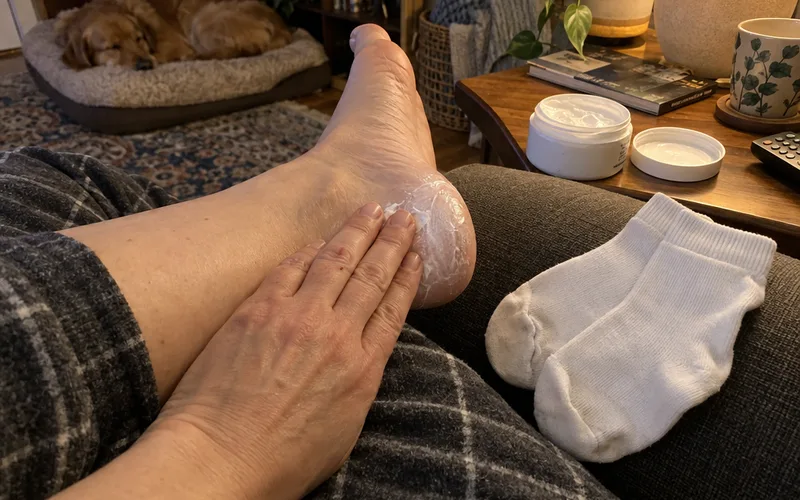
Thin body lotion is great for arms and legs, but heels need the heaviest cream you own.
Footwear matters too. Open sandals, flip-flops and going barefoot let the heel spread with each step, which can pull cracks wider.
When to See a Podiatrist Instead of Getting a Pedicure
A podiatrist, a doctor who treats feet, should handle cracked heels instead of a nail salon whenever the cracks look more like a wound than dry skin, or a health condition makes any foot cut risky.
Book a podiatry visit if you notice any of these:
- Cracks that bleed or keep reopening
- Pain when you stand or walk
- Symptoms of infection, like redness, swelling, warmth or pus
- Diabetes, nerve damage or poor circulation in your feet
- No change after a few weeks of daily moisturizer
A podiatrist can remove thick skin with sterile tools, close deep splits with liquid bandage and treat infection, which a salon isn’t set up to do. Once your heels heal, a gentle pedicure and your nail care basics are usually enough.
The Bottom Line
The right pedicure for cracked heels is gentle: filed in layers, sealed with moisture and never cut with a blade.
This week, check your heels against the podiatrist signs, then book a dry or paraffin pedicure and start cream and socks tonight.
And keep the rest of your nail care routine on the same calendar.
Frequently Asked Questions
Does a pedicure cure cracked feet?
A pedicure doesn’t cure cracked feet on its own, but it removes the hard, dry skin that keeps splitting. Nightly moisturizer under cotton socks does the rest.
What is the most effective treatment for cracked heels?
The most effective treatment for everyday cracked heels is gentle filing plus a thick urea cream or petroleum jelly every night under cotton socks. Deep, bleeding or painful cracks need a podiatrist instead.
Why are my feet worse after a pedicure?
Feet usually feel worse after a pedicure when too much skin was filed or shaved off, leaving the heel raw and tender. Redness, swelling or pus in the days after can mean an infection, so see a doctor.